



CT Coronary Angiogram on the Central Coast: Comprehensive Guide to Non-Invasive Heart Imaging and Patient Preparation
A CT Coronary Angiogram (CTCA) is a non-invasive X‑ray examination that visualises the coronary arteries to help diagnose coronary artery disease. Clear, practical information about the test and local access on the Central Coast can reduce anxiety and help patients and referrers prepare appropriately.
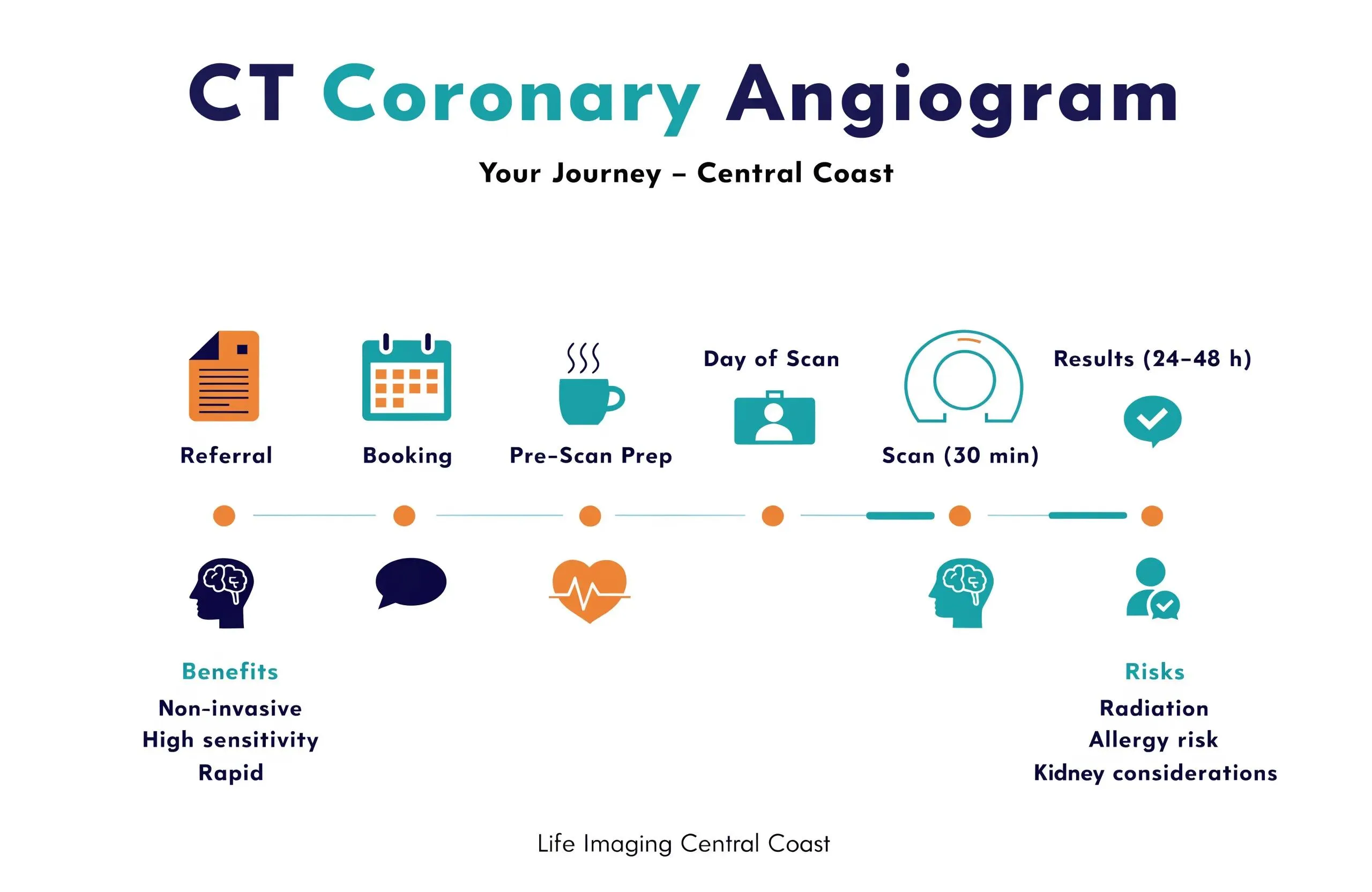
This article summarises CTCA indications, the scan process, benefits and risks, patient preparation, booking and result timelines for Central Coast Life Imaging centres.
Key Takeaways
- CTCA is a non-invasive CT scan that images coronary arteries using contrast enhancement.
- It detects coronary artery disease early, supporting timely treatment decisions.
- The test requires an intravenous contrast injection and brief breath-holds during imaging.
- Compared with invasive catheter angiography, CTCA is quicker and has a lower complication profile for many patients.
- Risks include modest radiation, possible contrast reactions and considerations for impaired kidney function.
- Patients should bring a referral, share medical history, follow fasting advice and review medication instructions.
- Life Imaging operates CTCA services on the Central Coast with straightforward booking and referrals.
- Reports are typically available to the referrer within 24–48 hours.
Comprehensive Guide to CT Coronary Angiogram (CTCA) on the Central Coast
CTCA acquires high‑resolution cross‑sectional images of the heart and coronary vessels using rapid X‑ray acquisition and computer reconstruction to identify stenosis or plaque in coronary arteries.
Because CTCA does not require vascular catheterisation, it reduces procedure‑related complications while offering detailed anatomical information useful for diagnosis and management.
What is a CT Coronary Angiogram (CTCA)?
CTCA is a targeted cardiac CT with contrast that delineates the coronary lumen and vessel wall to detect atherosclerotic disease and stenosis, enabling earlier clinical decisions for patients at risk of coronary artery disease.
Procedure

Patients lie on a motorised table that passes through the CT gantry while an intravenous contrast agent opacifies the coronary arteries. Brief breath‑holds are requested to reduce motion artefact; the appointment typically lasts about 30 minutes and most people resume normal activities soon after.
Benefits
CTCA provides sensitive, rapid assessment of coronary anatomy with a lower immediate complication risk than invasive angiography for many patients.
- Non-Invasive: No arterial catheter is required, reducing bleeding and infection risk.
- High Sensitivity: Detects coronary stenosis and plaque reliably for diagnostic triage.
- Rapid Assessment: Quick acquisition and prompt reporting aid timely clinical decisions.
These features make CTCA a useful first‑line investigation in appropriate clinical settings.
Risks
CTCA is generally well tolerated, but risks should be discussed beforehand.
- Radiation Exposure: The scan involves a modest dose of ionising radiation.
- Allergic Reactions: Contrast dye can cause allergic responses in some patients.
- Kidney Function Concerns: Patients with renal impairment need assessment before contrast use.
A discussion of radiation, allergy history and renal function helps determine suitability and any preparatory measures.
Patient Preparation Steps

Good preparation improves image quality and safety. Typical steps include providing a referral, scheduling the appointment, and sharing relevant medical history.
- Obtain a Referral: A referral from a treating clinician is usually required.
- Booking the Appointment: Book at a local imaging centre such as Life Imaging on the Central Coast.
- Provide Medical History: Advise the centre of allergies, kidney disease, and current medications.
Following these steps reduces delays and allows centres to tailor protocols where needed.
Understanding CTCA as a Non-Invasive Heart Scan Alternative
CTCA offers detailed coronary assessment without arterial catheterisation and is a lower‑risk option for many patients who are suitable candidates.
How CTCA Supports Early Detection of Coronary Artery Disease
Early identification of coronary disease via CTCA enables prompt medical or interventional management, which can reduce symptoms and long‑term risk.
How Should Patients Prepare for a CTCA Scan on the Central Coast?
Preparation varies by centre; common instructions focus on fasting, medication and specific pre‑scan directions to ensure optimal images and safety.
- Dietary Restrictions: Often a brief fast (commonly 4–6 hours) is recommended.
- Medication Guidelines: Discuss medications, especially those that affect heart rate, with your referrer or the imaging centre.
- Pre-Scan Instructions: Follow any centre‑specific guidance given when booking.
Adhering to instructions increases the likelihood of a successful scan and accurate results.
What to Expect During Your Heart CT Scan Appointment
On arrival, registration and review of referral and medical history occur. The radiographer explains the procedure, places an IV for contrast, and gives breathing instructions during brief scan acquisitions. Most patients leave shortly after the appointment; formal results are sent to the referrer.
Where to Access CT Coronary Angiogram Services on the Central Coast?
CT Coronary Angiogram services are available at several locations on the Central Coast, including:
- Life Imaging – Bateau Bay: P4/12 Bay Village Rd, Bateau Bay NSW 2261, Phone: 02 4326 7000
- Life Imaging – Killarney Vale: 1/3-5 Farrar Rd, Killarney NSW 2261, Phone: 02 4326 7000
- Life Imaging – Umina Beach: 310 West St, Umina Beach NSW 2257, Phone: 02 4326 7000
- Life Imaging – Erina: Shop 1, 148-158 The Entrance Road, Erina NSW 2250, Phone: 02 4326 7000
These centres perform CT cardiac studies and coordinate care with referring clinicians.
Life Imaging Centres: Locations and Booking Information
Life Imaging operates multiple Central Coast centres offering convenient access to CTCA. When booking, have your referral ready to streamline scheduling and pre‑scan instructions.
Referral Process and How to Schedule Your CTCA
To arrange a CTCA, follow the centre’s referral and booking procedures.
- Obtain a Referral: Ask your clinician for a CTCA referral.
- Submit the Referral: Send the referral to your chosen imaging centre.
- Contact the Imaging Provider: Call the centre to confirm appointment times and preparation details.
These steps ensure the centre can plan the study and advise any special precautions.
What Are the Costs and Result Timelines for Heart CT Scans on the Central Coast?
Costs vary by centre and services; ask the imaging provider when booking. Reports are generally available to the referring clinician within 24–48 hours, allowing prompt follow‑up.
Typical CTCA Results Time and How You Receive Your Report
Most CTCA reports are completed and sent to the referrer within 24–48 hours; the referrer will discuss findings and any next steps with the patient.
Frequently Asked Questions
What should I expect in terms of comfort during a CT Coronary Angiogram?
Most patients have minimal discomfort; the scan is non‑invasive and brief, though the contrast injection may cause a transient sensation.
Are there any specific dietary restrictions before a CTCA?
Fasting for about 4–6 hours is commonly advised—confirm exact guidance with the imaging centre.
How does a CTCA compare to traditional angiography?
CTCA is less invasive than catheter angiography and provides a rapid, high‑resolution assessment of coronary anatomy for many indications.
What happens if I have an allergic reaction to the contrast dye?
Inform the referrer and imaging centre of any known contrast allergies; centres can assess alternatives or pre‑medication and are equipped to manage reactions.
Can I resume normal activities after a CTCA?
Most people can resume normal activities shortly after the scan; follow any specific post‑scan advice from staff.
How can I access CTCA services if I live outside the Central Coast?
CTCA is widely available at other hospitals and diagnostic imaging providers; discuss referral options with your clinician to find local services.
What should I do if I have further questions after my CTCA?
Contact your referring clinician or the imaging centre that performed the study for result interpretation and follow‑up advice.
Conclusion
CTCA offers precise, non‑invasive assessment of coronary disease and supports timely management. Follow the preparation guidance provided by your referrer and the imaging centre, and contact a Life Imaging centre on the Central Coast to arrange a CTCA with a current referral.