


A Practical Guide for Referrers
By Life Medical Imaging – Supporting Cardiac Care Across the Central Coast
Cardiovascular disease remains one of the leading causes of morbidity and mortality in Australia. Early detection and accurate risk stratification are essential, particularly for patients presenting with stable or non-specific symptoms suggestive of coronary artery disease.
Cardiac CT — including coronary artery calcium scoring (CACS) and CT coronary angiography (CTCA) — has become an important diagnostic tool for GPs and specialists when used in appropriate clinical contexts. This article outlines when each modality is best utilised, with a particular focus on symptoms that support CTCA referral, and how Life Medical Imaging supports clinicians with advanced cardiac imaging locally.
Understanding the Difference: Calcium Scoring vs CTCA
Coronary Artery Calcium Scoring (CACS)
Calcium scoring is a non-contrast CT study that measures the burden of calcified plaque within the coronary arteries. It is primarily used for cardiovascular risk stratification, rather than for evaluating active symptoms.
Best suited for:
- Asymptomatic or minimally symptomatic patients
- Patients with intermediate cardiovascular risk
- Individuals with a strong family history of coronary artery disease
- Patients where preventive management decisions (e.g. statin therapy) are being considered
Limitations:
- Does not assess luminal stenosis
- Not appropriate for patients with active or concerning chest pain
CT Coronary Angiography (CTCA)
CTCA is a contrast-enhanced study that directly visualises coronary artery anatomy and assesses the presence and severity of stenosis.
CTCA is particularly useful in symptomatic patients with suspected coronary artery disease, especially where pre-test probability is low to intermediate.
Symptoms That Support CTCA Referral
CTCA is most appropriate in patients with stable symptoms suggestive of coronary artery disease, including:
Typical or Atypical Chest Pain
- Central chest pressure or discomfort
- Exertional chest pain
- Chest pain relieved by rest
- Atypical chest pain in patients with cardiovascular risk factors
Exertional Symptoms
- Dyspnoea on exertion without an alternative respiratory explanation
- Reduced exercise tolerance
- Exertional fatigue
Associated or Concerning Symptoms
- Palpitations associated with chest discomfort
- Dizziness or near-syncope occurring with exertion
- Radiation of pain to the jaw, neck, shoulder, or arm
Equivocal or Inconclusive Investigations
CTCA is particularly valuable when:
- Exercise stress testing is inconclusive or equivocal
- Stress testing is not feasible
- ECG findings are non-diagnostic
- Echocardiography is normal despite ongoing symptoms
When CTCA Is Not Appropriate
CTCA is generally not suitable for:
- Acute coronary syndrome presentations
- Known severe coronary artery disease
- Unstable or high-risk patients
These patients should be managed via acute hospital-based pathways.
Where Calcium Scoring Fits in Primary Care
Calcium scoring may be considered in:
- Asymptomatic patients aged approximately 40–70 with cardiovascular risk factors
- Patients with borderline or intermediate cardiovascular risk
- Individuals reluctant to commence statin therapy without further risk stratification
A zero calcium score may provide reassurance, while elevated scores support more intensive risk modification.
Life Medical Imaging’s Cardiac CT Capability
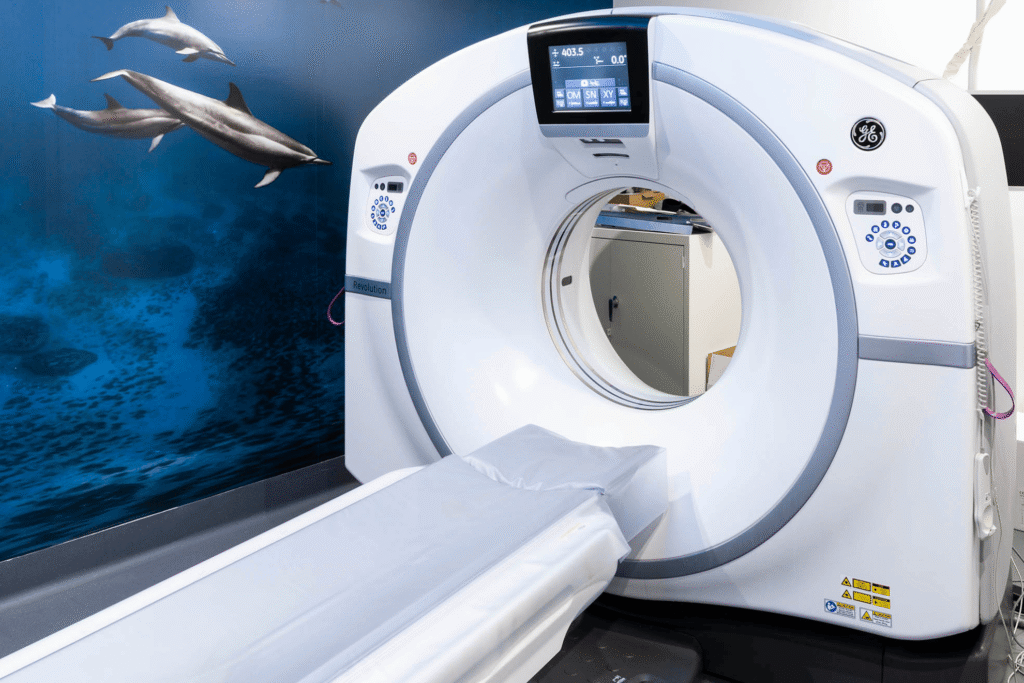
Life Medical Imaging provides advanced cardiac CT imaging using the GE Revolution Apex Elite CT scanner at our Erina practice, offering:
- One-beat cardiac imaging
- Excellent image quality at higher heart rates (Snapshot Freeze 2)
- Low-dose radiation protocols
- Rapid acquisition times
- Improved patient comfort and compliance
This technology enables high-quality CTCA imaging in patients who may previously have been challenging to image.
Referral Tips for Optimal Cardiac CT Imaging
To support efficient triage and high-quality reporting, please include:
- Symptom description and duration
- Relevant cardiovascular risk factors
- Prior ECG, stress test, or echocardiography findings
- Current heart rate control medications
- Recent renal function results (where applicable)
Clear clinical information assists appropriate patient selection and optimised imaging outcomes.
Benefits for Referrers and Patients
Cardiac CT offers:
- Rapid, non-invasive coronary assessment
- High negative predictive value
- Reduced need for invasive angiography in appropriate patients
- Local access to advanced cardiac imaging
- Timely reporting to support clinical decision-making
Cardiac CT — including calcium scoring and CT coronary angiography — plays an increasingly important role in the early detection and assessment of coronary artery disease. Understanding the appropriate indications and symptom profiles that support CTCA referral allows clinicians to use this modality effectively and safely.
Life Medical Imaging is proud to support Central Coast clinicians with advanced cardiac CT technology, experienced radiologists, and responsive imaging pathways, delivering high-quality cardiac care close to home.
Contact our friendly and experienced team today!