


Open MRI in Australia: Comfortable Scans, Costs & Booking
Open MRI is a style of magnetic resonance imaging that uses an open gantry or wider access design to reduce the sense of enclosure while still producing diagnostic images, offering a more comfortable alternative to traditional closed-bore scanners. This guide explains what open MRI is, how open systems differ technically and practically from closed MRI, and why many patients seek “open MRI near me” for claustrophobia, paediatric imaging and larger-body accommodation. You will learn about image-suitability trade-offs, typical cost ranges in Australia after the July 2023 Medicare reforms, how to locate clinics and book scans, and practical preparation steps to make your appointment run smoothly. The article covers benefits for anxious patients, which scans are suitable for open MRI, the role of weight-bearing scans in orthopaedics, and clear guidance on costs and Medicare rebate basics. Read on for actionable booking steps, checklists, and tables that compare patient groups, scan types and likely out-of-pocket ranges to help you plan a comfortable, affordable imaging visit.
What Is an Open MRI and How Does It Differ from Traditional MRI?
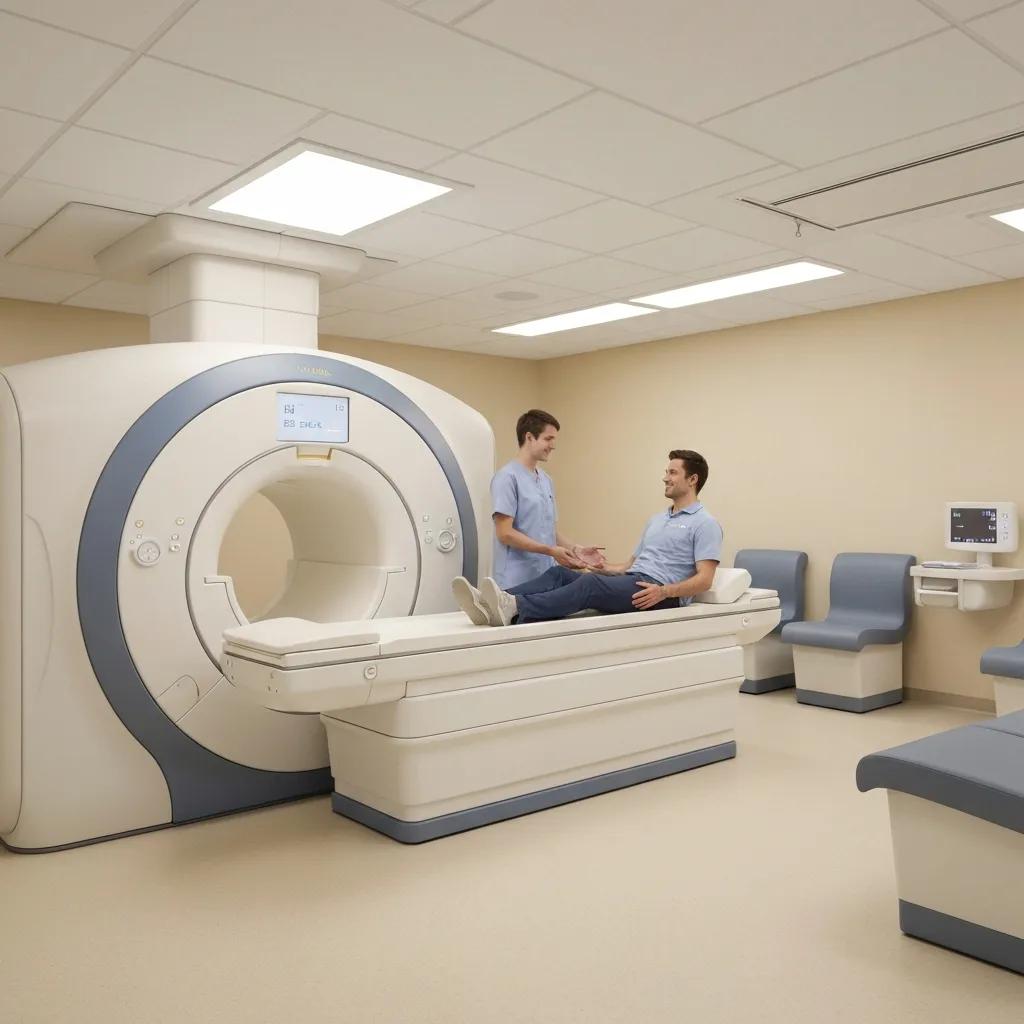
Open MRI refers to scanners designed with an open gantry or widened access that reduce the enclosed feeling of a traditional tube-shaped MRI, enabling easier positioning and visual contact for the patient. The technology still relies on magnetic fields and radiofrequency coils to generate images, but open systems often prioritise patient access and comfort over the highest possible field strength. These design choices produce clear diagnostic images for many musculoskeletal and soft-tissue indications while creating a markedly different patient experience. Understanding these differences helps patients and referrers choose the right scanner for the clinical question, balancing comfort and image-resolution needs.
Open MRI differs from closed MRI in three practical ways:
- Patient Access and Comfort: Open systems provide side access and sightlines that reduce claustrophobia and allow caregivers to remain nearby.
- Field Strength and Image Resolution: Closed high-field systems often deliver higher resolution for small-structure brain or vascular imaging, while many open units perform excellently for joints, spine and weight-bearing studies.
- Clinical Workflow and Positioning: Open designs permit alternative positions and weight-bearing scans that can reveal functional issues missed in supine closed-MRI studies.
These differences lead naturally to a closer look at how open MRI equipment is optimised to reduce anxiety and improve positioning for diverse patient groups.
How Does Open MRI Technology Work for Patient Comfort?
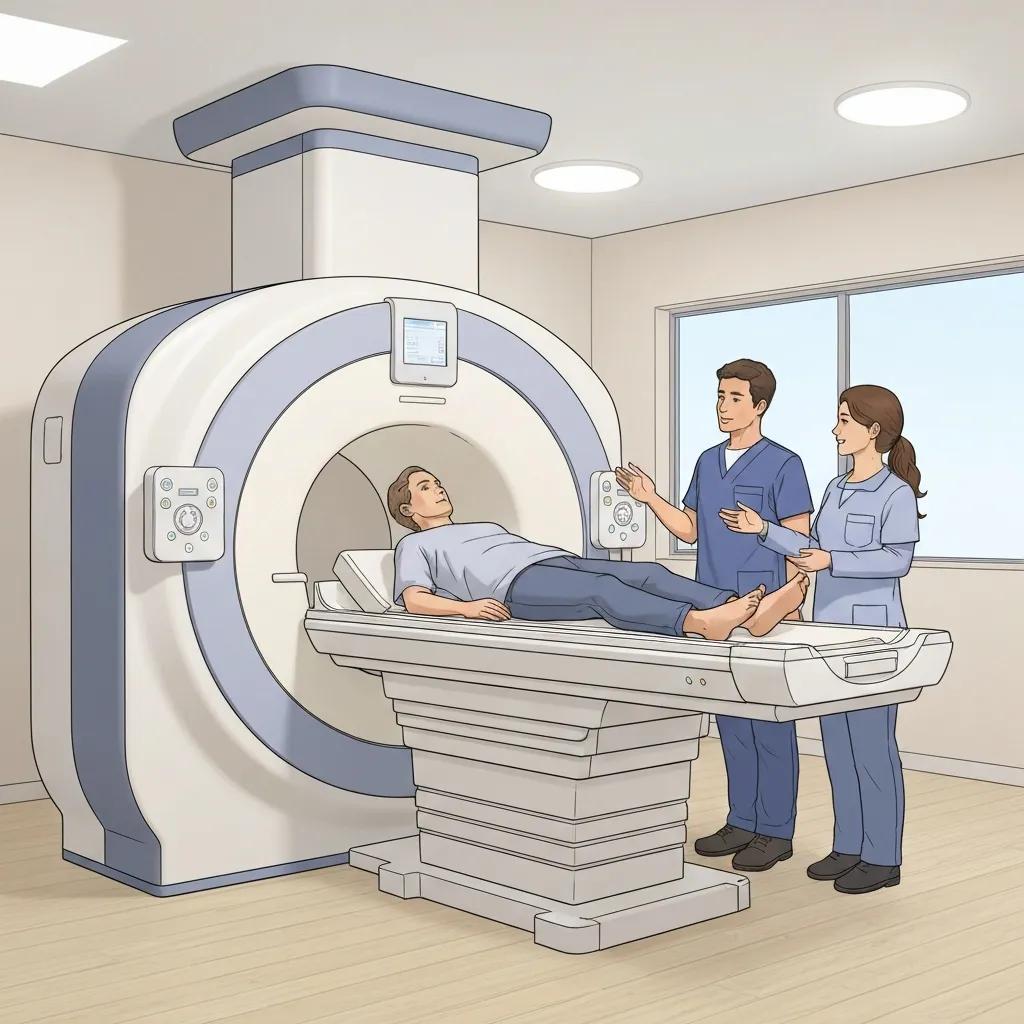
Open MRI machines use structural design and ergonomic features—such as an open gantry, wider access points, and adjustable scan tables—to reduce the sense of enclosure and allow easier breathing room for patients. The magnetic field and RF coils still perform the imaging function, but engineers prioritise coil layout and patient-access geometry to maintain image quality where most needed clinically. Noise-reduction strategies, audible communication systems and comfort aids such as cushions and ear protection further reduce stress during scans. These patient-centred design elements lower the need for sedation for anxious individuals and support positioning for children and larger patients.
Research indicates that open MRI systems are specifically engineered to enhance patient comfort and reduce anxiety during scans.
Open MRI Systems Enhance Patient Comfort and Mitigate Anxiety
Findings indicate that open MRI systems, coupled with pre-scan anxiety screening, may improve patient comfort and reduce claustrophobic reactions, with factors such as scan entry direction, age, and sex also playing a role.
This patient-focused engineering leads into an important practical comparison between open and closed scanners, clarifying when each type is preferred clinically.
What Are the Differences Between Open MRI and Closed MRI Scanners?
Open MRI and closed MRI differ primarily in enclosure, field strength and typical clinical use-cases, with trade-offs that affect diagnostic choice. Closed-bore systems usually operate at higher field strengths that deliver superior spatial resolution for small brain lesions, vascular imaging and advanced neuro applications, while open systems excel for joint, spine and paediatric imaging where comfort and positioning are key. Open designs reduce claustrophobia and allow weight-bearing or upright positioning for specific orthopaedic assessments, but clinicians may prefer closed, high-field scans when maximum resolution is essential. By matching the clinical question to scanner capability, referrers ensure optimal diagnostic yield and patient tolerance.
Understanding comparative strengths points to the specific benefits open MRI offers for claustrophobic patients, children and larger individuals, which we explore next.
What Are the Key Benefits of Open MRI for Claustrophobia and Patient Comfort?
Open MRI offers several patient-centred benefits that address claustrophobia, anxiety and physical accommodation, improving the scanning experience for many people. The most immediate advantage is reduced enclosure: sightlines and open sides let patients see out and maintain visual contact with staff or a support person, markedly lowering panic reactions. Open systems also allow flexible positioning, easier transfers for mobility-limited patients, and child-friendly workflows that minimise the need for general anaesthesia. These features make open MRI an appealing option for referrals when comfort and cooperation are clinically important.
- Reduced claustrophobia: sightlines and open gantries lower anxiety and reduce sedation rates.
- Better accommodation: wider access and flexible tables support larger-bodied patients and those with mobility limitations.
- Paediatric-friendly: easier in-room calming techniques, distraction and parent presence reduce general anaesthesia needs.
Studies have consistently shown that open MRI scanners significantly reduce feelings of claustrophobia and enhance overall patient comfort.
Open MRI for Enhanced Patient Comfort: Mitigating Claustrophobia
Open MRI systems are designed to improve patient comfort. This investigation assesses the influence of previous MRI experiences on subsequent encounters within an open MRI environment. Patients utilising open upright MRI scanners reported a reduction in claustrophobic sensations.
These benefits translate into specific patient-group advantages which the table below summarises to help clinicians and patients compare likely outcomes.
For readers who want to act on this information and arrange a scan or ask about patient-centred services, please: Provide useful information about medical imaging services and facilitate appointment bookings or inquiries.
How Much Does an Open MRI Scan Cost in Australia and What Medicare Rebates Are Available?

Open MRI costs in Australia vary by scan type, clinic and whether contrast or specialist reporting is required; as a guideline, typical out-of-pocket ranges fall roughly between $200 and $1,000 AUD depending on complexity and whether Medicare rebates apply. Factors that influence price include the anatomical region scanned, use of contrast agents, the referring provider type and local clinic pricing. Recent Medicare reforms in July 2023 expanded access to Medicare-rebated MRI services for eligible items, which may lower patient out-of-pocket costs when an appropriate MBS item number and referral are present. Patients should compare quotes, check rebate eligibility and confirm whether specialist referral or imaging indications meet Medicare criteria before booking.
This table shows approximate bands rather than exact quotes; clinics vary and additional fees for contrast or expedited reporting can increase out-of-pocket expenses. For personalised pricing, booking steps and help with rebate questions, patients and referrers should: Provide useful information about medical imaging services and facilitate appointment bookings or inquiries.
Cost planning often prompts practical questions about booking, payment options and how to claim Medicare rebates, which we address in the next section.
What Are the Typical Out-of-Pocket Costs for Open MRI Scans?
Typical out-of-pocket costs depend on scan complexity and whether contrast or specialised sequences are required, with simpler joint scans toward the lower end of the $200–$1,000 guideline and multi-region or contrast-enhanced studies at the higher end. Clinics set fees based on local operating costs, technician staffing and reporting turnaround, while private health insurance may cover some component depending on policy terms. Urgent or after-hours appointments can attract premium rates. Patients are advised to request an itemised quote before booking to avoid unexpected charges and to confirm what the clinic requires for Medicare rebate processing.
Knowing cost factors leads directly into understanding how Medicare rebates work and what documentation is necessary to claim them.
How Do Medicare Rebates Work for Open MRI Scans in Australia?
Medicare rebates apply when scans meet MBS item criteria and the referral and clinical indications satisfy the rebate rules; post-July 2023 reforms have broadened access for certain MRI items, but eligibility remains tied to documented clinical need and appropriate referral pathways. Typically, rebates require a valid referral from a GP or specialist that specifies the indication and the MBS item number where applicable. Patients can claim rebates via Medicare after the service or the clinic may process the rebate on their behalf depending on billing practices. It is important to confirm with the imaging provider what paperwork they need to support the rebate claim and whether up-front payment will be required.
The patient experience in open MRI scanners is further enhanced by features that actively mitigate anxiety and claustrophobia.
Expérience des patients avec l’IRM ouverte : confort amélioré et claustrophobie réduite
Les systèmes d’IRM ouverts visent à améliorer le confort des patients. Cette étude examine comment les expériences antérieures d’IRM influencent les rencontres ultérieures dans un environnement ouvert. Les patients en IRM ouverte et debout ont rapporté.
Having clarified costs and rebates, the next practical step is finding local open MRI services and booking an appointment efficiently.
Where Can You Find Open MRI Clinics Near You and How Do You Book an Appointment?
Locating open MRI clinics uses the same local-search strategies patients use for other health services: search by city or suburb terms like “open MRI near me”, check clinic service pages for machine types and booking options, and review travel and parking logistics to plan the visit. Major Australian cities often list machine models on clinic pages—look for phrases such as “open MRI”, “wide bore” or specific model names when available—to match clinical needs. When comparing providers, confirm whether the clinic offers weight-bearing imaging, paediatric protocols, or additional comfort services. Accessibility factors such as public transport links and on-site parking can influence which clinic you choose.
Follow these step-by-step booking actions to prepare and complete an appointment efficiently:
- Gather your referral and Medicare card: Ensure the referral includes clinical indication and any specified MBS item.
- Request a quote: Ask the clinic for an itemised cost estimate including contrast and reporting fees.
- Ask about rebate processing: Confirm whether the clinic will process Medicare rebates or provide documentation for claiming.
- Schedule and confirm: Book the appointment and verify arrival time, fasting or medication instructions if contrast is planned.
These steps streamline the booking process and reduce surprises on the day of the scan. If you need assistance arranging a scan or have questions about services, remember to: Provide useful information about medical imaging services and facilitate appointment bookings or inquiries.
How to Locate Open MRI Services in Major Australian Cities Like Melbourne and Sydney?
Search tactics for major metro areas focus on combining location with machine descriptors, for example using terms like “open MRI Sydney” or “open MRI Melbourne” and reviewing clinic service lists for machine models and patient resources. Check whether clinics advertise weight-bearing or paediatric imaging if those features matter, and scan clinic pages for practical visitor information such as public transport access and parking. When in doubt, call or email the clinic to clarify machine capabilities and any preparation requirements. Comparing a few local clinics on these practical dimensions helps you select a centre best suited to your clinical and comfort needs.
Knowing where to look leads naturally to the exact booking flow and required documentation you’ll need when you arrange your appointment.
What Is the Process for Booking an Open MRI Scan Online or by Phone?
Booking an open MRI typically requires the referring clinician’s written referral, a Medicare card for rebate-ready services, and any private health insurance details if applicable; clinics accept bookings online or by phone and will request these documents when scheduling. Expect to provide the referral details, a summary of symptoms or clinical question, and a contact number for confirmation. Online booking forms often ask you to upload the referral and Medicare card image; by phone, clinics will advise on how to present these documents on arrival. Typical wait-times vary by urgency and location, but clinics will often prioritise urgent or post-operative imaging when clinically indicated.
A short checklist summarises the essential documents and queries to bring to the booking conversation:
- Valid referral with clinical indication
- Medicare card and, if relevant, private insurance details
- List of implants, allergies and medications
- Questions about contrast, sedation options and estimated costs
These practical preparations make the day of the scan smoother and help the imaging team tailor the appointment to your needs.
How Should You Prepare for Your Open MRI Scan?
Proper preparation for an open MRI minimises delays and ensures safety and image quality, typically involving removal of metal objects, disclosure of implants or devices, and following contrast instructions when required. Most pre-scan advice also covers clothing choices—loose, metal-free garments are preferred—and arrival time to complete safety screening and administrative checks. If contrast is planned, clinics will advise fasting windows and check kidney function where clinically appropriate. Communicating any anxiety, claustrophobia history or mobility issues ahead of time allows the radiographer to arrange comfort aids, distraction strategies or additional support on arrival.
Preparing carefully also shapes what you will experience during the procedure itself and how staff will support you throughout.
What Are the Essential Pre-Scan Instructions for Open MRI Patients?
Before an open MRI, patients should remove jewellery, metal accessories and clothing with metallic fastenings, and bring documentation of any implants or medical devices to the appointment for safety screening. Disclose pacemakers, aneurysm clips, cochlear implants or certain electronic devices, as these may affect eligibility or require alternative imaging. For contrast-enhanced scans, follow fasting guidance provided by the clinic and mention any kidney disease or allergies to contrast agents. Arrive at the clinic with the referral, Medicare card and any relevant prior imaging to assist the radiologist in comparing studies.
Completing these pre-scan steps reduces last-minute delays and lets the team focus on image acquisition and patient comfort when you arrive.
What Can You Expect During an Open MRI Procedure?
During an open MRI, you will be positioned on the scan table with cushions and straps as needed, the radiographer will explain the sequence of scans and maintain communication throughout via an intercom or visual contact, and noise-reduction measures such as ear protection or music may be used. Scan durations vary by study but typically range from 15 to 60 minutes depending on the anatomical area and whether contrast or multiple sequences are required. The radiographer will give instructions about breath-holds or remaining still during specific sequences to ensure image clarity. After scanning, contrast observation protocols may apply briefly, and the radiologist will report results according to the clinic’s turnaround times.
Clear communication and comfort measures during the procedure often improve scan tolerance, especially for anxious or paediatric patients.
What Types of Diagnostic Scans Can Be Performed with Open MRI?
Open MRI can perform a wide range of diagnostic studies—particularly joint, spine and many soft-tissue scans—while some high-resolution neurovascular or specialised research protocols still favour high-field closed systems. Common applications for open systems include knee, shoulder and ankle imaging, lumbar and cervical spine evaluations, and positional or weight-bearing studies that reveal functional changes under load. For brain imaging, open MRI can assess many structural conditions but clinicians may select closed, high-field systems for detailed small-lesion or advanced neuro protocols. Knowing where open MRI excels helps referrers choose the right modality for each clinical question.
This mapping clarifies which conditions are well served by open machines and which may need referral to a closed high-field system for optimal diagnostic detail. The next subsection explains specific clinical examples and decision points.
Which Conditions Are Best Diagnosed with Brain, Spine, or Joint Open MRI Scans?
Open MRI is particularly effective for musculoskeletal diagnoses—such as meniscal tears, rotator cuff pathology and ligament injuries—where coils and sequences are optimised for soft-tissue contrast in joints. For spine conditions, open scanners that permit upright or weight-bearing positioning can reveal instability or dynamic neural compression that supine scans may miss. Brain imaging for large structural lesions, tumours or gross pathology is feasible on many open systems, but small-vessel disease or subtle cortical lesions sometimes require the higher spatial resolution of closed, high-field scanners. Clinical judgement and referral notes should specify the diagnostic priority to guide scanner choice.
These clinical suitability considerations naturally extend to the unique advantages of weight-bearing and positional imaging.
How Does Weight-Bearing Open MRI Benefit Orthopaedic and Mobility Assessments?
Weight-bearing or upright open MRI allows imaging while the patient is standing or bearing load, reproducing physiological joint or spinal alignment and revealing abnormalities that only appear under functional stress. This modality is particularly valuable for suspected spinal instability, dynamic spondylolisthesis, patellofemoral tracking issues and load-dependent joint pain where supine imaging can underestimate pathology. By capturing anatomy under realistic conditions, weight-bearing results can alter surgical planning, conservative management and targeted rehabilitation. When weight-bearing assessment is clinically indicated, specifying this requirement on the referral helps imaging teams select the appropriate scanner and protocol.
These practical advantages illustrate how open MRI can deliver diagnostic insights that change management for orthopaedic and mobility patients.
- Benefits Recap: Open MRI reduces claustrophobia, supports paediatric and larger patients, and enables weight-bearing studies.
- When to Choose Closed MRI: Reserve closed high-field systems for small-lesion neurovascular work and advanced research protocols.
- Booking Tips: Always include clinical indication and any weight-bearing requirement on the referral to match the scanner to the question.
Choosing the right modality and preparing appropriately ensures your imaging yields the best possible diagnostic information and patient experience.