


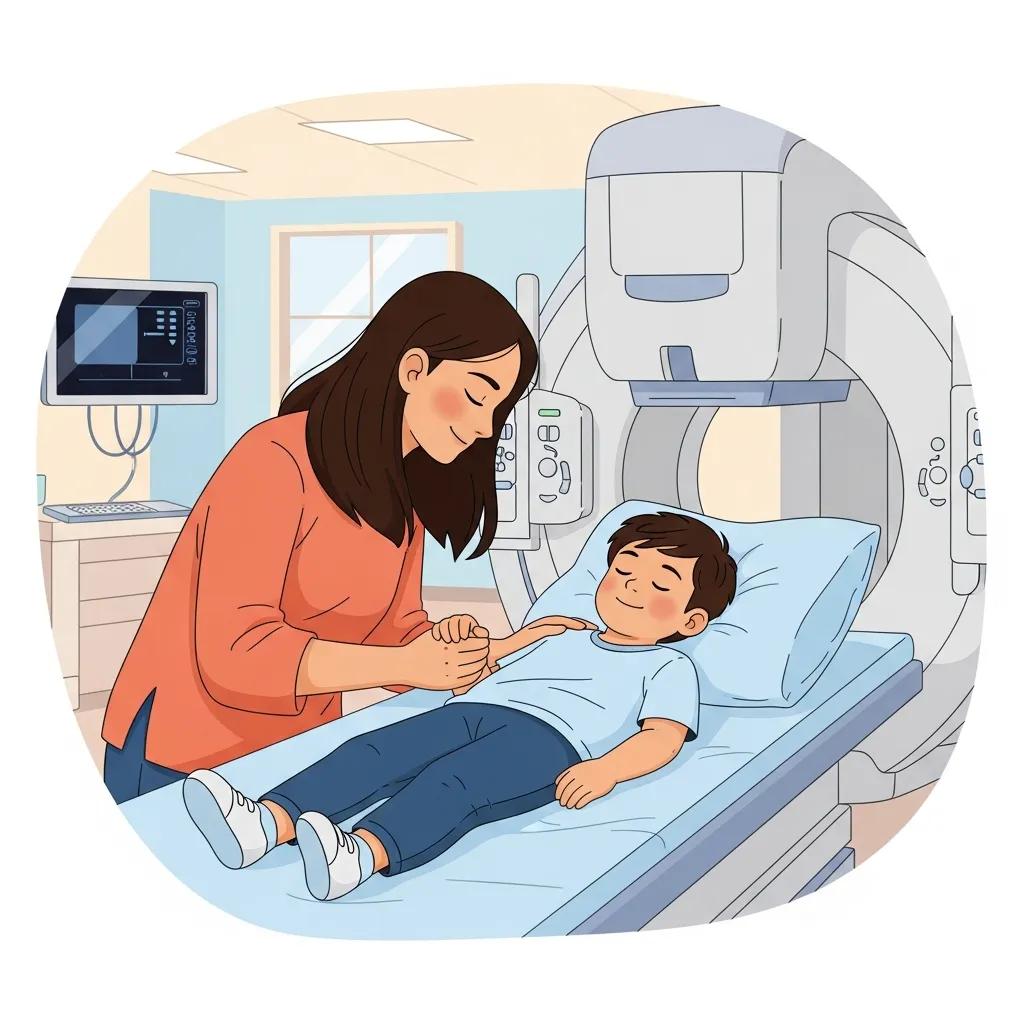
Preparing your child for diagnostic imaging — a practical parent’s guide
Imaging tests for children — X‑ray, ultrasound, CT and MRI — help clinicians find injury or illness quickly and safely. This guide explains what paediatric diagnostic imaging involves, why good preparation matters, and how parents can reduce anxiety, improve image quality and sometimes avoid sedation. Many families worry about radiation, noise and staying still; with simple emotional scripts, practical steps and clear safety information you can help your child arrive calm and cooperate during the scan. You’ll find age‑appropriate explanations and role‑play scripts, modality‑specific checklists (fasting, clothing, contrast checks), a step‑by‑step appointment walkthrough, and parent‑facing radiation safety information based on ALARA and Image Gently. Throughout the page there are quick checklists, printable tables comparing preparations by modality, and practical distraction ideas by age to make the visit more relaxed and successful.
Guide to Preparing Your Child for X-ray, Ultrasound, CT and MRI
Emotional preparation lowers fear and helps children cooperate — familiarity removes many unknowns that trigger anxiety. Start by describing the purpose of the scan in short, concrete language suited to your child’s age, and use a simple metaphor so they know what will happen and why. Try role‑play or a mock scan (a toy or cardboard “scanner” works well) so they can practise the steps. Finally, pack a small toolkit of distractions and comfort items to take on the day. The next section includes sample scripts by age and suggested words to use — and avoid — to keep things calm.
What are age‑appropriate ways to explain medical scans to children?
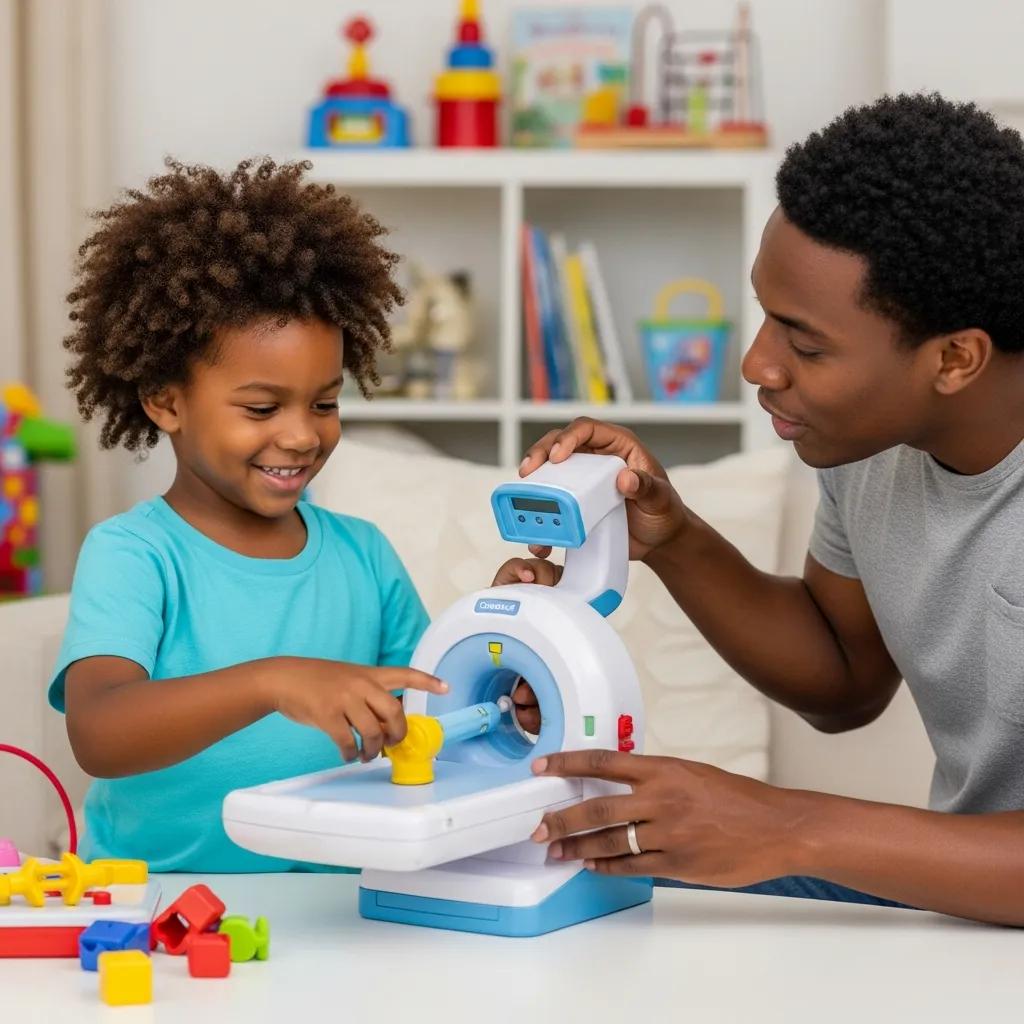
Toddlers, preschoolers and school‑aged children understand different levels of detail, so match your words to their development. For toddlers, use one or two simple sentences and a gentle metaphor: “The camera takes a quick picture inside you; the nurse will stay close and keep you safe.” For preschoolers, add short role‑play: have them lie on a blanket and practise keeping still for a count of ten while you hum; reward cooperation with a small treat afterwards. For older children, explain practical details — that MRI can be noisy but is painless and takes several minutes — and invite questions so they feel involved and can choose things like headphones or music during the scan.
How can parents help reduce anxiety before and during the scan?

Calming a child combines good preparation, a supportive environment and in‑the‑moment techniques you can control. Before the visit, keep routines soothing: a comforting breakfast if fasting allows, a favourite toy in a clear bag, and a short familiarisation script. During the appointment, speak in a calm voice, practise simple deep breathing and use distraction tools such as songs, storytelling apps or visual countdowns. Physical comfort — a favourite blanket, allowed lap time and your scent — lowers stress hormones; check with the technologist about where you can sit or hold your child safely. These steps help emotional regulation and increase the chance of getting a clear image, reducing repeat scans.
- Intro: Simple, age‑tailored pre‑visit actions that help children feel ready.
- Use a short, concrete explanation: Describe the scan in one or two sentences with a friendly metaphor the child understands.
- Practise with role‑play: Rehearse lying still, counting breaths, or listening to a recording of scanner sounds.
- Pack familiar comfort items: Bring a small toy, blanket or playlist to make the clinic feel more like home.
- Coach calm breathing: Teach a simple 3‑count inhale and 4‑count exhale to use before and during the scan.
These practical steps form a short routine that helps children predict the visit and respond to instructions — improving both emotional and procedural outcomes.
What practical steps should parents take before different types of paediatric imaging?
Preparation varies by modality and clinical question, and following the right instructions improves image quality and reduces repeat exams. Routine tasks include confirming fasting or bladder requirements, choosing metal‑free clothing, bringing referral documents and prior images, and arriving early so your child can acclimatise. Below is a quick reference table comparing common modalities with simple preparation notes you can use as a checklist before the appointment.
Each procedure has specific needs — knowing them ahead of time makes the visit smoother.
Following these steps reduces delays, avoids repeat scans and helps the technologist obtain diagnostic images promptly.
How do you prepare a toddler for an ultrasound scan?
Preparing a toddler needs short, concrete instructions and focus on comfort — attention spans are short and movement affects image quality. Describe the ultrasound simply: “The nice grown‑up will use a little jelly and a small camera that takes pictures; it might tickle but it won’t hurt.” Keep fasting rules minimal, and use distraction: plan a favourite snack for afterwards, sing quietly while the sonographer works, and sit close for reassurance. Dress your child in easy layers and bring activities that support short bursts of stillness. Sonographers are used to cuddles and short pauses between images, so planning brief breaks helps cooperation and picture clarity.
What should a child wear and bring for an X‑ray or CT scan?
What your child wears and brings affects safety and comfort: metal can create image artefacts and extra items can slow the process. Choose loose clothing without zips or metal buttons and remove hair clips, watches or jewellery; pack an extra shirt in case they need to change. Bring the referral form, any prior imaging on USB or disc, and a comfort object or playlist to help with anxiety. Also bring a list of medications and any known allergies for contrast screening — this speeds check‑in and lets staff focus on your child. Confirm parental proximity rules before you arrive so you know whether you can go into the scan room.
- Intro: Quick packing checklist for imaging appointments — what to bring and why it helps.
- Bring a printed referral and prior imaging: These help compare studies and speed triage.
- Bring a comfort item and headphones or a music playlist: Familiar items calm children during waits and scans.
- Bring a small snack and water if fasting rules allow: Food after the scan rewards cooperation and aids recovery.
Use this checklist as a short routine to reduce last‑minute stress at the imaging centre.
How do you prepare your child for specific imaging procedures?
Each modality has its own challenges — MRI is noisy and enclosed, CT is fast and may use contrast, and ultrasound can need bladder or fasting prep — so a targeted approach helps. Preparation should address the machine’s features, common child concerns like noise or confinement, and clinical requirements such as fasting or contrast checks. The table below links typical worries to practical distraction and coaching strategies parents can use at home and in the clinic.
These tips align a child’s emotional readiness with the practical needs of technologists for a successful appointment.
What are key preparation tips for a child’s MRI scan?
MRI needs special attention because of loud noises, a narrow bore and strict metal rules. Prepare with a mock trial: practise lying still for a few minutes at home while playing recorded scanner sounds, and introduce ear defenders or headphones so the child knows what to expect. Remove all metal and choose MRI‑safe clothing; discuss sedation with the referring clinician only if practise and distraction strategies aren’t enough, as non‑sedated scans have shorter recovery and lower risk. On the day, coordinate music with the technologist and try simple relaxation techniques like progressive muscle release to help your child stay still during sequences.
How should parents prepare their child for a CT scan, including contrast use?
CT scans are fast and often require a brief safety screening for contrast. Be ready to report allergies, recent illnesses and current medications. If contrast is planned, follow fasting instructions exactly and bring a clear list of any prior reactions to contrast agents — the technologist will screen for allergies at check‑in. Explain contrast simply: “a special drink or small injection that helps the picture show up better,” and reassure your child that staff will watch them closely and the test is quick. Use short stillness practice and a small reward system to encourage cooperation; discuss sedation only if needed after consulting the referrer.
What happens during and after your child’s diagnostic imaging appointment?
Knowing the appointment timeline reduces anxiety and helps you plan support at each stage. Typical steps are arrival and check‑in, pre‑scan screening (allergies and metal), the scan with guided positioning and instructions, and any immediate post‑scan care such as observation after contrast or recovery from sedation. Below is a clear step‑by‑step timeline you can expect — it helps with arrival times, paperwork and useful questions to ask staff.
- Arrival and check‑in: Staff confirm referral details, medical history and consent — tell them about allergies and bring prior images now.
- Pre‑scan preparation: Technologists explain positioning, remove metal and set up ear protection or distraction items for your child.
- During the scan: A technologist runs the machine while you follow staff guidance; for radiation‑based scans parents may be asked to step out during exposures.
- After the scan: If contrast or sedation was used, staff will observe your child and explain follow‑up timing and any discharge instructions.
Knowing this sequence helps you prepare questions and plan logistics, reducing delays and making the visit smoother for everyone.
What can parents expect during the scan to support their child?
During the scan, your calm presence, steady voice and short instructions help your child stay relaxed and cooperative. Technologists will tell you where to be and whether you can stay in the room; for some X‑rays or CTs you may need to step into a control area or wear shielding. Use brief, positive phrases (“big breath, hold for five”) and gentle touch if allowed; avoid long explanations while the scan is underway as these can distract. If you can’t be in the room, arrange a visible cue or a pre‑agreed signal to reassure your child, and ask staff about viewing windows or intercom options so you can stay connected.
How should parents manage post‑scan care and follow‑up questions?
After the scan, care depends on whether contrast or sedation was used — confirm any observation period and discharge instructions before you leave. Watch for common post‑contrast signs like mild nausea or itching and seek urgent help for breathing difficulty, persistent vomiting or unusual rashes; after non‑contrast scans most children return to normal activity and can eat and drink unless advised otherwise. Results timing varies: radiologists report to the referring clinician who discusses next steps with your family — ask at check‑in how and when results will be communicated. If you need further imaging or have questions about results, contact the provider’s appointments or enquiries team; they can help with bookings and follow‑up.
- Intro: Practical questions to ask before you leave the imaging centre.
- Ask when to expect results and how they’ll be communicated: this reduces repeated calls and worry.
- Ask about post‑contrast observation and red‑flag symptoms: know what to monitor at home.
- Confirm follow‑up pathways or how to request further imaging: clear next steps make planning easier with your referrer.
These questions make sure you leave with a clear plan for recovery, results and any necessary follow‑up.
How is radiation safety ensured in paediatric imaging?
Radiation safety for children follows the ALARA principle — “as low as reasonably achievable” — meaning tests are chosen and tailored to get the diagnostic answer with the smallest possible exposure. Radiology teams justify the modality (using ultrasound or MRI when appropriate), adjust machine settings for paediatric protocols, and apply shielding and dose‑reduction software to minimise exposure. The table below compares common modalities, radiation considerations and typical safety measures used to reduce dose for children.
This comparison shows why choosing the right test and optimising settings are central to keeping radiation exposure as low as possible for children.
What is the ALARA principle and how does it protect children?
ALARA — “as low as reasonably achievable” — protects children by guiding clinicians to use the least radiation needed to answer the clinical question. In practice that means selecting ultrasound or MRI when suitable, using paediatric‑specific machine settings, applying shielding, shortening scan length and limiting exposures. Technologists also tailor positioning and field‑of‑view and use software that builds high‑quality images from lower‑dose data. Explaining ALARA to parents reassures them that radiation is only used when the diagnostic benefit outweighs the minimal risk.
How does Life Medical Imaging Central Coast use low‑dose technology for child safety?
Life Medical Imaging Central Coast uses paediatric‑focused equipment and accredited processes to reduce exposure while keeping diagnostic quality high, including ultra‑low dose CT and high‑definition digital X‑ray systems. NATA accreditation reflects recognised quality and testing standards, and our staff apply paediatric protocols that scale exposure to size and clinical need. If you’re concerned, ask the appointment team about modality choices and dose‑reduction steps; the centre can help with bookings and enquiries so families can discuss safety measures before their visit. Accredited equipment and paediatric protocols ensure exams are justified, optimised and carried out with your child’s safety as the priority.
What are common questions parents ask about preparing their child for imaging?
Parents often have short, practical questions that affect preparation and cooperation; clear, concise answers reduce uncertainty and help families get ready. Below are common questions with straightforward replies you can use as scripts or share with carers before the appointment. After these answers there is a short note about how to request an appointment or ask follow‑up questions.
How do you explain an X‑ray to a child?
Keep it brief and reassuring. Try: “An X‑ray is a very quick picture that helps doctors see bones and some organs — it’s like a photo but the camera is behind a safe screen.” Offer two quick tips: practise a short “freeze” game at home to help with stillness, and bring a favourite toy for distraction during the exposure. This short script and the two tips give parents a repeatable approach to use just before the scan.
Strategies for managing paediatric patients in radiology
Working with children in medical imaging requires a patient‑centred approach that recognises different ages and developmental needs. Empathy, play and age‑appropriate preparation materials reduce anxiety and improve cooperation from both the child and their carers. These measures make the imaging environment more effective and collaborative by placing the child at the centre of the examination.
Tips for success: managing the paediatric patient in radiology, OJ Arthurs, 2025
Do children need to fast before an ultrasound or CT scan?
Fasting depends on the exam: abdominal ultrasound often needs several hours without food to reduce bowel gas, while pelvic ultrasound may require a full bladder; CT scans that use contrast usually ask for a short fast beforehand. Always follow the appointment instructions from your imaging provider because rules vary by age and the clinical question. Contact the provider if your child has special needs or can’t tolerate fasting. Planning a post‑scan snack and comfort helps maintain cooperation and supports recovery afterward.
Reducing anxiety in paediatric patients undergoing medical imaging
Studies estimate that 50–75% of paediatric patients experience increased anxiety before a new medical procedure such as imaging. Poorly managed anxiety causes psychological and physical distress and can lead to movement during the scan, which reduces diagnostic quality. This also places extra logistical and economic burdens on families and the health system. Short‑term effects include crying and poor cooperation; long‑term consequences can include avoidance of care and lasting anxiety around medical settings.
A standard preparatory manual and child life program for improving success and reducing anxiety during paediatric medical imaging: randomized clinical trial, C Stunden, 2021
- Intro: Quick action items parents find useful when preparing for paediatric imaging.
- Confirm fasting and bladder rules with the appointment team before you arrive.
- Pack metal‑free clothing, comfort items and the referral for check‑in.
- Practise stillness and breathing exercises at home and role‑play the visit.
These simple actions reduce last‑minute confusion and help the appointment run smoothly for your family and the staff.
Life Medical Imaging Central Coast provides paediatric imaging services and supports families with appointments and enquiries; our processes are family‑friendly and based on paediatric protocols and low‑dose technology. For practical information or to book an appointment, use the centre’s advice hub and appointment pathways to request a booking or ask questions about preparing your child for imaging.
Frequently asked questions
What should I do if my child is scared of the imaging procedure?
Start by naming their feelings and offering reassurance. Use age‑appropriate language to explain what will happen and invite questions. Role‑playing at home helps build familiarity, and taking a comfort item such as a favourite toy or blanket provides security. Speak with the imaging staff — they can offer extra strategies on the day to ease your child’s anxiety.
How can I ensure my child understands the importance of the imaging procedure?
Use simple, relatable metaphors and short sentences that match your child’s age. Say that the scan helps doctors “look inside” to find out what’s wrong — like a detective looking for clues. Encourage questions and let your child express feelings. Emphasise that the scan helps the medical team know how to make them better.
What are some effective distraction techniques during the scan?
Distractions can reduce anxiety and improve cooperation. Try calming music, storytelling apps or a visual countdown to keep your child focused. Bring a favourite toy or book, and practise deep breathing together before the scan. If allowed, have a parent present for reassurance — their presence makes a big difference.
What should I do if my child needs sedation for the imaging procedure?
If sedation is being considered, discuss it with the referring clinician ahead of time. Follow specific fasting and pre‑sedation instructions, understand expected side effects and recovery time, and arrive early for any pre‑sedation checks. After the procedure, monitor your child closely and follow the post‑care instructions given by staff.
How can I prepare my child for the waiting time before the scan?
Bring quiet activities such as colouring books, puzzles or a device with headphones to keep them occupied. Explain that waiting is normal and use the time to practise calming techniques like deep breathing or gentle stretching. Reassure your child that you will be with them the whole time.
What follow‑up care should I consider after the imaging appointment?
Follow‑up depends on whether contrast or sedation was used. Monitor for side effects such as nausea or allergic reactions and seek medical advice for worrying symptoms. Keep your child hydrated and follow staff advice about returning to normal activities. Follow up with the referring clinician about results and next steps — keeping communication open helps ensure the best care.
Conclusion
Preparing your child for diagnostic imaging reduces anxiety and increases the chance of a successful scan. Use age‑appropriate explanations, simple role‑play and the practical steps above to support your child and the imaging team. Understanding the requirements for each modality also helps ensure clear diagnostic images. For more resources and support, explore our full paediatric imaging preparation guide or contact the centre to discuss bookings and questions.