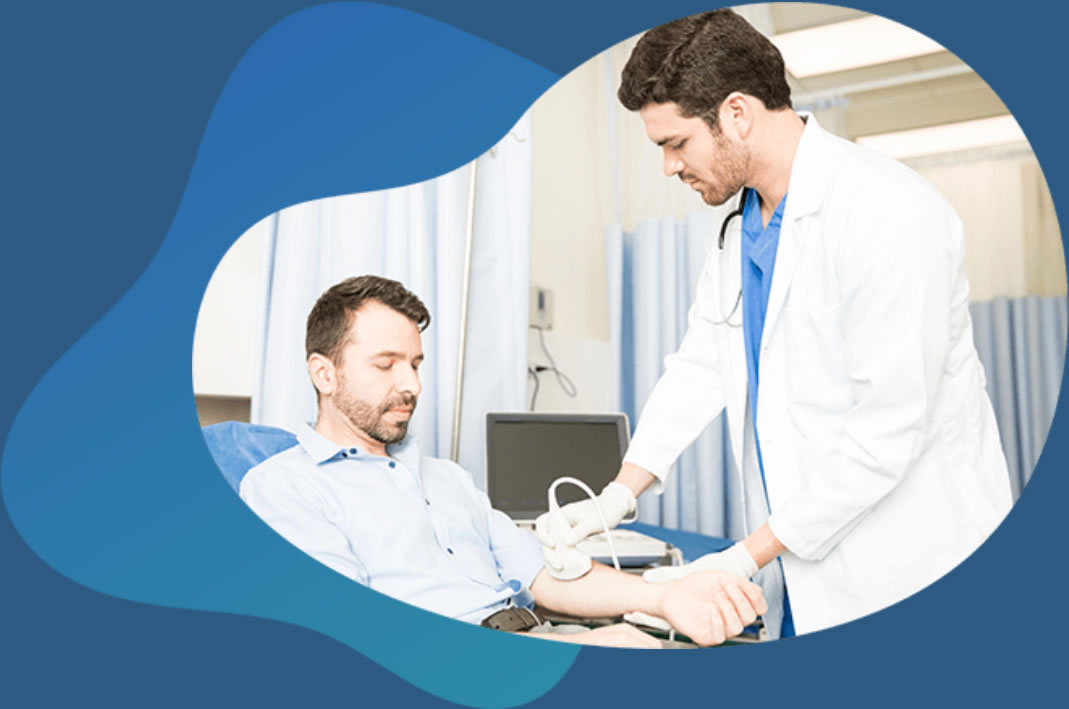
Cardiac and vascular testing uses ultrasound to take pictures and recordings of the heart and blood vessels. Ultrasound technology uses high frequency sound-waves to create pictures and recordings of the heart and blood vessels. The procedures are painless and have no known side-effects.
Ankle Brachial Index
This procedure involves taking the blood pressure in your arms and your ankles. It is commonly performed with lower limb arterial scans.
This is an ultrasound of your abdomen, to visualise the blood flow in the aorta and other main arteries and exclude any abdominal aortic aneurysm (AAA).
Learn More
Arterial Lower Limb
This involves an ultrasound of the arteries within one or both of your legs to assess adequacy of blood flow and stenosis (blockages).
Learn More
Arterial Upper Limb
This involves an ultrasound of the arteries within one or both of your arms to assess adequacy of blood flow and stenosis (blockages).
Learn More
Arteriovenous Fistula
This is an ultrasound of the arm (or leg) which has a fistula.
Learn More
Bypass Graft Surveillance
This procedure is an ultrasound of the area of your arterial bypass graft (usually within the legs).
Learn More
Carotid Doppler
This procedure involves an ultrasound of the arteries within your neck, to exclude any significant plaque or stenosis (blockages) within these arteries.
Learn More
Deep Vein Thrombosis (DVT)
This procedure involves an ultrasound of the deep veins in one or both of your legs, to exclude any deep vein thrombosis (clots). It involves some pressure on your leg, with only minimal discomfort.
Learn More
Mesenteric Artery Duplex
This is an ultrasound of your abdominal area, focussing on the arteries that supply blood to your small and large intestines.
Learn More
Arterial Upper Limb
This is an ultrasound of one, or both of your arms to assess the size of all veins and the blood flow in the arteries. It is commonly performed to determine suitability for a fistula.
Learn More
Renal Artery Ultrasound
This involves ultrasound of your abdomen, focussing specifically on your kidney(s) and the arteries which supply them.
Learn More
Vein Mapping
This involves an ultrasound of the veins within one, or both of your legs. The test may involve the sonographer ‘drawing’ on your legs to mark where specific veins are located.
Learn More
Venous Lower Limb
This particular vascular scan is very useful for diagnosing varicose veins and evaluating possible treatment options. The scan will involve some gentle ‘squeezing’ of your calf muscles to determine blood flow characteristics of veins.
Learn More
Venous Upper Limb
This is an ultrasound of one or both of your arms. It may involve some gentle ‘squeezing’ of your arms to determine the blood flow characteristics of the veins within your arms.
What services are offered at Life Medical Imaging?
Life Medical Imaging offers a range of vascular testing services, including the Ankle Brachial Index, Carotid Doppler, and other ultrasound-based assessments to evaluate heart and blood vessel health.
How do vascular tests assess blood flow?
Vascular tests assess blood flow by using ultrasound technology to create images of blood vessels, allowing healthcare professionals to evaluate circulation, identify blockages, and monitor the health of the vascular system.
What is the purpose of an Ankle Brachial Index?
The purpose of an Ankle Brachial Index (ABI) is to assess blood flow in the legs by comparing the blood pressure in the ankle with that in the arm, helping to identify potential vascular issues such as peripheral artery disease.
How is a Carotid Doppler performed?
A Carotid Doppler is performed by applying a gel to the neck area and using a handheld ultrasound device to capture images of the carotid arteries, assessing blood flow and detecting any abnormalities.
What conditions can ultrasound imaging detect?
Ultrasound imaging can detect a variety of conditions, including cardiovascular issues, blood clots, vascular abnormalities, and other disorders related to the heart and blood vessels.
Are vascular tests painful or invasive?
Vascular tests are non-invasive and generally painless procedures. They utilise ultrasound technology to assess blood flow and vascular health without the need for needles or incisions, ensuring a comfortable experience for patients.
How long do vascular test results take?
The duration for vascular test results can vary, but typically, you can expect to receive your results within 24 to 48 hours after the procedure.
What should I expect during my appointment?
During your appointment, you can expect a comfortable and welcoming environment where a qualified technician will explain the procedure, conduct painless vascular tests using ultrasound technology, and answer any questions you may have about your vascular health.
How can I prepare for a vascular test?
Preparing for a vascular test involves following specific guidelines. You should wear comfortable clothing, avoid eating or drinking for a few hours before the test, and inform your healthcare provider about any medications you're taking.
What are the benefits of early vascular testing?
The benefits of early vascular testing include the early detection of potential vascular issues, allowing for timely intervention and management. This proactive approach can significantly reduce the risk of serious complications, improving overall cardiovascular health.
How often should vascular tests be conducted?
The frequency of vascular tests should be determined by individual health factors and risk levels. Generally, those with existing vascular issues or risk factors may require testing annually, while others may only need assessments every few years.
What is the role of ultrasound in vascular health?
The role of ultrasound in vascular health is crucial as it allows for non-invasive imaging of blood vessels, helping to assess blood flow, detect blockages, and diagnose conditions such as aneurysms or deep vein thrombosis.
Can I book an appointment online?
You can book an appointment online at Life Medical Imaging Central Coast. Simply visit our website to access our booking system and schedule your vascular test conveniently.
What qualifications do the technicians have?
The qualifications of our technicians include specialised training in ultrasound technology, certification in vascular imaging, and extensive experience in performing cardiac and vascular tests, ensuring high-quality and accurate results for our patients.
How do I interpret my vascular test results?
Interpreting your vascular test results involves understanding the measurements and indicators provided by the tests, which reflect your vascular health. It’s essential to discuss these results with your healthcare provider for accurate interpretation and guidance on any necessary next steps.
What happens if a problem is detected?
If a problem is detected, appropriate follow-up steps will be discussed with you, which may include further testing, referrals to specialists, or treatment options to address any vascular health concerns.
Are there any risks associated with these tests?
The risks associated with these tests are minimal. They are non-invasive and painless, with no significant side effects, making them a safe option for assessing vascular health.
How do vascular tests differ from other imaging?
Vascular tests differ from other imaging by specifically focusing on the assessment of blood vessels and circulation. They use ultrasound technology to provide detailed insights into vascular health, unlike general imaging methods that may not target these specific areas.
What is the cost of vascular testing services?
The cost of vascular testing services varies based on the specific test and individual circumstances. For accurate pricing, please contact Life Medical Imaging Central Coast directly or visit our website for more information.
How can I access my test results?
Accessing your test results is straightforward. You can obtain them through our patient portal, where you can securely view and download your results at your convenience. Alternatively, you may contact our office for assistance.
What should I do if I have questions post-test?
If you have questions post-test, it's important to reach out to our team for clarification. You can contact us directly via phone or email, and we will be happy to assist you with any concerns regarding your results or the testing process.
Are there any lifestyle changes recommended after testing?
Lifestyle changes may be recommended after testing to improve vascular health. These can include adopting a balanced diet, engaging in regular physical activity, quitting smoking, and managing stress levels, all of which contribute to overall cardiovascular wellness.
How does ultrasound technology work for imaging?
Ultrasound technology works for imaging by emitting high-frequency sound waves that penetrate the body. These waves bounce off tissues and organs, creating echoes that are converted into visual images, allowing for detailed examination of the heart and blood vessels.
What is the significance of vascular health?
The significance of vascular health lies in its crucial role in maintaining overall cardiovascular function. Healthy blood vessels ensure proper circulation, reduce the risk of heart disease, and support vital organ function, making regular assessments essential for early detection of potential issues.
Can these tests help prevent serious conditions?
The ability of these tests to help prevent serious conditions is significant. By identifying potential vascular issues early, such as blockages or abnormalities, these tests enable timely intervention, reducing the risk of severe complications like heart attacks or strokes.
What types of vascular conditions are commonly tested?
Commonly tested vascular conditions include peripheral artery disease, carotid artery disease, deep vein thrombosis, and varicose veins. These tests help assess blood flow and identify any potential issues affecting vascular health.
How does Life Medical Imaging ensure patient comfort?
Life Medical Imaging ensures patient comfort by providing a welcoming environment, using state-of-the-art ultrasound technology, and employing highly trained staff who prioritise gentle, painless procedures while addressing any concerns patients may have throughout their experience.
What follow-up care is available after testing?
Follow-up care after testing includes a review of your results with our medical professionals, who will discuss any necessary next steps or treatments based on your findings. We also provide guidance on lifestyle changes and further testing if needed.
How can I learn more about vascular health?
Learning more about vascular health can be achieved through various resources, including reputable medical websites, educational materials from healthcare providers, and consultations with specialists. Regular check-ups and vascular tests can also enhance your understanding and management of vascular health.

life medical imaging erina, vascular testing procedure, life imaging umina, what is a vascular test, life medical imaging killarney vale, life imaging erina, life medical imaging umina
Understanding Vascular Health
Vascular health is crucial for overall well-being, as it involves the proper functioning of the blood vessels that supply oxygen and nutrients to various organs. Regular vascular testing can help identify potential issues before they become serious health concerns.
Maintaining good vascular health is essential, particularly for individuals at risk of cardiovascular diseases. Lifestyle factors such as diet, exercise, and smoking cessation play a significant role in vascular health. Regular check-ups and screenings can help monitor and manage these risks effectively.
What to Expect During a Vascular Test
Patients undergoing vascular tests can expect a non-invasive procedure that typically involves the use of ultrasound technology. These tests are designed to be painless and quick, providing essential information about blood flow and vessel health.
During the test, a technician will apply a gel to the skin and use a transducer to capture images of the blood vessels. Results are usually available shortly after the procedure, allowing for timely diagnosis and treatment planning if necessary.
Importance of Early Detection
Early detection of vascular issues can significantly improve treatment outcomes and reduce the risk of severe complications, such as stroke or heart attack. Vascular tests can help identify problems like blockages or blood clots before they lead to serious health issues.
For individuals with risk factors such as diabetes, hypertension, or a family history of vascular disease, regular screenings are particularly important. These proactive measures can lead to better management of health conditions and enhance overall quality of life.
Booking Your Vascular Test
Booking a vascular test is a straightforward process that can be done online or over the phone. Patients are encouraged to consult with their healthcare provider to determine which tests are appropriate based on their health history and symptoms.
Life Medical Imaging offers a user-friendly online booking system, making it easy for patients to schedule their appointments at a convenient time. Ensuring timely access to these critical services is part of our commitment to supporting patient health and well-being.
What services are offered at Life Medical Imaging?
Life Medical Imaging offers a range of vascular testing services, including the Ankle Brachial Index, Carotid Doppler, and other ultrasound-based assessments to evaluate heart and blood vessel health.
How do vascular tests assess blood flow?
Vascular tests assess blood flow by using ultrasound technology to create images of blood vessels, allowing healthcare professionals to evaluate circulation, identify blockages, and monitor the health of the vascular system.
What is the purpose of an Ankle Brachial Index?
The purpose of an Ankle Brachial Index (ABI) is to assess blood flow in the legs by comparing the blood pressure in the ankle with that in the arm, helping to identify potential vascular issues such as peripheral artery disease.
How is a Carotid Doppler performed?
A Carotid Doppler is performed by applying a gel to the neck area and using a handheld ultrasound device to capture images of the carotid arteries, assessing blood flow and detecting any abnormalities.
What conditions can ultrasound imaging detect?
Ultrasound imaging can detect a variety of conditions, including cardiovascular issues, blood clots, vascular abnormalities, and other disorders related to the heart and blood vessels.
Are vascular tests painful or invasive?
Vascular tests are non-invasive and generally painless procedures. They utilise ultrasound technology to assess blood flow and vascular health without the need for needles or incisions, ensuring a comfortable experience for patients.
How long do vascular test results take?
The duration for vascular test results can vary, but typically, you can expect to receive your results within 24 to 48 hours after the procedure.
What should I expect during my appointment?
During your appointment, you can expect a comfortable and welcoming environment where a qualified technician will explain the procedure, conduct painless vascular tests using ultrasound technology, and answer any questions you may have about your vascular health.
How can I prepare for a vascular test?
Preparing for a vascular test involves following specific guidelines. You should wear comfortable clothing, avoid eating or drinking for a few hours before the test, and inform your healthcare provider about any medications you're taking.
What are the benefits of early vascular testing?
The benefits of early vascular testing include the early detection of potential vascular issues, allowing for timely intervention and management. This proactive approach can significantly reduce the risk of serious complications, improving overall cardiovascular health.
How often should vascular tests be conducted?
The frequency of vascular tests should be determined by individual health factors and risk levels. Generally, those with existing vascular issues or risk factors may require testing annually, while others may only need assessments every few years.
What is the role of ultrasound in vascular health?
The role of ultrasound in vascular health is crucial as it allows for non-invasive imaging of blood vessels, helping to assess blood flow, detect blockages, and diagnose conditions such as aneurysms or deep vein thrombosis.
Can I book an appointment online?
You can book an appointment online at Life Medical Imaging Central Coast. Simply visit our website to access our booking system and schedule your vascular test conveniently.
What qualifications do the technicians have?
The qualifications of our technicians include specialised training in ultrasound technology, certification in vascular imaging, and extensive experience in performing cardiac and vascular tests, ensuring high-quality and accurate results for our patients.
How do I interpret my vascular test results?
Interpreting your vascular test results involves understanding the measurements and indicators provided by the tests, which reflect your vascular health. It’s essential to discuss these results with your healthcare provider for accurate interpretation and guidance on any necessary next steps.
What happens if a problem is detected?
If a problem is detected, appropriate follow-up steps will be discussed with you, which may include further testing, referrals to specialists, or treatment options to address any vascular health concerns.
Are there any risks associated with these tests?
The risks associated with these tests are minimal. They are non-invasive and painless, with no significant side effects, making them a safe option for assessing vascular health.
How do vascular tests differ from other imaging?
Vascular tests differ from other imaging by specifically focusing on the assessment of blood vessels and circulation. They use ultrasound technology to provide detailed insights into vascular health, unlike general imaging methods that may not target these specific areas.
What is the cost of vascular testing services?
The cost of vascular testing services varies based on the specific test and individual circumstances. For accurate pricing, please contact Life Medical Imaging Central Coast directly or visit our website for more information.
How can I access my test results?
Accessing your test results is straightforward. You can obtain them through our patient portal, where you can securely view and download your results at your convenience. Alternatively, you may contact our office for assistance.
What should I do if I have questions post-test?
If you have questions post-test, it's important to reach out to our team for clarification. You can contact us directly via phone or email, and we will be happy to assist you with any concerns regarding your results or the testing process.
Are there any lifestyle changes recommended after testing?
Lifestyle changes may be recommended after testing to improve vascular health. These can include adopting a balanced diet, engaging in regular physical activity, quitting smoking, and managing stress levels, all of which contribute to overall cardiovascular wellness.
How does ultrasound technology work for imaging?
Ultrasound technology works for imaging by emitting high-frequency sound waves that penetrate the body. These waves bounce off tissues and organs, creating echoes that are converted into visual images, allowing for detailed examination of the heart and blood vessels.
What is the significance of vascular health?
The significance of vascular health lies in its crucial role in maintaining overall cardiovascular function. Healthy blood vessels ensure proper circulation, reduce the risk of heart disease, and support vital organ function, making regular assessments essential for early detection of potential issues.
Can these tests help prevent serious conditions?
The ability of these tests to help prevent serious conditions is significant. By identifying potential vascular issues early, such as blockages or abnormalities, these tests enable timely intervention, reducing the risk of severe complications like heart attacks or strokes.
What types of vascular conditions are commonly tested?
Commonly tested vascular conditions include peripheral artery disease, carotid artery disease, deep vein thrombosis, and varicose veins. These tests help assess blood flow and identify any potential issues affecting vascular health.
How does Life Medical Imaging ensure patient comfort?
Life Medical Imaging ensures patient comfort by providing a welcoming environment, using state-of-the-art ultrasound technology, and employing highly trained staff who prioritise gentle, painless procedures while addressing any concerns patients may have throughout their experience.
What follow-up care is available after testing?
Follow-up care after testing includes a review of your results with our medical professionals, who will discuss any necessary next steps or treatments based on your findings. We also provide guidance on lifestyle changes and further testing if needed.
How can I learn more about vascular health?
Learning more about vascular health can be achieved through various resources, including reputable medical websites, educational materials from healthcare providers, and consultations with specialists. Regular check-ups and vascular tests can also enhance your understanding and management of vascular health.
life medical imaging erina, vascular testing procedure, life imaging umina, what is a vascular test, life medical imaging killarney vale, life imaging erina, life medical imaging umina
Understanding Vascular Health
Vascular health is crucial for overall well-being, as it involves the proper functioning of the blood vessels that supply oxygen and nutrients to various organs. Regular vascular testing can help identify potential issues before they become serious health concerns.
Maintaining good vascular health is essential, particularly for individuals at risk of cardiovascular diseases. Lifestyle factors such as diet, exercise, and smoking cessation play a significant role in vascular health. Regular check-ups and screenings can help monitor and manage these risks effectively.
What to Expect During a Vascular Test
Patients undergoing vascular tests can expect a non-invasive procedure that typically involves the use of ultrasound technology. These tests are designed to be painless and quick, providing essential information about blood flow and vessel health.
During the test, a technician will apply a gel to the skin and use a transducer to capture images of the blood vessels. Results are usually available shortly after the procedure, allowing for timely diagnosis and treatment planning if necessary.
Importance of Early Detection
Early detection of vascular issues can significantly improve treatment outcomes and reduce the risk of severe complications, such as stroke or heart attack. Vascular tests can help identify problems like blockages or blood clots before they lead to serious health issues.
For individuals with risk factors such as diabetes, hypertension, or a family history of vascular disease, regular screenings are particularly important. These proactive measures can lead to better management of health conditions and enhance overall quality of life.
Booking Your Vascular Test
Booking a vascular test is a straightforward process that can be done online or over the phone. Patients are encouraged to consult with their healthcare provider to determine which tests are appropriate based on their health history and symptoms.
Life Medical Imaging offers a user-friendly online booking system, making it easy for patients to schedule their appointments at a convenient time. Ensuring timely access to these critical services is part of our commitment to supporting patient health and well-being.