


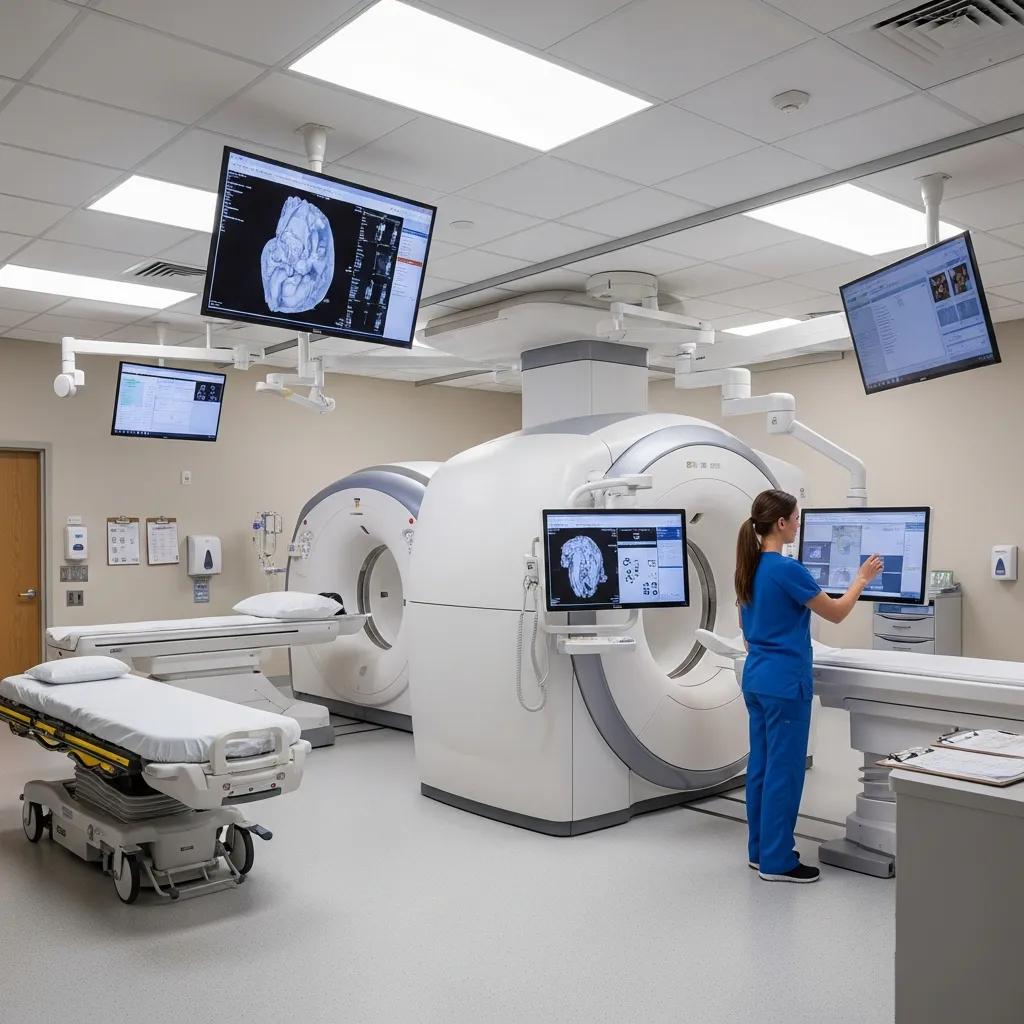
How IT Improves Medical Imaging and Keeps Patient Data Secure
Information technology underpins modern medical imaging by combining specialised image storage and transfer systems with layered security to speed diagnosis and safeguard patient information. This guide explains how PACS, RIS and DICOM work alongside cloud services, cybersecurity best practice and emerging analytics to boost diagnostic accuracy while meeting privacy obligations. You’ll see how images travel from scanner to clinician, which technical and organisational safeguards protect studies, and how cloud and AI tools change reporting without compromising compliance with the Australian Privacy Principles. Practical sections cover cyber controls, cloud disaster recovery, AI impacts and digital referral workflows, and we give examples of digital services used in practice plus guidance on accessing images and making enquiries or bookings.
What Is Health Information Technology in Medical Imaging?
In medical imaging, health information technology means the software, hardware and standards that capture, store, route and protect diagnostic images so clinicians can diagnose and treat patients faster and more reliably. These systems use standard file formats and networked infrastructure so studies are captured, indexed and delivered to authorised users with minimal delay — improving clinical decisions and continuity of care. In everyday practice this includes image archives, reporting workstations and interfaces with electronic health records that reduce administration and enable timely referrals. Knowing the main components and a simple workflow helps patients and referrers understand where speed and security are applied.
The core systems that support radiology workflows are clear and interoperable.
- PACS — stores and serves images to authorised clinicians for review and long‑term archive.
- RIS — manages appointments, patient details and reporting workflows to coordinate care.
- DICOM — standardises image files and metadata so equipment from different vendors can exchange studies reliably.
Together these systems create an end‑to‑end imaging workflow that cuts waiting times and supports coordinated care. Below we describe how they power diagnostic services and why security matters at every step.
How Does IT Support Diagnostic Radiology Services?
IT streamlines the journey from scan to report, removing manual steps that introduce delay or error. Scanners produce DICOM studies that are automatically received by PACS and linked to scheduling and reporting tasks in the RIS, so radiographers and radiologists work from a single, current record. Alerts and task lists speed triage of urgent cases, and EHR integrations give referring clinicians prompt access to reports and prior imaging for comparison. This smoother chain shortens turnaround times, reduces transcription errors and improves both clinical outcomes and patient experience.
Mapping each system’s role clarifies responsibilities and downstream flows, which helps with auditing and lets IT teams focus controls and monitoring where they matter most. As digital referrals and cloud services broaden multi‑site collaboration, these workflows become the backbone of efficient diagnostic pathways.
Why Is Patient Data Security Critical in Medical Imaging?
Imaging studies often contain sensitive health information and identifiable metadata; a breach can expose clinical details and undermine patient trust. Unauthorized access or corruption of imaging files can delay diagnosis, interrupt care pathways and create legal and regulatory risks under Australian privacy law. Protecting the confidentiality, integrity and availability of imaging data therefore preserves patient rights and clinical continuity. Practical safeguards and transparent governance give patients and referrers confidence that their information is handled responsibly.
Keeping imaging workflows secure requires operational measures such as least‑privilege access, thorough logging and a rapid incident response capability — topics we cover in the cybersecurity section. These are the technical and organisational controls providers use to protect patient data and demonstrate accountability.
How Does Cybersecurity Protect Patient Data in Diagnostic Imaging?
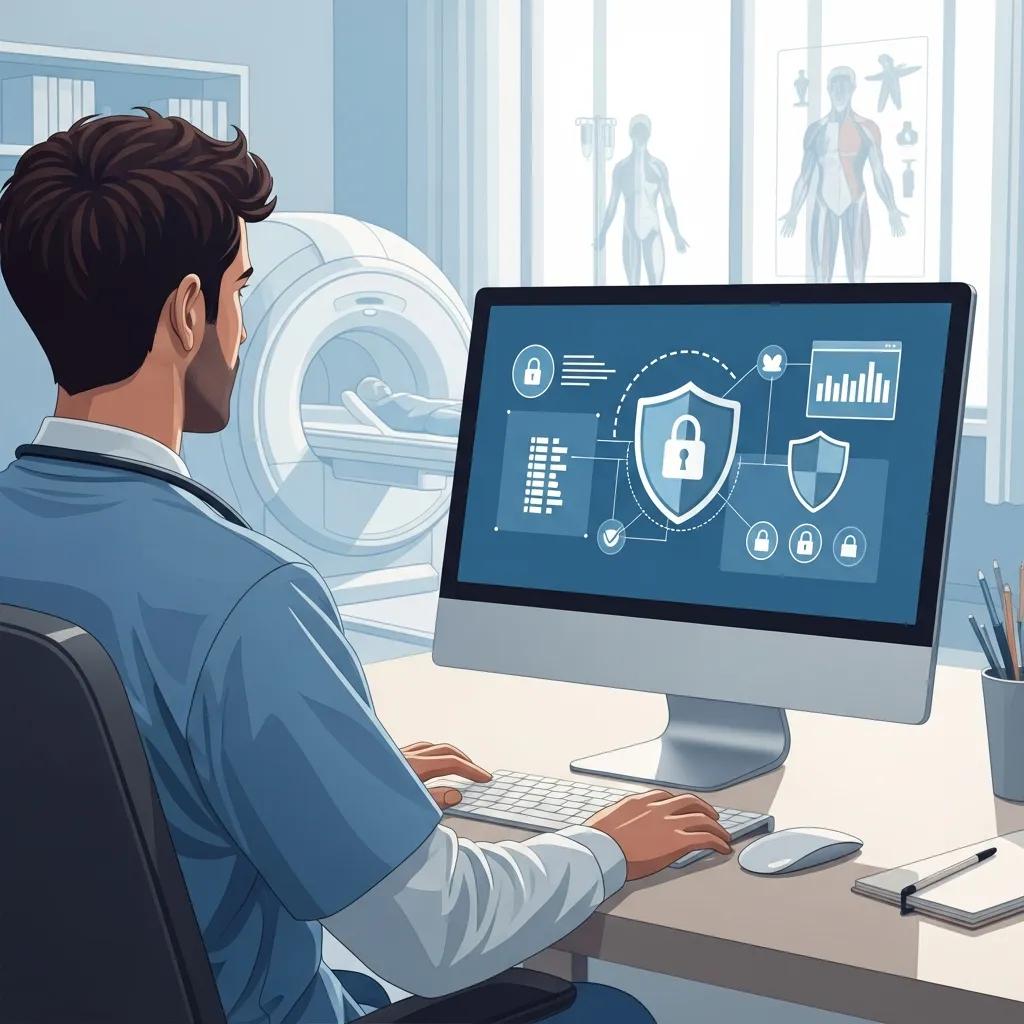
Cybersecurity for diagnostic imaging combines encryption, strict access controls and continuous monitoring so only authorised clinicians can view and move studies, while detection systems spot anomalies early. These measures prevent unauthorised disclosure, preserve data integrity and keep imaging systems available when clinicians need them — all of which support patient safety and regulatory compliance. A layered security model reduces single points of failure and enables rapid recovery after an incident.
Key cybersecurity measures for imaging environments are practical and well established:
- Encryption — secures images at rest and in transit so files are unreadable if intercepted.
- Access control — role‑based permissions and multi‑factor authentication limit who can view or change studies.
- Monitoring and incident response — continuous logging, intrusion detection and tested response playbooks speed containment and recovery.
These controls work together to reduce risk across PACS, RIS and connected devices. Below is a compact summary of common controls, their attributes and typical values to help clinical teams understand the protections in place.
This summary shows how encryption, access governance and monitoring form a defensible environment for imaging data. Knowing these controls exist reduces the likelihood of data loss and supports forensic investigation if an incident occurs.
What Are the Key Cybersecurity Measures for Medical Imaging Data?
Key measures include encrypting images and metadata, enforcing strict role‑based access, using multi‑factor authentication for remote access, and keeping continuous logs for audit and investigation. Network segmentation and device hardening limit lateral movement if an intrusion happens, and timely patching reduces exposure to known vulnerabilities. Regular penetration tests and tabletop exercises validate controls and improve recovery times. Together, these layered measures reduce the risk of data theft, service disruption and unauthorised changes to clinical images.
Organisational policies and staff training address human factors, ensuring technical controls are used correctly and that referrers and clinicians know secure access pathways. Effective cybersecurity combines sound technology with clear governance to protect patient care.
How Does Life Medical Imaging Comply with Australian Privacy Principles?
Providers must operate in line with the Australian Privacy Principles (APPs), which require lawful handling of personal information, minimising collection, secure storage and clear patient access pathways. Compliance looks like documented privacy notices, consent processes, access logs for image retrieval and retention policies that balance clinical need with data minimisation. Patients should receive straightforward explanations about how their images are used and how to request access or raise concerns under the national framework.
At Life Medical Imaging Central Coast we combine technical controls with process safeguards to meet these obligations. Services such as Access Life Images and eReferral are examples of secure digital tools that let authorised referrers receive images and reports while preserving audit trails and limiting unnecessary data exposure. For enquiries or to arrange appointments, callers can contact the clinic on 02 4326 7000. These practices reassure patients and referrers that privacy is central to our work.
What Role Does Cloud Computing Play in Managing Medical Records?
Cloud computing offers scalable storage and compute resources that make medical images more accessible to authorised clinicians while providing resilient backup and disaster recovery. By decoupling storage from local data centres, cloud PACS solutions enable multi‑site access, elastic capacity for growing archives and simpler updates for analytics and AI tools. Moving to the cloud transfers some operational responsibilities to certified providers, so organisations must check security certifications and contractual safeguards to maintain compliance and confidentiality. Understanding these trade‑offs helps teams choose between on‑premises, cloud and hybrid approaches.
Cloud adoption delivers three core operational benefits for imaging services:
- Accessibility: Clinicians across sites can access studies without manual transfers.
- Scalability: Storage expands as needed to handle large datasets and long retention periods.
- Disaster recovery: Geo‑redundancy supports faster restoration after outages.
Below is a compact comparison of storage models to help teams evaluate PACS deployment and resilience options.
How Does Cloud Storage Improve Accessibility and Scalability?
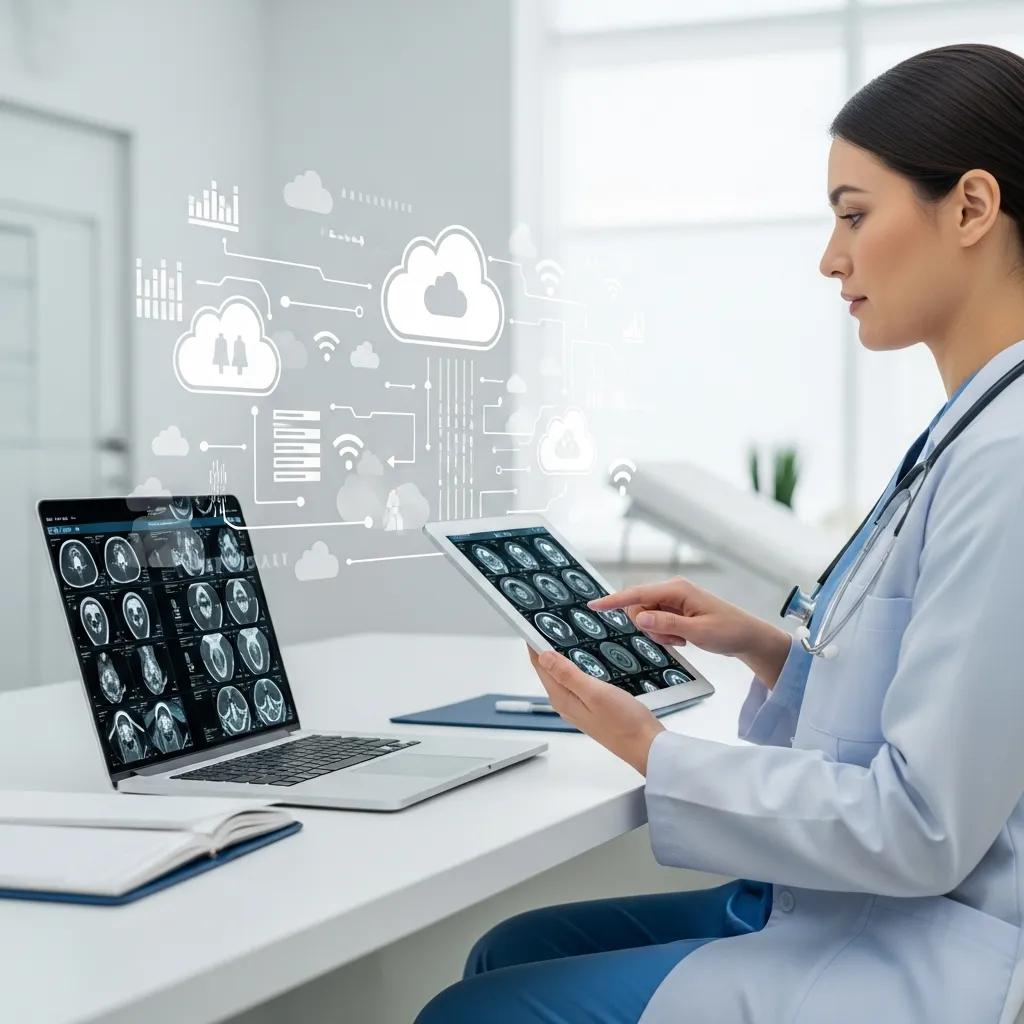
Cloud storage removes common access bottlenecks by centralising archives and providing secure, role‑based remote access for referrers and reporting radiologists. Multi‑site clinics and remote specialists can retrieve prior studies quickly for comparison, enabling faster second opinions and reducing duplicate imaging. Elastic capacity handles bursts of activity — for example during peak demand — without costly hardware upgrades, and supports long‑term retention policies needed for follow‑up and research. These capabilities streamline operations and reduce administrative handovers.
Typical use cases include remote reporting from home or satellite clinics and rapid retrieval for multidisciplinary meetings — both of which shorten time‑to‑diagnosis. When implemented correctly, cloud storage improves collaboration and maintains performance as volumes grow.
How Is Disaster Recovery Ensured Through Cloud Solutions?
Cloud providers offer geo‑redundant storage, automated backups and tested restore procedures to keep imaging archives available after outages or disasters. Disaster recovery plans specify recovery time objectives (RTO) and recovery point objectives (RPO) that define acceptable downtime and data loss, and restores are validated through regular drills. For imaging services, tested restores of PACS and associated metadata ensure clinicians can access prior studies needed for continuity of care. Referrers should ask providers about expected RTO/RPO and the cadence of restore tests.
A clear disaster recovery plan reduces clinical disruption and supports patient safety by preserving access to historical imaging when it matters most. Cloud architectures can deliver strong resilience when paired with documented recovery testing.
How Do Advanced IT Solutions Improve Diagnostic Accuracy and Workflow?
Advanced IT — including validated AI tools, analytics platforms and workflow automation — improves diagnostic accuracy and reduces repetitive tasks so radiologists can focus on complex interpretation. AI can triage urgent studies, highlight suspicious findings and produce quantitative measurements that increase reproducibility for areas such as cardiology and oncology. Operational dashboards track KPIs like turnaround times, modality utilisation and report backlogs, helping managers optimise staff and equipment schedules. Together, these technologies speed reporting and support higher‑quality care.
Adoption must include rigorous validation, clinical governance and smooth integration into reporting workflows so AI augments rather than replaces clinical judgement. The subsections below explain AI impacts and the benefits of digital referral systems in more detail.
What Is the Impact of AI on Medical Imaging Diagnostics?
AI speeds triage, automates detection and provides quantitative metrics that support diagnostic confidence and follow‑up planning. Validated models can flag likely critical findings so radiologists prioritise urgent cases, and measurement tools standardise lesion sizing for longitudinal comparison. AI requires ongoing clinical validation, governance to reduce false positives and integration that preserves radiologist oversight. Properly used, AI improves throughput and consistency while clinicians retain final responsibility for diagnoses.
Balancing innovation with careful validation ensures AI becomes a trusted assistant rather than an unproven decision‑maker. Clinical teams should favour explainable models and continuously audit performance to maintain safety and trust.
How Do Digital Referral and Image Access Systems Enhance Efficiency?
Digital referral and image access systems cut administrative friction by enabling structured referral submissions and secure image transfers that carry clinical context. eReferral portals speed appointment booking, reduce lost paperwork and ensure images arrive linked to the correct patient record, shortening report turnaround and lowering clerical load. These systems also support secure sharing for multidisciplinary care and let referrers retrieve images and reports remotely without manual requests. Standardised digital workflows reduce re‑entry errors and free staff to focus on clinical tasks.
Common benefits include fewer phone calls, faster access to prior imaging and an auditable trail for each referral — all of which improve reliability and clinician satisfaction.
How Does Life Medical Imaging Ensure Secure and Seamless Image Management?
Life Medical Imaging Central Coast manages images with standards‑based systems and secure digital services so authorised clinicians can access studies reliably while patient data remains protected through every step. PACS acts as the central archive, DICOM ensures interoperability between devices and reporting systems, and secure referral portals reduce administrative handovers. These measures support secure storage, fast access and multi‑vendor interoperability that benefit patients and referrers. For practical access to images and referrals, the clinic uses secure digital pathways that reflect the technical controls described above.
What Is PACS and How Does It Manage Medical Images Securely?
PACS (Picture Archiving and Communication System) is the primary repository that stores, indexes and serves medical images to authorised users while keeping audit trails and enforcing role‑based access. PACS links to modality workstations and reporting tools to display images with structured reports and prior studies, and it uses access controls and encryption to protect confidentiality. Operational benefits include faster retrieval of prior imaging, centralised backups and simpler sharing with authorised referrers. A well‑configured PACS reduces duplication and supports workflows across multiple sites.
Knowing how PACS works helps clinicians understand why archived images remain available for follow‑up and second opinions, and why governance of user accounts and logging is essential to protect patient privacy.
How Does DICOM Enable Interoperability in Medical Imaging?
DICOM is the industry standard that specifies how images and metadata are formatted and exchanged between scanners, PACS and reporting systems, ensuring studies from different manufacturers are compatible. By standardising fields such as patient ID, study UID and series descriptors, DICOM reduces manual entry errors and helps match images to the correct records. This interoperability enables reliable transfers for remote reporting, cross‑site comparison and long‑term archiving. Consistent DICOM implementation lowers technical friction and improves the reliability of image exchange.
DICOM’s structured metadata also supports automated workflows and auditability, which improves patient safety and operational efficiency across diverse imaging environments.
What Are the Emerging Trends in Healthcare IT for Radiology?
Near‑term trends in radiology IT include wider cloud PACS adoption, integration of validated AI into reporting pipelines, growth in imaging analytics for operational improvement and a move toward zero‑trust security architectures. These developments aim to increase diagnostic throughput, enable population‑level analytics and harden systems against evolving threats. Adoption requires governance frameworks, performance monitoring and clear contracts that define data protection responsibilities and service levels. Staying informed about these trends helps providers plan investments that match clinical priorities.
The following list summarises three high‑impact trends and their implications for imaging services.
- Hybrid cloud architectures: Combine local performance with cloud resilience for scalable, performant PACS.
- AI‑assisted diagnostics: Improve triage and quantification while requiring validation and oversight.
- Zero‑trust security: Move from perimeter defence to identity‑focused controls to limit lateral risk.
These trends offer efficiency and quality gains but require disciplined governance, continuous testing and staff training to achieve their benefits safely.
How Will AI and Data Analytics Shape the Future of Medical Imaging?
AI and analytics will increasingly enable predictive triage, automated quantification and operational forecasting that raise diagnostic consistency and improve resource planning. Large‑scale analysis of imaging metadata can reveal modality bottlenecks, predict maintenance needs and inform staffing models, while validated AI reduces time on repetitive measurements. Widespread use depends on robust data governance, external validation and careful workflow integration to ensure safe and equitable outcomes. When implemented responsibly, these tools deliver productivity gains without replacing clinician judgement.
As capabilities grow, clinicians and IT teams should prioritise transparency, continuous performance audits and integration with clinical governance to maintain trust and patient safety.
What Are the Ongoing Challenges in Radiology Cybersecurity?
Radiology environments face ongoing threats such as exposed PACS servers, phishing that compromises credentials and vulnerabilities in networked imaging devices that attackers can use for lateral movement. Consequences include delayed reporting, data loss and reputational damage, and remediation typically requires coordinated IT and clinical action. Recommended defenses include regular patching, segmentation of imaging networks, continuous monitoring and staff training on secure workflows. Incident response plans that prioritise imaging system recovery help maintain continuity of care during security events.
We aim to provide clear, practical information about our imaging services and to help patients and referrers arrange appointments or obtain images.
For appointments or enquiries at Life Medical Imaging Central Coast, please call the clinic on 02 4326 7000. Our staff can advise referrers on requesting access to images via secure channels and guide patients on obtaining copies of their imaging and reports. These contact options ensure clinical questions and booking needs are handled promptly while protecting the security and privacy of imaging data.
Frequently Asked Questions
What are the benefits of using cloud computing in medical imaging?
Cloud computing brings clearer access, easier scaling and stronger disaster recovery to medical imaging. Centralised cloud archives let authorised clinicians view studies from different sites without manual transfers, speeding diagnosis. Elastic storage grows with demand and supports long‑term retention, while geo‑redundant backups help restore archives quickly after outages. Together, these features improve operational efficiency and support better patient care.
How does AI improve the workflow in medical imaging?
AI streamlines routine tasks like triage and anomaly detection, allowing radiologists to concentrate on complex interpretation. Algorithms can flag urgent findings and produce consistent quantitative measurements that aid follow‑up. Proper integration keeps human oversight central — AI supports the clinical workflow rather than replacing clinical judgement.
What role does DICOM play in medical imaging interoperability?
DICOM (Digital Imaging and Communications in Medicine) is the standard that ensures images and metadata can be exchanged between different systems. By defining fields such as patient ID and study descriptors, DICOM reduces data entry errors and enables reliable transfers across platforms, supporting continuity of care and collaborative practice.
How can healthcare providers ensure compliance with Australian Privacy Principles?
Providers meet the Australian Privacy Principles by practising secure data handling, collecting only what’s necessary, and providing clear access pathways for patients. This involves documented privacy notices, informed consent, access logs for image retrieval and routine audits and staff training. Prioritising transparency and patient rights builds trust and ensures responsible data management.
What are the emerging trends in healthcare IT for radiology?
Key trends include hybrid cloud PACS, validated AI in reporting pipelines and zero‑trust security models. Hybrid cloud balances local performance with cloud resilience, AI improves diagnostic workflow when validated and overseen, and zero‑trust emphasises identity and least‑privilege access. These developments aim to boost efficiency while addressing evolving cybersecurity risks.
What challenges do radiology departments face in cybersecurity?
Challenges include vulnerable PACS servers, staff-targeted phishing and insecure networked devices. These risks can delay reporting and threaten patient data. Effective countermeasures are regular patching, network segmentation, continuous monitoring, staff education and a tested incident response plan focused on imaging priorities.
Conclusion
Bringing information technology into medical imaging improves diagnostic accuracy and strengthens patient data protection, while ensuring timely, dependable access to clinical information. By using standards and solutions such as PACS, RIS and DICOM alongside cloud, AI and sound cybersecurity, providers can streamline workflows and meet privacy obligations. Understanding these technologies helps clinicians and referrers make informed choices that benefit patient care. For further information or to explore our services, contact Life Medical Imaging Central Coast today.