


PRP Injections: A Practical Guide to Platelet‑Rich Plasma Therapy and What to Expect
Platelet‑rich plasma (PRP) uses a small sample of your own blood, concentrated to increase the number of platelets and growth factors before being injected into an injured area. The goal is to support tissue repair, reduce inflammation and assist a return to function without the invasiveness of surgery. This guide covers what PRP contains, how it helps healing at a cellular level, which musculoskeletal problems are most likely to improve, and how the treatment is prepared and delivered. We explain why imaging guidance matters, what outcomes patients commonly experience for joints and tendons, practical preparation and aftercare, and the main risks and likely costs. The content is split into clear sections—mechanism, procedure, clinical benefits, indications, preparation and recovery, and risks/cost—so you and your referrer can use the evidence-focused summaries and checklists to make informed choices.
What Are Platelet‑Rich Plasma Injections and How Do They Work?
PRP concentrates platelets and the growth factors they contain to create a local environment that supports tissue repair. When platelets are activated they release signalling molecules such as platelet‑derived growth factor (PDGF), transforming growth factor‑beta (TGF‑β) and vascular endothelial growth factor (VEGF). These signals attract reparative cells, encourage new blood vessel growth and support collagen formation — all important for tendon and cartilage healing and for reducing pain. Because PRP is a biologic treatment, how it is prepared and where it is placed matters for both safety and results. The sections that follow explain PRP composition and the cellular actions that can translate into clinical improvement.
What is Platelet‑Rich Plasma and What Does It Contain?
PRP is the plasma fraction of centrifuged whole blood with a higher‑than‑baseline platelet concentration. Platelets contain alpha‑granules packed with growth factors (PDGF, TGF‑β, VEGF and others) that regulate cell migration, cell division and extracellular matrix remodelling. The plasma provides proteins and fibrin that act as a temporary scaffold at the injection site. Different preparation systems produce leukocyte‑rich or leukocyte‑poor PRP and varying platelet counts; those differences can affect inflammation and clinical choice. Knowing what is in the PRP helps clinicians select the right preparation for tendons, ligaments or cartilage targets.
PRP in Regenerative Medicine: Standardisation and Growth Factor Quantification
PRP is used across specialties—including orthopaedics, ophthalmology and wound care—as a source of growth factors to support tissue regeneration. Evidence on clinical benefit is mixed in part because many studies use different PRP preparations that are hard to compare. Measuring platelet counts and growth factor levels helps explain how PRP works at a molecular level and why consistent preparation methods are important. Greater standardisation of PRP protocols is needed to improve comparability between studies and clinical practice.
Platelet‑rich plasma preparation for regenerative medicine: optimization and quantification of cytokines and growth factors, RBV Carias, 2013
How Does PRP Therapy Stimulate Healing and Tissue Repair?
PRP delivers a concentrated mix of signalling molecules that activate local cells and recruit stem or progenitor cells to the injured tissue. Once platelets are triggered they release a burst of growth factors that modulate inflammation, encourage angiogenesis and support collagen synthesis—processes fundamental to repairing tendons and cartilage. Clinically this can mean reduced pain, measurable improvements in tissue appearance on imaging, and steady functional gains over weeks to months. Recent research (to mid‑2024) highlights that PRP’s benefit depends on lesion chronicity, individual patient factors and accurate delivery, so careful patient selection and image‑guided technique help optimise outcomes.
What Does the PRP Injection Procedure Involve?
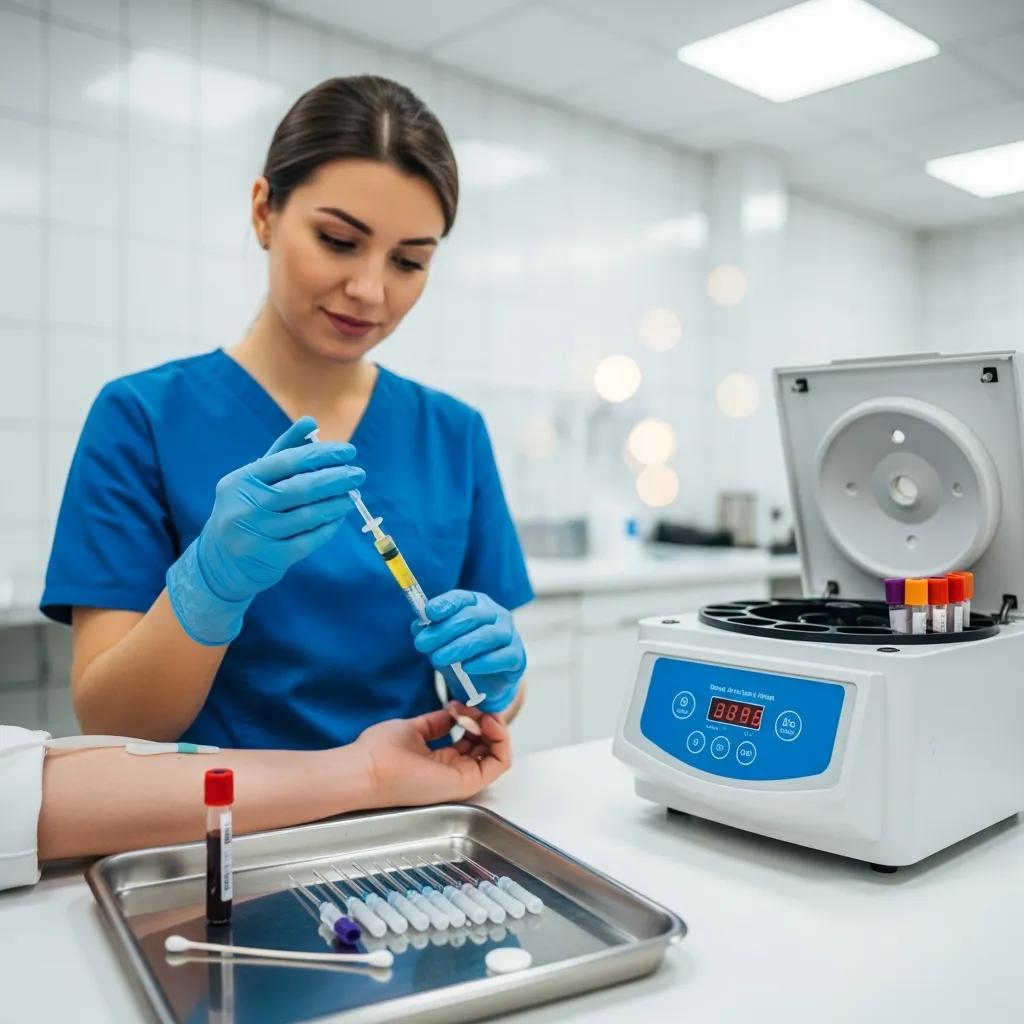
A typical PRP appointment starts with a clinical assessment and review of any imaging, followed by a small blood draw, centrifugation to concentrate platelets, and a targeted injection into the affected tissue under sterile conditions. Ultrasound is commonly used to guide needle placement into tendons, ligaments or joints—this improves accuracy and reduces risk. Each step influences comfort and effectiveness, so knowing the sequence helps set realistic expectations. The subsections below describe blood processing and the role of imaging guidance; the numbered overview and table summarise the procedure steps and what they mean for you.
Before the table, here is a concise, numbered procedural overview of the core steps:
- Assessment and consent: A clinical review and imaging confirm suitability and the exact target site.
- Blood collection: A venous blood sample is taken using sterile technique.
- Centrifugation and preparation: The sample is spun to isolate the platelet‑rich fraction.
- Image‑guided injection: Ultrasound is used to place the needle and deliver the PRP precisely.
- Immediate aftercare: Short observation, activity advice and rehabilitation planning before discharge.
This stepwise approach reduces variability and improves the chance of a helpful result. The table below maps each main procedural step to patient impact and typical duration.
Knowing what happens at each stage helps set expectations about time, comfort and safety. That understanding also explains why imaging guidance is recommended and how preparation choices can affect results.
How Is Blood Collected and Processed for PRP Therapy?
PRP begins with a sterile venous draw of a modest blood volume selected for the intended concentration. The sample is centrifuged to separate red cells from plasma and the platelet‑rich layer. Centrifuge speed and time influence platelet concentration and whether leukocytes are included, producing leukocyte‑rich or leukocyte‑poor preparations. The device and protocol chosen affect growth factor yield and the inflammatory profile; clinicians base their choice on the target tissue and available evidence. Strict sterile technique and validated equipment are essential to maintain quality and minimise infection risk while achieving the desired biological activity.
Why Is Ultrasound Guidance Used During PRP Injections?
Ultrasound gives live images of the anatomy and the needle, allowing precise PRP deposition into tendons, ligaments or joint spaces while avoiding nerves and blood vessels. Compared with blind injections, image guidance improves accuracy, can enhance symptom outcomes in many cases, and reduces the chance of misplaced injections that might limit benefit. For deep or complex targets, ultrasound also lets clinicians watch tissue response in real time and confirm correct placement—this precision is why image‑guided procedures are standard at advanced imaging centres offering PRP.
What Are the Benefits of PRP Therapy for Joint Pain and Tendon Injuries?
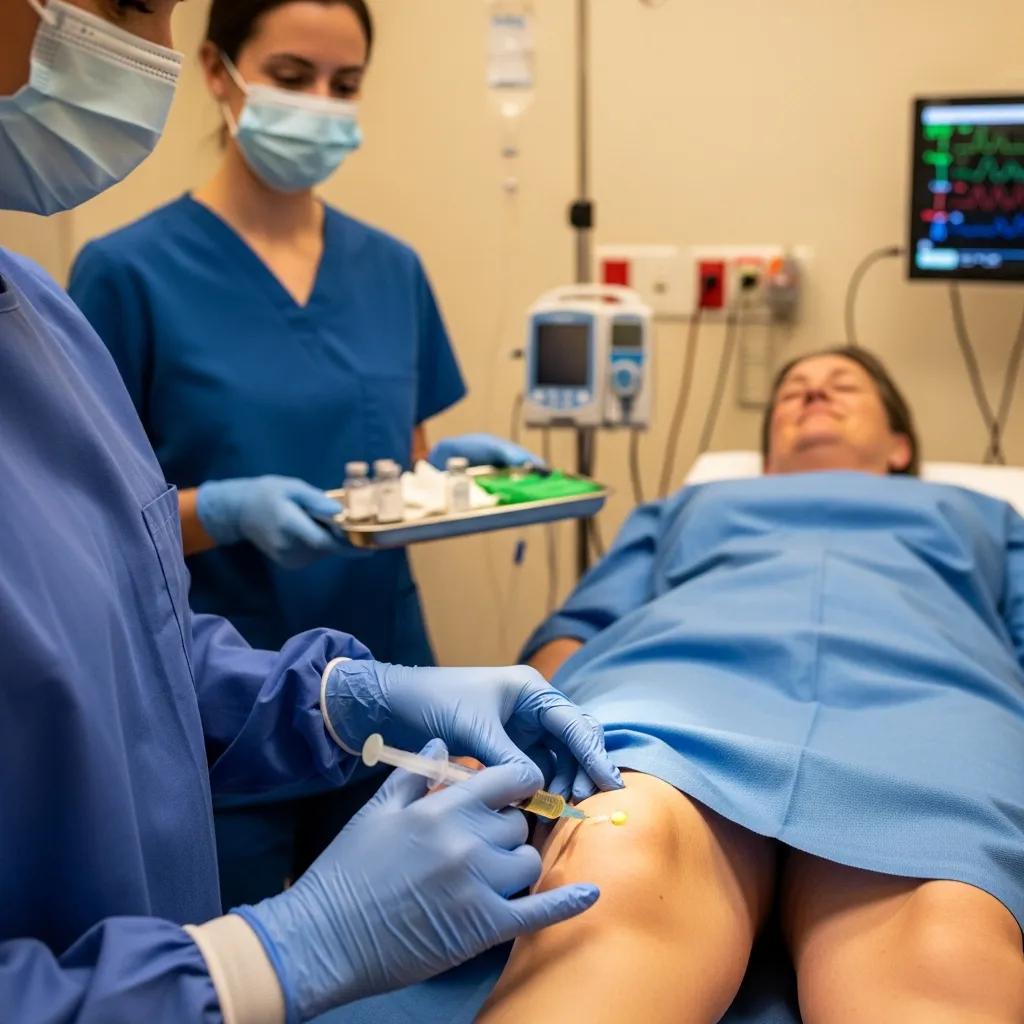
PRP can reduce pain, improve function and—for some patients—delay or avoid surgery by encouraging biological repair rather than simply masking symptoms. In osteoarthritis and tendinopathy, PRP may help modulate inflammation, support matrix repair and speed symptomatic improvement compared with placebo in certain trials. Results vary with the condition, its stage and how closely patients follow rehabilitation. PRP is often considered when conservative care has not been enough and when patients wish to postpone or avoid operative treatment. The sections below explain how PRP works in osteoarthritis and give realistic timelines for tendon and ligament recovery.
To make outcomes clear, here’s a focused list of benefits patients commonly experience:
- Pain reduction: Gradual decrease in symptoms over weeks to months.
- Functional improvement: Better range of motion and easier daily activity.
- Tissue repair support: Stimulation of collagen synthesis and matrix remodelling.
- Surgery avoidance/delay: Possible reduced need for operative intervention in selected cases.
These points reflect PRP’s regenerative aims and help guide patient selection and rehabilitation planning. The next section looks at osteoarthritis evidence and practical selection criteria in more detail.
How Does PRP Help Treat Osteoarthritis and Musculoskeletal Conditions?
For osteoarthritis—especially early to moderate knee OA—PRP can reduce pain and improve function better than saline and, in some studies, better than other injectables. Effects typically appear over several weeks and can last many months in some patients. Mechanistically, intra‑articular PRP may reduce synovial inflammation, supply trophic growth factors and support cartilage matrix maintenance. Meta‑analyses through mid‑2024 show variable effect sizes across trials, reinforcing the importance of standardised preparation and appropriate patient selection (younger patients with focal degeneration often report better outcomes). PRP is not a cure for advanced joint destruction, but it can be a useful part of a multimodal treatment plan.
Platelet‑Rich Plasma Injections for Early Knee Osteoarthritis: A Valid Treatment Option
Intra‑articular PRP injections for early symptomatic knee osteoarthritis have shown meaningful pain reduction and improved function at 12 months in clinical series. Some studies report further benefit with repeated treatments at around 12–18 months, although lasting effects beyond two years are less certain. These results support PRP as a valid non‑surgical option for selected patients.
The effects of repeated intra‑articular PRP injections on clinical outcomes of early osteoarthritis of the knee, A Gobbi, 2015
What Results Can Patients Expect from PRP for Tendon and Ligament Injuries?
For tendinopathy and partial ligament injuries, PRP is associated with symptom relief and functional gains. Patients often notice early pain modulation within 2–6 weeks, with maximal improvement seen by 3–6 months. Success is influenced by chronicity—acute or subacute injuries generally respond better than long‑standing degenerative tendinopathy—and by adherence to a structured rehabilitation programme. Combining PRP with physiotherapy and graded loading typically gives the best long‑term outcomes. Because individual responses vary, clinicians will discuss realistic timelines and emphasise the importance of post‑procedure rehab.
Which Conditions Can Be Treated with PRP Injections?
PRP is used for a range of musculoskeletal problems including knee osteoarthritis, rotator cuff tendinopathy, lateral epicondylitis (tennis elbow), Achilles tendinopathy, plantar fasciitis and selected partial ligament tears. Common indications are chronic tendinopathy that has not responded to conservative care, focal cartilage degeneration and certain sports injuries where biological support may speed recovery. Contraindications and precautions exist, so a pre‑procedure assessment is essential. The table below summarises common conditions, the typical level of evidence and expected benefit/timeframe to help patients and referrers weigh options.
The table below outlines condition‑specific evidence and likely outcomes:
This summary sets realistic expectations across common presentations and helps decide whether PRP is appropriate for an individual. The next section examines knee OA and sports‑injury evidence in greater detail.
How Effective Is PRP for Knee Osteoarthritis and Sports Injuries?
Pooled data suggest PRP provides superior pain and function improvement over saline, and in some comparisons over hyaluronic acid, particularly in earlier stages of knee OA and when standardised preparations are used. Effect size and duration vary—many patients report meaningful relief for several months to around a year. For sports injuries, PRP can shorten return‑to‑play timelines for selected tendon and soft‑tissue injuries, but outcomes depend on the injury type, the athlete’s conditioning and the rehabilitation plan. Clinicians consider lesion characteristics, activity goals and alternative treatments when recommending PRP for sports pathology.
Efficacy and Safety of Platelet‑Rich Plasma for Knee Osteoarthritis: A Clinical Update
Recent clinical updates report both efficacy and safety for PRP in knee osteoarthritis, with a trend toward better results in earlier disease stages. While benefits may be seen across disease severities, outcomes are more consistent when preparation and patient selection are standardised.
Clinical update: why PRP should be your first choice for injection therapy in treating osteoarthritis of the knee, 2018
Can PRP Therapy Help with Chronic Tendinopathy and Ligament Damage?
Chronic tendinopathy often reflects degenerative changes and failed healing. PRP aims to restart a reparative response by delivering growth factors and a provisional scaffold. Evidence shows improvement for chronic tendinopathies such as lateral epicondyle and patellar tendinopathy, particularly when combined with eccentric loading and progressive rehab. Partial ligament tears may also benefit symptomatically and structurally when PRP is used as an adjunct, though outcomes depend on tear size and joint stability. PRP is most effective as part of a multimodal plan that includes physiotherapy and activity modification.
How Should Patients Prepare for PRP Therapy and What Is Recovery Like?
Preparing for PRP focuses on safety and optimising the biological environment at the time of injection. Discuss medications (especially anticoagulants and NSAIDs) with your clinician beforehand, arrange transport if needed, and plan follow‑up rehabilitation. Patients are usually asked to avoid NSAIDs close to the procedure because they can blunt platelet activity, and to wear comfortable clothing that allows easy access to the treatment site. Expect a short period of increased soreness for 48–72 hours, then gradual reintroduction of activity under a structured rehab plan. The checklist below gives practical steps to prepare and plan.
Pre‑procedure checklist for patients considering PRP:
- Medication review: Talk to your clinician about anticoagulants and NSAIDs before the appointment.
- Comfort and logistics: Wear loose clothing and arrange transport if needed.
- Imaging and referral: Bring prior scans or arrange eReferral so your clinician can review images.
- Expectations: Plan for short‑term soreness and follow a staged rehabilitation timeline.
These steps reduce procedural risk and help set realistic recovery expectations. For patients on the Central Coast, Life Medical Imaging Central Coast offers ultrasound‑guided PRP injections delivered by accredited interventional staff within a ‑accredited imaging service, with referrer support and eReferral pathways for efficient booking and secure image access.
What Pre‑Procedure Steps Should Patients Follow Before PRP Injections?
Confirm your clinical assessment with the treating clinician, and only stop or adjust anti‑platelet or NSAID medications when advised by a clinician. Bring any relevant imaging or referral documentation, wear clothing that allows easy access to the treatment site, and arrange for someone to drive you home if you expect to use stronger pain relief. Informed consent, discussion of alternatives and realistic timelines are part of the pre‑procedure consultation. Following these steps helps avoid delays on the day and supports optimal procedural conditions.
What Are the Typical Recovery Timeline and Aftercare Recommendations?

Recovery commonly starts with a transient increase in soreness for 48–72 hours as the biological response begins, followed by gradual improvement over 2–12 weeks and maximal functional gains often by 3–6 months. Aftercare usually includes protected loading in the first weeks, progressive physiotherapy‑led strengthening, and a staged plan for returning to sport or high‑load activities. Monitor for worsening pain, fever, spreading redness or new neurological symptoms and contact your treating clinician if these occur. Structured follow‑up allows the rehab plan to be adjusted to your progress.
What Are the Risks, Side Effects, and Costs of PRP Therapy?
Because PRP uses your own blood it is generally well tolerated, but local reactions such as temporary pain, swelling and bruising are common. Serious complications—like infection or nerve/tissue injury—are rare when sterile technique and image guidance are used. Costs vary with the preparation method, number of injections and whether imaging guidance is used; many insurers consider PRP elective, so out‑of‑pocket expenses are common. Presenting risks, frequency and cost drivers clearly helps patients and referrers make informed decisions. The bullets and table below summarise common side effects, mitigation strategies and typical cost considerations.
Before the table, here is a concise bulleted list of common side effects and practical mitigation strategies:
- Local soreness and swelling: Expected inflammatory response; usually settles within days.
- Bruising at the venepuncture site: Usually minor and manageable with local care.
- Infection: Rare when the procedure is performed under sterile conditions by accredited staff.
- Nerve or tissue injury: Very uncommon when ultrasound guidance is used.
These points help patients recognise typical short‑term effects and when to seek care. The table below summarises risk and cost elements for quick reference.
This summary clarifies likely risks and key cost drivers so you can discuss specifics with your referrer or imaging provider. High‑quality, accredited services and ultrasound guidance reduce complication risk and improve targeting accuracy.
What Are the Common Side Effects and Potential Risks of PRP Injections?
Typical short‑term side effects include local soreness, transient swelling and bruising at the injection or venepuncture site—these reflect the intended inflammatory phase of healing. Serious complications such as infection or neurovascular injury are uncommon when procedures are performed under sterile conditions and with appropriate image guidance. Providers reduce risk through standard precautions, accredited practice and careful patient selection; patients with bleeding disorders or active infections are usually not suitable candidates. If you experience worsening pain, fever or spreading redness, contact your clinician promptly.
How Much Does PRP Therapy Cost and Is It Covered by Insurance?
PRP costs depend on the preparation method (device and protocol), whether ultrasound guidance is used, the anatomical target and how many sessions are recommended. These variables create a range of out‑of‑pocket expenses. Insurance policies differ—many consider PRP elective or experimental—so check your cover before booking. For accurate pricing and referral pathways, contact a local accredited imaging provider that offers interventional services and referrer support to obtain up‑to‑date fees and eReferral options.
As a practical note for local patients and referrers: Life Medical Imaging Central Coast is a ‑accredited, independent radiology clinic offering diagnostic imaging and ultrasound‑guided interventional procedures, including PRP injections, with electronic referral support and secure image access to help referrers arrange patient care.
- Key takeaway: Accreditation and image guidance support procedural safety and improve treatment precision.
- Action point: Check your insurance policy and talk with your referrer about eReferral options for imaging‑guided PRP.
- Practical reminder: Discuss preparation, likely costs and your rehabilitation plan with the treating clinician before you proceed.
This practical guidance turns the information above into clear next steps for patients and referrers considering PRP therapy.
Frequently Asked Questions
What should I expect during the PRP injection procedure?
The procedure begins with a clinical assessment and a small blood draw. Your blood is centrifuged to separate the platelet‑rich fraction and the injection is usually performed under ultrasound guidance to ensure accurate placement. You may feel brief discomfort during the injection but most people tolerate the procedure well. After a short observation period you will receive aftercare instructions and be discharged the same day.
How long does it take to see results from PRP therapy?
Response varies by condition and individual factors. Many patients notice some symptom improvement within 2–6 weeks, with the greatest gains often seen between 3–6 months. Adhering to a structured rehabilitation programme helps optimise outcomes. Your clinician will outline an expected timeline based on your diagnosis and goals.
Are there any specific conditions that contraindicate PRP therapy?
Yes. Active infection at the treatment site, bleeding disorders, or uncontrolled coagulopathy are typical contraindications. Patients on anticoagulant therapy or with certain systemic conditions should discuss suitability with their clinician. A full pre‑procedure assessment ensures PRP is safe and appropriate for you.
What is the typical recovery process after PRP therapy?
Recovery usually starts with a short period of increased soreness for 48–72 hours, then progressive improvement over the following weeks. You will typically follow a staged rehabilitation programme adjusted to the treated tissue. Regular follow‑up helps monitor progress and adapt the plan to ensure the best possible recovery.
Can PRP therapy be repeated, and if so, how often?
Yes—PRP can often be repeated when clinically appropriate. The timing depends on how you respond and the condition treated; many clinicians wait several weeks to a few months between sessions to allow the biological effects to develop. Your healthcare provider will recommend the best schedule based on your progress.
What lifestyle changes can enhance the effectiveness of PRP therapy?
Healthy habits support healing: a balanced diet, regular gentle exercise, good hydration and smoking cessation all help. Limiting alcohol and following the clinician’s advice about activity modification and rehab exercises will also improve your chances of a good outcome.
Conclusion
PRP therapy is a minimally invasive, biologically based option for many musculoskeletal conditions. By using your own platelets and growth factors, PRP can support tissue repair, reduce pain and improve function for selected patients, often helping to delay or avoid surgery. Understanding the procedure, likely benefits, risks and recovery expectations will help you and your referrer decide whether PRP is right for you. Speak with a qualified provider to discuss how PRP could fit into your treatment plan and rehabilitation goals.