



Technology Degrees: Types, Careers & Top Universities — A Practical Guide
Technology degrees cover a wide range of higher-education programmes that teach computing, systems design, software development and data analysis for today’s digital workplaces. This guide explains what a technology degree involves, how related fields (computer science, information technology, software engineering and data science) differ, and why these qualifications matter for employment and career progress. You’ll learn how degree levels compare, which specialisations lead to in-demand jobs, how to assess universities and online courses, and practical steps for applying and funding study. We also map degrees to typical career paths and current 2024–2025 hiring trends, and highlight growing areas such as AI, cybersecurity and medical imaging informatics so you can plan study that fits industry needs.
What Is a Technology Degree and Why Is It Important?
A technology degree is an accredited higher-education qualification that teaches the theory and hands-on skills needed to build and manage digital systems. These programmes mix algorithmic thinking, software development, systems architecture and data management so graduates leave with the technical competence employers expect. The main advantage is stronger employability: graduates often move into roles that support digital transformation across sectors — from finance to healthcare — while gaining transferable skills like coding, systems thinking and problem solving. Knowing what each discipline focuses on helps prospective students match study outcomes to career goals; we cover those differences next.
How Do Technology Degrees Differ: Computer Science, IT, Software Engineering, and Data Science?
Computer Science emphasises the theoretical foundations of computation, algorithms and complexity, preparing graduates for research, algorithm design and systems-level work. Information Technology is more applied, focusing on networks, system administration and enterprise IT services for operational roles. Software Engineering centres on disciplined development, project management and quality assurance to produce reliable, scalable applications. Data Science focuses on statistics, machine learning and data pipelines to turn data into practical insights. All four share core modules like programming and databases but vary by module balance and typical career paths.
What Skills and Competencies Do Technology Degrees Develop?
Technology degrees develop both technical skills — programming, algorithms, database design, cloud basics and machine learning — and transferable skills such as critical thinking, teamwork and technical communication. Employers look for graduates who can design end-to-end solutions, interpret data for decisions and work with multidisciplinary teams. For example, a capstone project building cloud-native microservices shows systems design and deployment skills useful in DevOps teams, while a predictive-model project prepares a graduate for analytics or MLOps roles. These skills support career growth and ongoing reskilling.
Which Types of Technology Degrees Are Available?
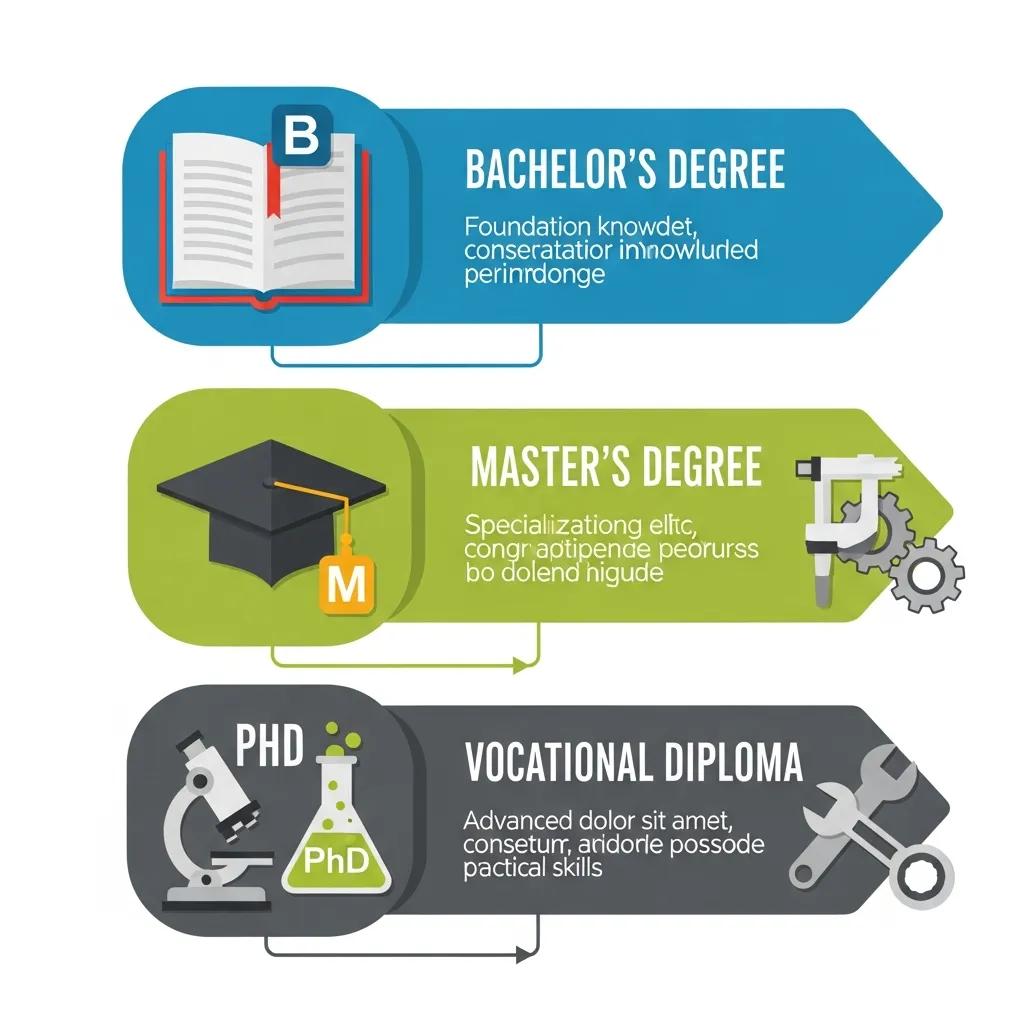
Technology education ranges from undergraduate to research degrees, plus vocational diplomas and short professional certificates for quick upskilling. Bachelor’s degrees provide broad foundations and project experience; master’s degrees enable specialisation or conversion from a non-technical background; PhD programmes focus on original research and advanced R&D roles. Vocational diplomas and micro-credentials suit rapid skill updates. Choosing the right level depends on your goals — entry-level work, specialised technical roles or academic research.
Different degree types also differ in duration, assessment style and career outcomes; the table below gives a quick comparison.
This side-by-side view shows the typical pathway from broad foundational training to focused specialisation and research careers. The next section looks more closely at what each level offers to help with programme selection.
Note on clinical specialisations: areas like medical imaging technology and imaging informatics apply technical study to healthcare tasks such as image processing, workflow optimisation and data management for diagnostic services. If you want to see these workflows in a real clinical setting, Life Medical Imaging Central Coast offers diagnostic services including CT scans, X-rays and several ultrasound specialties that rely on imaging technology and informatics. You can visit Life Medical Imaging Central Coast’s website or Google Business Profile to request information or book an observation.
What Are the Key Features of Bachelor’s, Master’s, and PhD Technology Degrees?
Bachelor’s degrees focus on breadth and employability, combining core modules with capstone projects and internship opportunities that bridge study and work. Master’s programmes emphasise depth and specialisation, with advanced modules and substantial projects suitable for technical upskilling or career switching. PhD programmes centre on independent research, preparing specialists for academic roles and high-level R&D. Entry requirements differ: bachelors usually expect secondary qualifications in maths or computing, masters may require a related degree or relevant experience, and PhDs require prior research ability. Knowing these differences helps you choose the right path for your career plans.
How Do Specialisations Like Cybersecurity, AI, and Data Science Shape Degree Choices?
Specialisations change curriculum focus and likely employer destinations. Cybersecurity modules teach secure-by-design principles, penetration testing and incident response for roles with high security needs. AI and machine learning cover modelling, MLOps and ethical considerations for data-driven products. Data science emphasises statistics, visualization and pipeline engineering for analytical roles. Hiring trends in 2024–2025 show strong growth in cloud security, applied ML and data engineering, so choose programmes that include practical labs, industry projects and current toolchains. Certifications and hands-on portfolios further strengthen job prospects.
What Career Paths Can You Pursue with a Technology Degree?

A technology degree opens many roles across software development, data analysis, cybersecurity, systems administration and research. Graduates often start in entry-level positions and progress to senior technical, managerial or specialist tracks. Specialisations usually determine common employer sectors — fintech, healthcare, government or energy. Mapping degrees to job outcomes helps answer “is it worth it” and supports planning for new graduates and mid-career switchers alike.
Which Jobs Are Common for Graduates in Computer Science, IT, and Software Engineering?
Typical entry-level roles include junior software developer, systems administrator, QA engineer and data analyst. These positions provide hands-on exposure to codebases, infrastructure and data workflows. Early-career steps often include earning professional certifications, contributing to open-source projects and completing internships that demonstrate practical skills.
Two common progressions: a software developer who gains backend and systems experience can move into systems architecture or DevOps, while a data analyst who builds production-ready models can progress to data scientist or machine learning engineer roles. Portfolio projects and internships speed up these transitions.
What Are the Salary Expectations and Industry Trends for Technology Graduates?
Salaries depend on role, specialisation and location. Entry-level roles usually start lower, while specialists in AI, cloud and cybersecurity command premium pay in 2024–2025. High-growth sectors include AI-powered services, cloud infrastructure and health-tech, which are hiring for applied ML, MLOps and secure-by-design skills. Check local labour market data for exact salary bands; generally, investing in a relevant specialisation and demonstrable project experience boosts mid-career earnings. Use these trends to prioritise modules and internships during study.
Which Are the Best Tech Universities and Online Programs?
Choosing the right provider means looking at measurable factors: research output, industry partnerships, graduate employment rates and accreditation. Strong programmes balance theoretical rigour with practical exposure such as industry projects, labs and placements that improve graduate readiness. Online programmes and traditional universities differ in format and depth, so weigh learning mode, fees and scholarship options against your career goals.
Use the table below to compare provider attributes quickly. It highlights strengths and funding considerations so you can shortlist options that match priorities like hands-on experience, specialist modules and employer links.
What Criteria Define Top Universities for Technology Degrees?
Top institutions show strong research output, clear accreditation, positive employer feedback and transparent graduate outcomes. Other useful signals are industry partnerships that enable internships and capstones, faculty with practical experience and modern labs that support hands-on learning. Review module lists, placement rates and alumni career paths when comparing providers — those details indicate how well a programme prepares you for work.
How Do Online Technology Courses and Certifications Compare to Traditional Degrees?
Online courses and certifications are ideal for working professionals and career changers who need targeted skills quickly. They offer flexible schedules and can be more cost-effective. Traditional degrees deliver deeper theoretical foundations, broader assessment and recognised academic credentials suited to research or advanced technical careers. Bootcamps and micro-credentials complement degrees when they provide practical projects and employer recognition. Choose online routes for rapid skill gains and degrees for long-term foundation and credibility.
How Do You Apply and Fund a Technology Degree?
Applications usually require academic transcripts, proof of prerequisites (for example, maths or computing), a personal statement and sometimes coding samples or a portfolio. Postgraduate applicants may need a related bachelor’s degree or relevant work experience; research applicants must submit a proposal and secure a supervisor. Funding typically combines university scholarships, government loans or grants, employer sponsorship and part-time work. Early planning and timely scholarship applications improve your chances of support. Below are practical steps and common funding sources to help you plan.
- Gather academic transcripts and evidence of prerequisites well before deadlines.
- Build a technical portfolio with projects, GitHub links and capstone summaries.
- Write targeted personal statements that explain career goals and relevant experience.
- Apply early for institutional scholarships and external grants; investigate employer sponsorship.
- Consider part-time study or paid internships to reduce living costs while gaining experience.
These steps form a practical timeline for applications and funding; the table below summarises typical entry requirements and funding sources for reference.
What Are the Typical Entry Requirements for Technology Degree Programs?
Entry requirements commonly include strong results in maths and science at secondary level for undergraduate entry, or a relevant bachelor’s degree for postgraduate study. International applicants usually need English language proof. Professional experience can sometimes substitute for academic prerequisites on conversion or part-time pathways. Alternative routes — vocational diplomas, bootcamps or recognised certifications — let applicants without traditional credentials demonstrate competency. Knowing these options helps you plan how to meet entry criteria.
Which Scholarships and Financial Aid Options Are Available for Technology Students?
Scholarships and aid come from universities, governments and industry sponsors. Merit scholarships reward academic achievement; need-based awards help students with financial constraints. Research students can access competitive fellowships or stipends linked to projects; masters candidates may find modular payment plans or employer tuition support. To improve success, tailor scholarship applications, showcase technical projects and apply early to both university and external funders. Combining several smaller awards with part-time work reduces reliance on a single source.
What Is the Future of Technology Degrees: Emerging Fields and Skills?
Technology degrees are changing fast as AI, cloud computing and cybersecurity reshape industry needs. Curricula increasingly include practical labs, ethics and interdisciplinary projects. Emerging emphases include MLOps, model governance, secure-by-design engineering and domain-specific applications like health informatics and imaging data science. Graduates who pair core technical skills with domain knowledge and a habit of continuous learning will be best placed for future roles. The next sections look at curriculum shifts and new career opportunities these changes create.
How Are AI, Machine Learning, and Cybersecurity Influencing Degree Curricula?
AI and machine learning have moved from elective topics into core modules in many programmes, covering supervised and unsupervised methods, model deployment and ethical use. Cybersecurity is woven across curricula with secure coding, threat modelling and cloud security labs so graduates understand defence-in-depth. Institutions are adding team projects and industry-led capstones to mirror workplace workflows and better prepare students for employer expectations. These changes prioritise hands-on skills, reproducible experiments and ethical reasoning.
What New Career Opportunities Are Arising from Advances in Technology?
Technology advances create hybrid roles such as MLOps engineer, AI ethics specialist, imaging data specialist and cloud security architect — roles that combine technical depth with domain knowledge. Healthcare needs professionals who link data science and clinical workflows: positions like imaging informatics specialist or radiology IT engineer support diagnostic pipelines and data governance. These roles often require multidisciplinary training and practical experience with tools and compliance. To move into them, prioritise relevant specialisations, project work and cross-disciplinary internships.
If you want firsthand exposure to clinical imaging workflows, Life Medical Imaging Central Coast provides diagnostic services including CT scans, X-rays, a range of ultrasound specialties, interventional and paediatric imaging, cardiac imaging, bone densitometry and dental imaging. Observing clinical environments can clarify how imaging informatics and medical imaging technology work in practice; contact Life Medical Imaging Central Coast via their website or Google Business Profile to enquire about observation or professional information.
- Continuous learning and micro-credentials: Take short courses in MLOps, cloud security or imaging informatics to keep skills current.
- Interdisciplinary projects: Build projects that combine domain knowledge (for example, healthcare data) with technical tools.
- Professional networking: Use industry placements and employer-led capstones to build contacts and job-ready experience.
For diagnostic imaging needs, appointment bookings or questions about imaging workflows, contact Life Medical Imaging Central Coast through their website or Google Business Profile to arrange appointments or request information about services such as CT scans, X-rays, ultrasound and other imaging modalities.
Frequently Asked Questions
What are the benefits of pursuing a technology degree online?
Studying online offers flexibility to balance work and study, access to a broader range of courses and the ability to tailor learning to your needs. Online options can be more affordable and save on travel and accommodation. Many programs include practical projects and industry links, so you can gain relevant experience that employers recognise.
How can I choose the right specialisation within a technology degree?
Choose a specialisation by matching your interests, career goals and market demand. Research fields like cybersecurity, data science or software engineering to understand typical roles and skills. Talk with professionals, review course modules and try internships or projects in areas that interest you — hands-on experience often clarifies the best fit.
What role do internships play in technology degree programmes?
Internships provide real-world experience where you apply classroom learning, develop practical skills and build professional networks. They often lead to job offers and help students understand workplace expectations. Many universities help students secure internships, which can be a decisive advantage when entering the job market.
What are the emerging trends in technology education?
Key trends include interdisciplinary learning, more project-based and industry-led work, and the integration of AI, machine learning and cybersecurity into core curricula. Micro-credentials and short courses are also rising as flexible ways to gain targeted skills quickly.
How do I stay updated with the latest developments in technology fields?
Stay current by subscribing to industry newsletters, following reputable blogs, joining professional groups and attending webinars or conferences. Engage in online communities and keep learning through short courses and certifications. Ongoing project work and networking help you track practical developments.
What are the typical career advancement opportunities for technology graduates?
Graduates commonly move from entry-level roles to senior technical positions or into management. For example, a software developer may become a lead developer or architect; a data analyst can progress to data scientist or analytics manager. Specialising in areas like AI or cybersecurity, continuous upskilling and professional networking all support career advancement.
Conclusion
Studying a technology degree gives you practical skills and a clear pathway into a wide range of digital careers. By understanding specialisations and their typical job outcomes, you can choose study that aligns with industry demand and your own goals. Compare providers on practical experience, employer links and graduate outcomes to find the best fit. When you’re ready, use our resources to research courses and take the next step in your career journey.