



How to Arrange Radiology Referrals on the Central Coast
A radiology referral is a written request from an authorised clinician that directs you to diagnostic imaging. It records the clinical reason for the scan, helps the imaging team schedule the right study, and supports Medicare claims where applicable. Knowing who can refer, what to include, and how electronic systems like eReferral work will speed up your booking and reduce avoidable delays. This page walks you through getting and submitting a valid referral on the Central Coast, explains what different clinics usually need, and offers practical tips to prepare for your appointment. You’ll find which scans usually require referrals, how Medicare and bulk billing commonly apply, what allied health practitioners can request, and what to do for urgent cases — all written in straightforward, local terms to make booking easier.
Understanding Radiology Referrals — Process, Requirements and eReferral
A radiology referral is a formal request from an authorised clinician that justifies and directs a patient to diagnostic imaging. Clear referrals speed up bookings, support Medicare processing and reduce the chance of rejected or delayed appointments. Electronic referral systems help by sending structured, complete information directly to imaging providers.
Electronic referral systems in health care: a scoping review, AP Costa, 2004
How do I get a medical imaging referral on the Central Coast?
You need a medical imaging referral whenever a clinician believes imaging is clinically indicated. The referral documents the clinician’s assessment, the requested modality and relevant clinical history — which lets the imaging department schedule, prepare and, where eligible, process Medicare rebates. Most radiology bookings rely on clear clinical information to allocate the right resources, so a complete referral reduces the risk of rejected bookings or delays. Referrals are usually completed by a GP or specialist and sent electronically (eReferral) or as a paper/scanned copy to the imaging clinic. Bringing ID and any previous imaging to your appointment also helps bookings confirm the correct study and any special needs.
Before sending a referral, check the clinic’s preferred submission method and any preparation notes for the specific scan. The short checklist below outlines a simple patient pathway to secure imaging.
- See your GP or another authorised referrer and explain your symptoms and why imaging is needed.
- Ask for a written referral that names the modality, body area, clinical history and urgency.
- Request the referrer send the referral via the clinic’s preferred channel (eReferral, fax or scanned email).
- Attend the appointment with the original referral (or a confirmed electronic submission), your Medicare card and any prior imaging.
This practical checklist helps patients on the Central Coast prepare referrals and leads into the specific referral requirements below.
What types of referrals does Life Medical Imaging accept?
Life Medical Imaging accepts referrals from GPs and medical specialists for diagnostic imaging. Where regulations allow, some allied health referrals are accepted for certain studies. We take paper referrals, scanned copies sent by email and secure eReferral submissions. For paediatric or interventional studies you may need extra consent or attachments. For complex cases, including prior imaging reports and a clear clinical question helps the radiology team choose the right protocol. A complete referral avoids administrative follow-up and gets your booking confirmed faster.
Referral formats and who can refer vary by study and patient age — it’s best to check local requirements so the clinic can allocate the correct resources for the requested examination.
What information is required for a valid radiology referral?
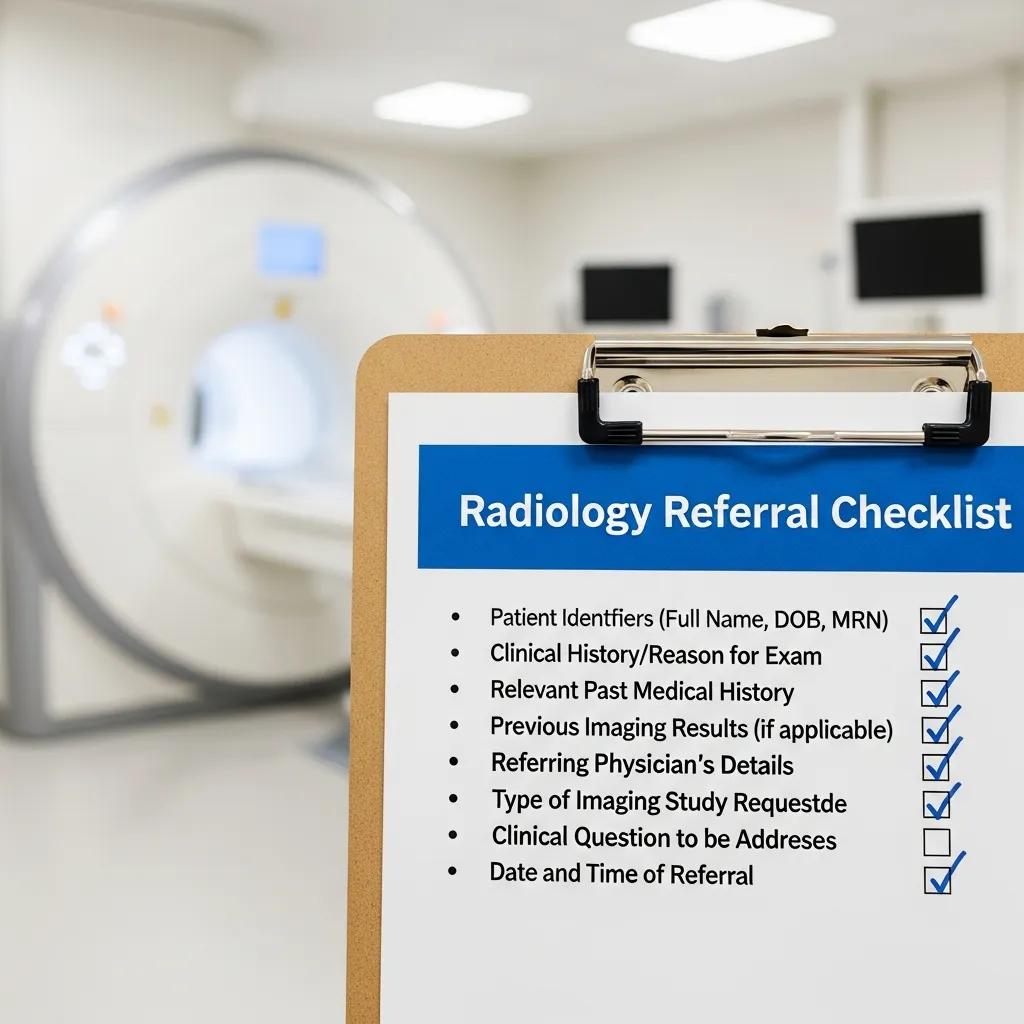
A valid referral should include the patient’s full name and date of birth, the referring clinician’s name and signature, a concise clinical history (symptoms or provisional diagnosis), the exact imaging requested and the date of referral. Missing information — such as a signature, clear clinical justification or an exact modality — is a common reason appointments are delayed or rejected. To reduce follow-up, note any prior imaging, allergies (particularly to contrast), and special needs like paediatric consent or mobility assistance. Keep a copy of the referral and confirm submission with the imaging clinic so bookings can be finalised quickly.
Clear, complete referrals reduce back-and-forth and help the clinic arrange your scan without delay. The next section explains how eReferral makes this simpler.
How does the eReferral system simplify radiology referrals in NSW?

eReferral is a secure electronic pathway that lets clinicians send structured referral data straight to imaging providers. It reduces transcription errors, improves the completeness of clinical information and usually speeds up booking. Unlike paper, eReferral carries attachments (prior reports, images) and metadata that help radiology teams prioritise and schedule the right study. The result is fewer lost referrals, clearer clinical questions attached to imaging requests and better traceability for clinicians and patients — all leading to shorter processing times and a smoother experience. eReferral sits within modern digital health workflows and matches current expectations for efficient inter-practice communication.
Key factors for successful eReferral adoption
Referral solutions reduce transactional costs and can improve care coordination. Successful implementations focus on clear workflows, correct data fields and easy clinician workflows.
E-referral solutions: successful experiences, key features and challenges — a systematic review, M Naseriasl, 2015
- Complete the referral in your clinical software and attach any prior imaging or reports.
- Select the imaging provider and choose the correct study code or short modality description.
- Send the referral through the secure eReferral channel and check for acknowledgement from the clinic.
- Follow up with the bookings team if you need to confirm urgency or special preparation.
- Improved accuracy — fewer transcription and legibility errors than paper referrals.
- Faster processing — electronic submissions usually lead to quicker acknowledgements and appointment offers.
- Better handover — attachments and structured fields carry clinical context that informs imaging protocols.
How do I submit an eReferral to Life Medical Imaging?
Submitting an eReferral to Life Medical Imaging follows the usual workflow: prepare the referral in your practice software, include a brief clinical history and any attachments, choose Life Medical Imaging as the recipient, and send via the secure eReferral channel. You should receive an electronic acknowledgement and a bookings contact will follow up to confirm appointment details. Typical required fields include patient identifiers, requested modality, urgency and prior imaging references. A short clinical question helps our radiologists pick the most appropriate protocol. Processing times vary, but eReferral generally reduces delays compared with paper transfers.
If you need support with eReferral or practice workflows, contact the clinic for referrer resources and referral templates to ensure all required fields are completed correctly.
How does eReferral improve efficiency for doctors and patients?
eReferral creates a reliable, auditable channel between referrers and imaging teams that preserves structured clinical data and attachments. This reduces administrative rework and unnecessary phone calls. Clinicians keep their workflow uninterrupted because eReferral integrates with practice systems; patients get faster appointment confirmations and clearer pre-scan instructions. From a continuity-of-care perspective, eReferral helps link reports and images back to the original referral metadata, improving follow-up. These benefits are especially important for high-volume practices and patients who need timely scans.
The net effect is a smoother pathway from clinical decision to imaging result.
Which medical imaging services require a referral near me?
Most advanced diagnostic modalities require a formal referral because they are specialised services. Examples include MRI, CT, ultrasound, X-ray and interventional procedures. A referral documents clinical need and often determines eligibility for a Medicare rebate, so using the correct modality and clinical justification is important. Simple X-rays can sometimes be arranged quickly, but many clinics still require a written referral for scheduling and billing. Knowing modality-specific rules helps avoid unnecessary repeats and ensures patients get the right scan first time.
The table below summarises common modalities and whether a referral is usually required, with practical notes.
Different modalities have distinct referral and preparation requirements. The short section below explains who should refer and what to include for common scans.
When is a referral needed for CT, MRI, ultrasound and X-ray?
CT and MRI almost always need a formal referral because they are higher-complexity tests. CT referrals should document the suspected issue and any contraindications such as pregnancy; MRI referrals should list safety details like implants and previous imaging. Ultrasound referrals generally need a clinical history and are commonly ordered by GPs for abdominal, pelvic or vascular problems; pregnancy and paediatric considerations should be included where applicable. X-ray referrals are typically used for trauma and suspected fractures and should state the area of concern and mechanism of injury. A clear clinical question on the referral helps the imaging team pick the right protocol and reduces the chance of repeat scans.
If you’re unsure which modality is best, talk with the radiology bookings team or a specialist colleague to match the referral to the diagnostic need and patient safety requirements.
How do referral requirements differ for specialised imaging services?
Specialised services — cardiac CT, women’s imaging, paediatric imaging and interventional radiology — need more detailed referrals that often include prior imaging, specific clinical questions and sometimes specialist endorsement. These details let the team tailor protocols, organise pre-procedure counselling and arrange consent. For example, cardiac imaging referrals should list cardiovascular risk factors and the clinical question (eg. coronary assessment); paediatric imaging needs age-appropriate consent and notes about sedation if relevant. Interventional procedures like biopsies usually require prior imaging review and multidisciplinary notes to justify the invasive study. Including these elements up front prevents delays and helps prepare specialised equipment and staff.
Clear specialist routing on referrals improves triage and aligns the study with the diagnostic problem, supporting safety and diagnostic accuracy.
Where are Life Medical Imaging locations on the Central Coast that accept referrals?
Life Medical Imaging has several Central Coast sites that accept referrals. Each clinic may have small administrative differences — preferred referral channels, walk-in policies or specific preparation instructions — so check the local clinic procedure before submitting. Our services include general and cardiac CT, CT angiography, dental imaging, digital X-ray, a range of ultrasound services, interventional procedures, paediatric imaging, bone densitometry and women’s imaging. Knowing the clinic-specific referral route helps referrers and patients submit referrals correctly and speed up bookings.
The compact reference table below summarises typical referral procedures by location to guide submissions.
What are the referral procedures at Erina, Bateau Bay, Killarney Vale and Umina Beach?
All Life Medical Imaging clinics on the Central Coast accept referrals but may state a preferred submission route. Many sites favour eReferral for completeness and traceability, while fax or scanned referrals are accepted from practices without eReferral. Our bookings teams confirm receipt and advise on any preparation such as fasting, contrast precautions or paediatric consent. For specialised studies at Erina (for example cardiac imaging), attaching prior ECGs or cardiology notes helps select the right protocol. Calling or emailing the clinic before submission ensures the referral arrives in the preferred format and helps avoid scheduling delays.
Checking preferred procedures before sending a referral reduces administrative back-and-forth and helps get patients booked sooner.
Are urgent or walk-in referrals accepted at any Central Coast clinics?
Urgent referral policies differ by clinic and modality. Emergencies should be managed through emergency departments. For urgent outpatient imaging, clinics can often fast-track appointments if the referral clearly states clinical urgency and includes supporting documentation. Some sites have limited walk-in capacity for basic X-rays, but availability depends on staffing and demand — always call ahead to confirm. Marking urgency on the referral and following up with bookings increases the chance of rapid scheduling. If a patient deteriorates acutely, clinicians should use emergency pathways instead of routine outpatient referrals.
Clear urgency wording in the referral and early contact with booking staff are the best ways to speed up outpatient imaging.
How do Medicare and bulk billing work for medical imaging referrals near me?
Medicare rebates apply to many, but not all, imaging services and depend on clinical indication, correct referral documentation and the relevant item number. Bulk billing availability is set by each clinic and by the specific service. A valid referral supports Medicare claims and may reduce out-of-pocket costs for patients. Because billing arrangements vary across modalities and clinics, always check at booking whether bulk billing or a Medicare rebate applies and whether any gap fees are expected. Clarifying costs when you schedule prevents unexpected bills and helps you choose the most appropriate location.
The table below summarises typical billing expectations by service to help patients plan financially and know what to ask at booking.
Which imaging services are commonly bulk billed for Medicare-eligible patients?
Some imaging services commonly attract Medicare rebates and may be bulk billed depending on clinic policy and the clinical reason on the referral. Ultrasounds and basic X-rays ordered by a GP for defined conditions are often eligible; MRI and CT usually have stricter item criteria. Eligibility requires a valid referral that documents clinical justification and the appropriate Medicare item number where applicable. Interventional outpatient procedures often have limited rebate coverage and may require patient contribution. Always confirm eligibility and bulk billing at the time of booking to avoid surprise costs.
Because billing rules and clinic policies change, checking expectations before the appointment helps patients plan and reduces administrative confusion.
What should patients know about billing when using a referral?
When booking imaging with a referral, ask whether the appointment will be bulk billed, which Medicare rebate applies and whether any gap fees are expected. Present your Medicare card and the referral at check-in to speed processing. Also ask whether prior authorisation is required for contrast studies and whether fees apply for extra report copies or image discs. If you plan to claim through private health insurance, confirm the clinic’s billing and claim process in advance. Clear questions at booking help avoid misunderstandings and allow you to choose the right location and time for your imaging.
Being proactive about billing at the time of referral and booking reduces the risk of unexpected costs and supports a smoother experience.
Can allied health professionals refer patients for medical imaging near me?
Allied health referral scope varies by modality and local regulation. In many cases physiotherapists, chiropractors and podiatrists can request plain X-rays and, where permitted, some musculoskeletal ultrasounds. CT, MRI and interventional procedures typically require a GP or specialist referral. Allied health referrers should include a clear clinical history and objective findings to improve appropriateness and acceptance. Knowing these scope differences helps allied health clinicians choose the correct referral source and supports timely access to imaging.
Imaging referral guidelines support better care and value
Using evidence-based referral guidelines improves care quality and patient outcomes while reducing unnecessary costs. Clear guidelines help ensure radiology adds value to clinical decision-making.
Impact and effect of imaging referral guidelines on patients and radiology services: a systematic review, YX Tay, 2025
- X-ray: Frequently requested for suspected fractures and common musculoskeletal problems.
- Ultrasound: Sometimes available for musculoskeletal or soft-tissue assessment within scope.
- Bone densitometry: Referral policies vary — check with the clinic before submitting.
Which imaging services can physiotherapists, chiropractors and podiatrists refer for?
Physiotherapists, chiropractors and podiatrists commonly refer for plain X-rays and, in some areas, musculoskeletal ultrasound when allowed by local rules. These referrals support conservative care decisions and help identify patients who need specialist review. For MRI, CT or interventional procedures a GP or medical specialist referral is usually required to document the broader clinical context and manage risks. Allied health referrers should include clinical findings, symptom duration and prior conservative treatments to justify imaging and speed acceptance.
Clear, focused referrals from allied health professionals reduce duplication and guide imaging teams to the most useful study.
How do allied health referrers submit referrals to Life Medical Imaging?
Allied health referrers should use the clinic’s preferred channels — eReferral where available, or a scanned paper referral — to ensure completeness and traceability. Include key clinical findings and a concise clinical question to help triage. Typical steps: prepare a short referral with patient identifiers and clinical history, choose the correct modality, attach prior reports if available, send via the clinic’s accepted channel and confirm receipt with bookings. If you’re unsure about modality selection, call the clinic first to avoid rejection and delays. Clear contact details on the referral help the clinic resolve queries without contacting the patient directly.
Following these steps helps allied health clinicians integrate with local radiology workflows and supports better patient care.
For help with referrals or bookings, contact Life Medical Imaging by phone at 02 4326 7000 or by email at info@lifeimaging.com.au. Our referrer resources include forms and eReferral guidance to streamline submissions and support timely appointments. Life Medical Imaging is NATA-accredited and provides a wide range of services across Central Coast locations (Bateau Bay, Killarney Vale, Umina Beach and Erina). If you’re a referrer or patient with questions about modality-specific requirements or billing, contact the bookings team for the correct local procedure and urgent referral handling. These direct channels help ensure your referral is processed correctly and appointments are arranged efficiently.
Frequently asked questions
What should I do if my referral is rejected or delayed?
If your referral is rejected or delayed, contact the imaging clinic’s bookings team for the reason and any missing details. They can tell you whether information is incomplete or the submission format was incorrect. It’s also useful to ask your referring clinician to update or resend the referral. If the scan is time-sensitive, discuss expedited options with both the clinic and your clinician to find an appropriate pathway.
Can I change my imaging appointment after receiving a referral?
Yes — you can reschedule an imaging appointment after a referral is issued. Contact the clinic directly to check availability and to confirm any preparation changes. Have your referral details handy when you call so bookings can assist quickly, and always confirm the new appointment to avoid confusion.
What happens if I forget to bring my referral to the appointment?
If you forget your referral, the clinic may need to verify it before proceeding, which could cause delays or rescheduling. Call the clinic as soon as possible — they may accept an electronic copy or wait for the referrer to send confirmation. If not, you may need to reschedule once the referral is received.
Are there any specific preparations I need to follow before my imaging appointment?
Preparation depends on the type of scan. Some tests require fasting, others ask you to avoid certain medications or wear loose clothing. Follow any instructions from your referrer or the imaging clinic. If you haven’t received preparation guidance, contact the clinic ahead of time to confirm what you need to do.
How can I ensure my imaging results are shared with my doctor?
Ask the imaging clinic to send the results directly to your referring clinician — most clinics do this as standard. You can also request a copy of your report for your records. If you have a follow-up appointment booked, bring the results or confirm the clinic has sent them to your doctor before the visit.
What should I do if I have questions about my imaging results?
If you have questions about your results, speak with your referring clinician. They can explain findings in the context of your health and recommend any next steps. If the matter seems urgent, contact your doctor’s office for a prompt discussion.
Conclusion
Getting a radiology referral on the Central Coast helps you access the right diagnostic imaging quickly and safely. Understanding what referrals need to include, how eReferral works and the local clinic procedures will reduce delays and make your care journey smoother. Follow the steps above, check billing and preparation details at booking, and contact Life Medical Imaging if you need assistance. We’re here to help you get the right scan at the right time.