


Radiography at University: A practical guide to diagnostic and therapeutic degrees and careers in the UK
Radiography sits at the crossroads of medicine, physics and compassionate patient care. This guide walks you through diagnostic and therapeutic radiography degrees, entry requirements, leading university options, likely career routes, professional registration and the practical skills employers look for. At Life Medical Imaging Central Coast we use our clinical experience to explain how university learning links to real-world imaging work — and we’re happy to discuss observation opportunities or answer questions about placements. Recent trends show radiography training increasingly blends digital capability, hands-on clinical placements and close teamwork across specialties; this article maps those shifts to course content and workplace expectations. You’ll find clear comparisons of the diagnostic and therapeutic routes, typical UCAS offers, universities with strong placement networks, common specialisms and expected salaries, how AI and new technology are changing the role, and the steps required for professional registration. Each section connects academic learning to everyday imaging modalities and employer settings so you can prepare a targeted application and plan meaningful clinical experience.
What are diagnostic and therapeutic radiography degrees in the UK?
Diagnostic and therapeutic radiography are specialist allied health degrees that blend scientific theory, clinical skills and supervised placements to prepare regulated practitioners. Diagnostic programmes focus on producing and using clinical images across modalities — X‑ray, CT, MRI and ultrasound — while therapeutic degrees train radiographers to plan and deliver radiotherapy for people with cancer. Both pathways cover anatomy, radiation physics, professional practice and patient-centred communication, with integrated clinical placements that transfer classroom learning into hands‑on care. Graduates from approved courses are eligible to apply for professional registration and can start work in acute trusts, outpatient services or specialist clinics, or continue with postgraduate study.
The table below highlights the key differences in structure and typical outcomes for each pathway.
This comparison shows how programmes lead to different clinical responsibilities and employer settings. Next, we look closer at diagnostic practice and the main imaging modalities.
What is diagnostic radiography and its role in healthcare?

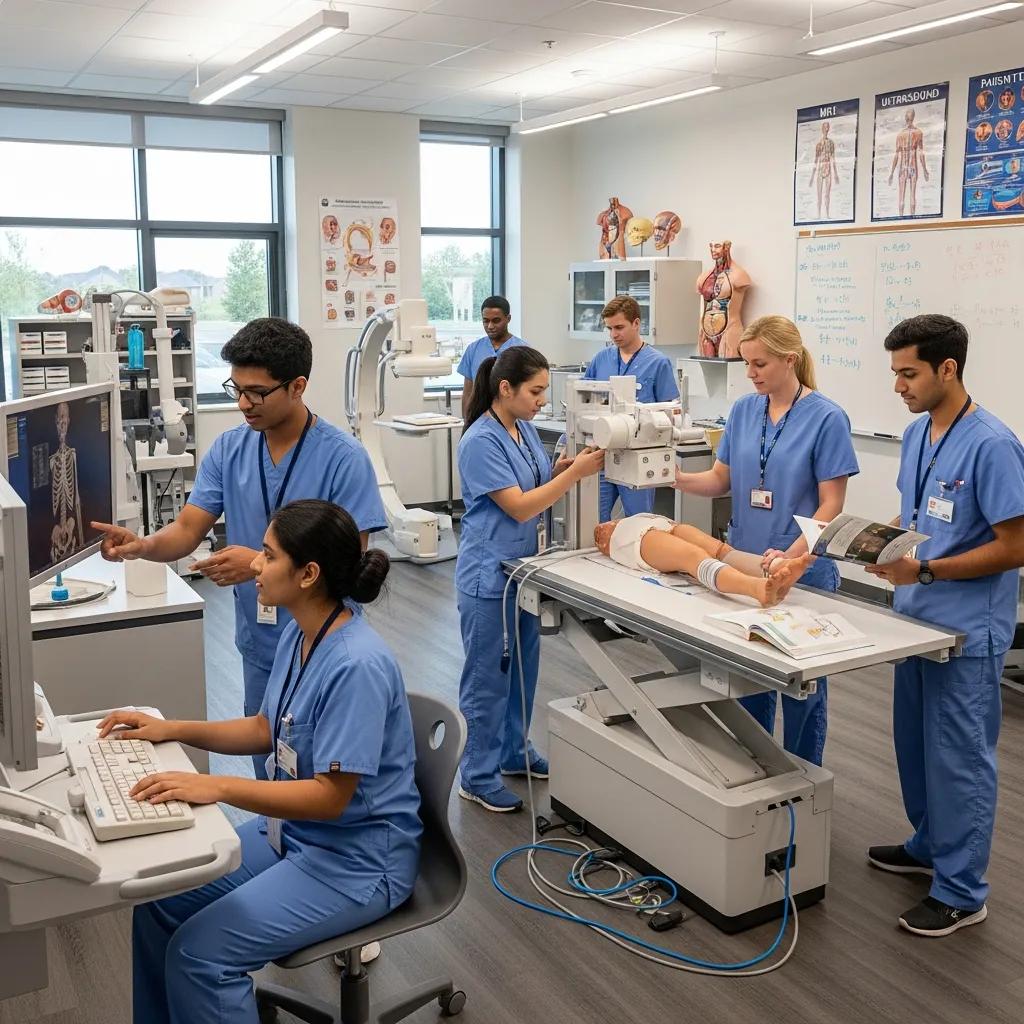
Diagnostic radiography trains practitioners to create clinical images that support diagnosis and guide treatment, with a strong emphasis on patient safety and image quality. You’ll learn how X‑ray, computed tomography (CT), magnetic resonance imaging (MRI) and ultrasound systems work, how to position patients to get diagnostically useful images, and how to apply radiation protection principles to keep doses as low as reasonably practicable. Diagnostic radiographers work across emergency departments, outpatient imaging centres and specialist clinics, performing everything from trauma X‑rays to advanced cross‑sectional imaging used in surgical planning. Course learning combines anatomy and physics lectures with simulation and assessed clinical placements to build both technical competence and professional judgement.
Those same imaging skills play a crucial supporting role in therapeutic radiography, where images guide precise treatment delivery.
How does therapeutic radiography differ from diagnostic radiography?
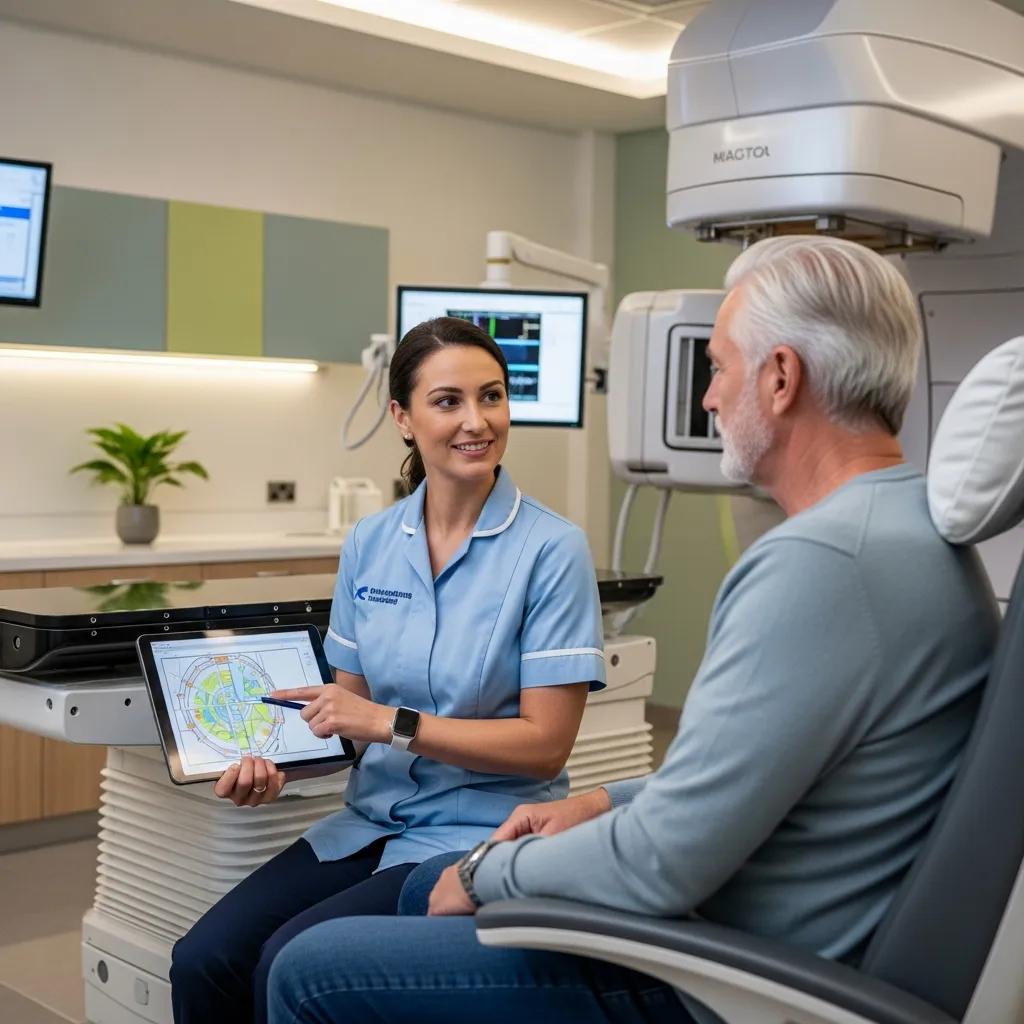
Therapeutic radiography focuses on using targeted ionising radiation to treat cancer. Training emphasises treatment planning systems, patient simulation, verification and close multidisciplinary working with oncologists and medical physicists. Students study radiotherapy physics, treatment verification and dose fractionation alongside modules in oncology care, palliative support and psychosocial communication. Clinical placements place learners in simulation suites and beside linear accelerators, where safety, accuracy and patient continuity are paramount. Graduates are prepared not only to deliver technically precise treatments but also to support patients through symptoms, follow‑up and coordinated care — a role distinct from image‑focused diagnostic practice.
Knowing these differences will help you choose the pathway that best matches your clinical interests and career goals.
What are the entry requirements for radiography university courses in the UK?
Entry requirements usually combine academic qualifications, science prerequisites and evidence of relevant experience. Universities set UCAS point offers that reflect demand and course intensity. Typical applicants present science‑based A‑levels (or equivalent technical qualifications), with GCSEs including English and maths, and may need an interview or practical assessment that tests communication and empathy. Alternative routes — Access to HE diplomas, apprenticeships and mature‑student pathways — are available, but still expect demonstrable healthcare exposure and a commitment to regulated practice. A well‑written personal statement and observational or volunteer experience strengthen applications by showing motivation and insight into clinical work.
Below is a practical mapping of common qualifications to typical UCAS point ranges to help you compare options.
This table summarises common entry pathways and typical offers, clarifying how different qualifications map to university expectations and helping you choose how to prepare.
Which qualifications and UCAS points are needed for radiography degrees?
Most UK radiography programmes expect A‑level or equivalent science qualifications, with UCAS offers varying by university. Biology or physics is commonly requested alongside general requirements in English and maths. Some courses accept applied qualifications such as BTECs when supported by a strong portfolio or relevant experience. Mature students and holders of Access to HE diplomas can show equivalent readiness through graded credits and clinical exposure. Apprenticeships combine workplace learning with academic modules as another route in. Admissions teams assess both academic achievement and interpersonal skills, so practical experience and a reflective personal statement are important differentiators.
Next we explain how to write a compelling personal statement and prepare for interviews.
How to prepare a radiography personal statement and interview?
A strong personal statement clearly explains why you want to work in patient‑facing imaging, gives concrete examples of relevant experience and reflects on teamwork and professional ethics. Structure your statement around three or four specific examples — volunteer shifts, observational placements, coursework or communication experiences — and say what each taught you. For interviews, practise common scenarios: handling ethical dilemmas, explaining procedures to patients, and straightforward clinical problem‑solving. Some universities use short practical tasks or group activities to assess teamwork. Use clear transitions between examples and link your experience to the learning outcomes of the course to stand out at selection.
Good interview preparation naturally leads into choosing universities with strong placement and facilities.
Which are the best radiography universities and courses in the UK?
“Best” depends on the factors that matter to you: placement quality, simulation and digital facilities, graduate outcomes and curriculum relevance to current clinical practice. Top programmes offer early clinical exposure, modern imaging suites or simulation centres, and strong links with diverse employer settings so graduates are job‑ready. When comparing courses, look for detailed module lists in anatomy, radiographic technique, image reporting and digital skills, plus clear placement hours and assessed competencies. Prefer institutions that publish graduate employment data and give students hands‑on time with CT, MRI and linear accelerators — those experiences align most directly with employer needs.
When shortlisting, prioritise programmes that show these strengths:
- Extensive clinical placement networks and strong graduate employment rates.
- Early integration of digital radiography and image informatics in the curriculum.
- Dedicated simulation suites or interprofessional training modules.
These selection criteria also affect funding options and placement logistics — practical considerations worth checking before you apply.
What are the top‑ranked diagnostic radiography degree programmes?
Leading diagnostic programmes give early hands‑on experience, exposure to advanced modalities and strong employer partnerships that broaden placement choices. They typically guide students from basic X‑ray technique to cross‑sectional imaging such as CT and MRI, supported by simulation labs that mirror real clinical workflows. Graduate employability is strongest where courses arrange placements across emergency, outpatient and private clinic settings so students see varied case mixes and equipment. Employers value graduates familiar with modern digital systems and patient‑centred practice, which these programmes tend to produce.
Understanding financial support can help you manage study and placement costs.
What funding options and bursaries are available for radiography students?
Funding can come from national schemes, university bursaries and targeted support for shortage specialisms. In the UK, some health‑sector funds and university scholarships may help with tuition or provide maintenance support for eligible students, especially where courses align with workforce need. Programmes sometimes offer hardship funds, accommodation assistance and travel bursaries for placement commitments; postgraduate study may have separate funding routes or employer sponsorship. Check eligibility early and budget for placement costs such as travel and professional uniforms.
Practical experience is often decisive when choosing a course — seek chances to observe modern imaging practice where you can.
Practical experience & placements: To maximise employability, choose placements that expose you to CT, MRI, ultrasound and radiotherapy simulation. Observing clinical practice in CT and MRI suites or radiotherapy linear accelerator rooms reveals equipment workflows and interdisciplinary communication. Contact local clinics and imaging centres for observation or short work‑experience opportunities to complement university placements and deepen your understanding of patient pathways and equipment.
What career paths and specialisations are available after radiography university?
Radiography graduates can move into diagnostic imaging, radiotherapy, interventional procedures, research and education, working in NHS trusts, private clinics and specialist centres. Common specialisms include CT, MRI, ultrasound, mammography, nuclear medicine and interventional radiography. These pathways often require further training or accredited postgraduate qualifications to gain reporting skills or advanced practice responsibilities. Career progression can lead from entry clinical roles into advanced practitioner, reporting radiographer or managerial positions. Ongoing professional development — postgraduate study, competency‑based training and CPD — supports those moves.
The table below shows typical specialisms and where they’re commonly located.
What are common radiography career opportunities and specialisations in the UK?
Typical roles include diagnostic imaging posts, positions in radiotherapy centres and specialist pathways such as reporting radiographer or advanced practitioner roles that combine imaging with clinical decision‑making. Early‑career radiographers usually rotate through modalities to gain competency in patient positioning, image optimisation and quality assurance. Specialisation often requires additional courses or in‑house competency portfolios and can lead to responsibilities in image reporting, team leadership or interventional support. Private clinics and specialist centres frequently look for radiographers with CT or MRI experience, reflecting demand for cross‑sectional imaging skills.
Next we outline salary expectations and common professional development routes to help with long‑term planning.
What is the expected salary and professional development for radiographers?
Radiographer salaries in the UK typically follow national banding frameworks. New graduates usually start in entry bands (often Band 5) with progression tied to experience, specialism and added responsibilities; location and employer type also affect pay. Professional development options include postgraduate degrees in advanced practice, reporting certifications and leadership training, which open the way to higher‑band clinical or managerial roles. Maintaining registration, completing CPD and building modality‑specific competencies are essential for progression. Investing in targeted postgraduate study or accredited in‑house training generally aligns with broader responsibilities and better pay.
Life Medical Imaging Central Coast perspective: Private clinics can offer concentrated exposure to CT, MRI and ultrasound workflows and may support targeted upskilling in image quality and patient communication. Clinics often provide observation opportunities and short placements that complement university training — if you’re interested in work experience or informal observation, contact Life Medical Imaging Central Coast to discuss what’s available.
How are advanced technology and AI shaping the future of radiography careers?
Advanced imaging technology and AI are changing radiography by automating routine tasks, improving diagnostic triage and raising expectations for digital literacy in clinical practice. AI assists with anomaly detection, image reconstruction and structured reporting — helping accuracy and reducing turnaround times — while modern modalities demand operators who understand image informatics and quality assurance. As a result, radiography education now includes data‑handling, familiarity with teleradiology systems and basic machine learning concepts behind clinical decision‑support tools. Role boundaries are shifting: radiographers increasingly contribute to image‑driven care pathways, help validate AI tools and participate in service improvement.
Key practical impacts of AI include:
- Faster image triage and earlier flagging of urgent findings.
- Reconstruction and noise‑reduction algorithms that improve image quality and reduce repeat scans.
- Reporting support and structured data extraction that streamline workflows and auditing.
Training must therefore teach both core imaging skills and the informatics competencies needed to use these tools safely and effectively.
How is AI improving diagnostic accuracy in radiography?
AI improves diagnostic accuracy by offering second‑read algorithms that flag possible abnormalities, enhancing reconstruction to reveal subtle details, and extracting structured data that supports consistent reporting. Practical uses include triage models that prioritise acute chest findings, dose‑optimising reconstruction algorithms, and natural‑language tools that summarise reports for multidisciplinary teams. These tools augment clinical judgement rather than replace it, so training increasingly includes supervised exposure to AI outputs and governance principles to ensure safe use. Approached as decision‑support, AI can raise sensitivity and streamline workflow while clinicians retain final oversight.
Better diagnostic tools also change daily routines in clinics and hospital departments, affecting how radiographers schedule, review and communicate results.
The impact of AI on the radiography profession: workflow, roles and opportunities
This paper reviews how AI systems entered medical imaging and explores their potential effects on radiographers’ workflows — from procedure planning and image acquisition to processing. It highlights opportunities such as improved patient care, broader cross‑modality skills, enhanced technical expertise and the chance for radiographers to take on AI‑supported reporting and auditing tasks.
What is a typical day in the life of a radiographer at a private clinic?
In private practice a radiographer’s day often starts with equipment checks and planned CT or MRI appointments, balancing efficiency with patient‑centred care and image quality control. Mornings usually include pre‑scan briefings, patient positioning for cross‑sectional studies and coordinating referrals with admin teams. Midday work often focuses on image post‑processing, reporting workflows and communicating follow‑up recommendations to referrers. Afternoons may involve quality control, reviewing AI‑assisted flags and participating in case discussions, along with time for equipment logs and CPD. Private clinics commonly concentrate on a smaller range of modalities, letting radiographers build high‑volume expertise in particular techniques.
Life Medical Imaging Central Coast practical note: Clinics with modern scanners and integrated reporting workflows are useful places to see how university skills translate into everyday practice. Observing CT protocols or MRI safety checks helps you understand the competencies employers expect — contact us for information about observation and placement possibilities.
What are the key professional bodies and regulatory requirements for radiographers in the UK?
UK radiographers work within statutory regulation and professional guidance designed to protect patients and maintain standards. The Health and Care Professions Council (HCPC) provides statutory registration, sets standards of proficiency and keeps the public register that qualified practitioners must join to practise lawfully. The Society and College of Radiographers offers professional development, policy advice and CPD resources, supporting students and early‑career staff. Knowing the registration pathway, fitness‑to‑practise expectations and CPD obligations is essential for graduates to remain competent and compliant throughout their careers.
The regulatory framework below leads directly into the registration steps and professional supports covered afterward.
Evolving radiography roles and educational needs in diagnostic imaging
As imaging capabilities have expanded, demand for radiology services and extended radiographer roles has grown. Research with service managers shows an increase in role extensions over time — including radiographers taking on reporting tasks previously done by radiologists — and highlights the educational implications and the need for clinical support when implementing new roles.
What role does the Health and Care Professions Council play in radiography?
The Health and Care Professions Council (HCPC) is the statutory regulator that sets professional standards for radiographers and maintains the register of qualified practitioners required for legal practice. Registration requires a recognised qualification from an approved programme, fitness‑to‑practise checks and any required supporting evidence; once registered, practitioners must meet CPD and conduct standards to stay on the register. The HCPC also handles concerns about practice and can require remediation where standards fall short, protecting patients and public confidence. Make sure your chosen degree qualifies you for HCPC registration on graduation.
Understanding professional support helps new practitioners navigate CPD, membership and career development options.
How does the Society and College of Radiographers support radiography professionals?
The Society and College of Radiographers provides CPD resources, policy guidance and student support to help radiographers build safe, effective practice and progress their careers. Membership gives access to learning modules, mentorship networks, research groups and practical advice on scope of practice. The organisation advocates for workforce development and evidence‑based standards that influence curricula and employer expectations. Engaging with the professional body supports reflective practice, informs postgraduate choices and helps plan accreditation or advanced practice pathways.
These supports help radiographers stay adaptable as technology and service models evolve.
Frequently asked questions
What skills are essential for a successful career in radiography?
Successful radiographers combine technical ability, strong interpersonal skills and analytical judgement. Technically, you need competence with imaging equipment and radiation safety. Interpersonally, you must explain procedures clearly and reassure patients. Analytically, you’ll need to recognise image quality issues and understand clinical context. Adaptability, attention to detail and teamwork are also vital in fast‑moving clinical environments.
What are the continuing professional development (CPD) requirements for radiographers?
CPD is required to maintain HCPC registration. Radiographers must take part in activities that develop skills and knowledge — for example workshops, online courses or research — and reflect on how learning affects practice. Keeping CPD records and applying learning to patient care are central to staying competent as technology and practice evolve.
How does one transition from a radiography degree to a specialised role?
After qualifying, most radiographers begin in general clinical roles and build modality experience through rotations and employer training. To specialise, you’ll usually complete accredited postgraduate courses or in‑house competency programmes in areas such as MRI, CT or interventional radiography. Seeking mentorship, networking and targeted CPD helps open specialist opportunities.
What impact does AI have on the training of future radiographers?
AI is becoming part of training by introducing tools for image analysis, anomaly detection and workflow optimisation. Education increasingly covers how to interpret AI outputs, apply governance principles and use informatics systems — preparing students to work safely with decision‑support tools while preserving clinical oversight and ethical practice.
What are the common challenges faced by radiography students during their training?
Common challenges include balancing demanding coursework with practical placements, managing time effectively, and coping with emotionally difficult clinical situations. Adjusting to the clinical environment and meeting assessed competencies can be stressful; support from peers, mentors and academic staff is important for success.
How can radiography graduates enhance their employability after university?
Enhance employability by gaining practical experience through placements, voluntary work or internships, and by networking within the profession. Pursuing postgraduate qualifications or certifications in sought‑after modalities and maintaining strong communication and teamwork skills will help you stand out. Regular CPD and demonstrable clinical experience show employers your commitment to professional growth.
Conclusion
Choosing a radiography degree opens the door to a rewarding clinical career that combines technical skill with patient care. Knowing the differences between diagnostic and therapeutic routes will help you pick the right course for your goals. Research universities for placement quality, facilities and graduate outcomes, and explore funding options early to plan for placement costs. If you’d like practical insight into modern imaging workflows or are interested in observation opportunities, contact Life Medical Imaging Central Coast to discuss next steps.