



Preparing your child for diagnostic imaging: a parent’s guide to paediatric MRI, CT, ultrasound and X‑ray
Diagnostic imaging lets clinicians look inside the body to diagnose injury and illness. When a child is prepared—both practically and emotionally—scans are quicker, clearer and less likely to need repeating. This guide explains how to get ready for common paediatric tests (MRI, CT, ultrasound and X‑ray), with clear, age‑appropriate language, fasting rules, distraction ideas and simple scripts to calm toddlers through teens. You’ll find step‑by‑step checklists, what to bring on the day, how sedation or contrast changes preparation, and quick comparisons and tables to make planning straightforward. Practical tips focus on reducing distress while keeping safety principles such as ALARA (radiation minimisation) and sedation precautions front of mind.
How can parents effectively prepare their child for diagnostic imaging?
Good preparation blends practical checks (paperwork, clothing, fasting when needed) with simple emotional preparation that matches your child’s age. Physical readiness helps staff run the scan safely and efficiently; emotional readiness helps your child cooperate and can reduce the need for sedation. Calm, consistent parental behaviour on the day improves cooperation and image quality. The short checklist below lists the most important actions to take in the days and hours before the appointment.
- Bring the referral and any previous images or reports so the radiology team can plan the scan.
- Dress your child in comfortable, metal‑free clothing and leave jewellery and accessories at home.
- If sedation or contrast is planned, follow fasting and medication instructions exactly — call the clinic if anything is unclear.
- Pack familiar comfort items, permitted snacks, distraction devices and a familiar comforter where appropriate.
These simple steps cut last‑minute stress and let staff focus on the scan. Next, learn how to prepare children emotionally with honest, age‑appropriate explanations and play.
What are the key steps in physical and emotional preparation for paediatric imaging?
Physical preparation covers documents, clothing and any pre‑scan safety checks the clinic requests; emotional preparation uses short explanations and role‑play to set expectations. Check your appointment letter for fasting notes, bring identification and the referral, and make sure clothing has no metal fasteners to avoid delays. Emotionally, use short, concrete phrases suited to your child’s age, practise lying still at home for short periods and speak calmly and confidently—frame the scan as a quick, helpful test. Combining both approaches reduces anxiety and often shortens scan time by improving cooperation.
These practical actions prepare both body and mind. The next section explains how a parent’s demeanour can influence a child’s anxiety and willingness to cooperate.
How does parental support reduce anxiety during imaging procedures?
Parents strongly influence a child’s stress levels: calm, confident caregivers lower stress and make it easier for children to follow instructions. Try a steady voice, brief explanations and reassurance without over‑apologising. Practical tactics include doing calming breathing exercises together, bringing a familiar toy and role‑playing the appointment with a teddy or toy scanner. Praise small cooperative steps rather than using threats or punishment—this reinforces positive behaviour and helps staff complete the scan smoothly.
Management of Paediatric Anxiety in Medical Imaging: Impact and Consequences
Previous studies estimate that 50–75% of children experience heightened anxiety before a new medical procedure such as imaging [1,2]. Poorly managed anxiety can cause immediate distress and movement during the scan, which reduces image quality [1–5], and creates extra logistical and economic burdens for families and services [6,7]. Short‑term effects include crying, pain and poor cooperation [1,8,9]; long‑term effects can include avoidance of medical care, altered coping and, in some cases, post‑traumatic stress symptoms [9,10]. Interventions such as preparatory manuals and child life programmes have shown benefits in reducing anxiety and improving scan success (see randomized trial by C Stunden, 2021).
When parents practise these approaches beforehand, children usually arrive more settled and teams can often avoid sedation. That leads into modality‑specific preparation — for example, MRI where noise and the enclosed scanner can be challenging for some children.
At Life Medical Imaging Central Coast: Life Medical Imaging Central Coast provides specialist paediatric imaging across multiple Central Coast locations and offers online booking. Our child‑focused teams support many of the preparation steps described here; contact your local clinic for details.
How should you prepare your child specifically for an MRI scan?

MRI is a non‑ionising test that uses magnets and radio waves to create detailed images of soft tissues. It’s commonly used for the brain, spine and soft‑tissue concerns in children. MRI does not use X‑rays, but the scanner can be noisy and the tunnel may feel confining, so physical screening and emotional preparation are important. Remove metal, and tell staff about implants, orthodontics or anything metallic in clothing. Preparation usually includes stillness practice, explaining the noises and, if sedation is planned, following fasting instructions carefully.
What is an MRI and why is it used for children?
MRI produces high‑resolution images using magnetic fields and radio waves, making it ideal for detail in the brain, spinal cord, joints and soft tissues without ionising radiation. In children it’s commonly used for developmental concerns, injuries, tumours and complex structural problems where soft‑tissue detail matters. Because MRI avoids radiation, it’s often preferred when repeat imaging or superior soft‑tissue contrast is required. Paediatric teams now use child‑friendly explanations and noise‑reduction aids to make the experience easier for young patients.
Knowing MRI is safe but noisy and that staying still is important helps shape practical preparation that supports coping on the day.
What are the physical and emotional preparation requirements for a child’s MRI?
Physically, screen for metal items, remove jewellery and wear metal‑free clothing; follow clinic fasting rules if sedation is planned. Emotionally, use age‑appropriate descriptions (for example, “the scanner takes pictures like a big camera”) and practise lying still with a pillow or rolled towel to mimic scanner positioning. Provide ear protection and, where allowed, use music or audio stories during the scan. For younger children, a short mock‑scanner practice at home can be helpful. If sedation is planned, expect staff to contact you with fasting and consent instructions—accurate adherence is important for safety.
Below is a quick comparison to help parents understand how preparation differs by modality.
This table highlights the main differences so you can plan the right preparation for each test and practise the emotional supports that match the scan’s demands.
At Life Medical Imaging Central Coast: Life Medical Imaging Central Coast offers paediatric MRI with child‑centred approaches and staff trained to support emotional preparation. Online booking is available to streamline appointments.
What are the best practices for preparing your child for a CT scan?
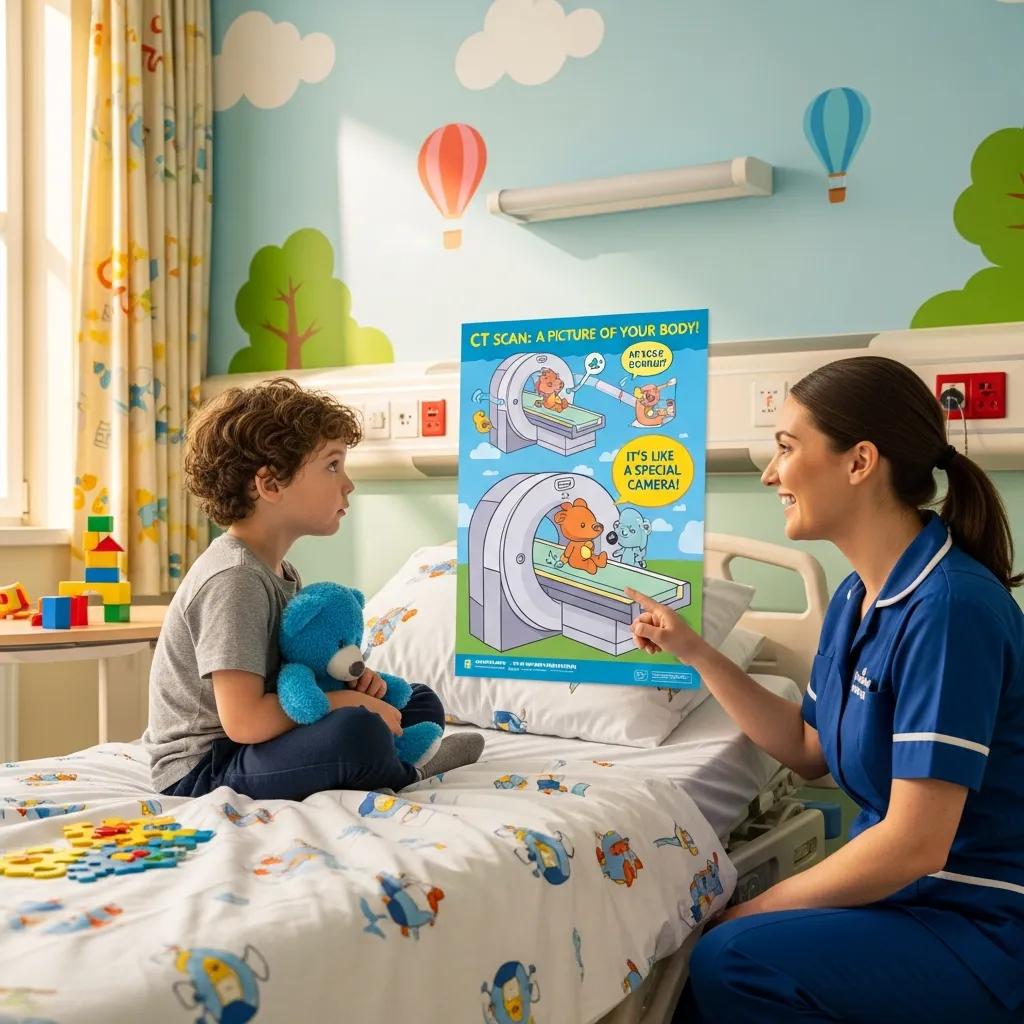
CT uses ionising radiation to produce fast, cross‑sectional images and is often recommended for trauma, suspected fractures or where speed is essential. Because CT involves radiation, teams follow the ALARA principle (as low as reasonably achievable), adjusting doses for the child’s size and clinical need. CT sometimes uses IV contrast to enhance organs or vessels, so check whether contrast is planned and follow fasting and hydration instructions. Emotional preparation focuses on explaining how quick the scan is and practising brief stillness.
What is a CT scan and when is it recommended for children?
CT rapidly acquires detailed images using X‑rays and computer processing, making it valuable in emergencies and complex anatomical assessments. In paediatric care, clinicians take extra steps to minimise radiation and consider alternatives such as ultrasound or MRI where appropriate. If you have concerns about radiation, discuss risks and benefits with the referring clinician so you can make an informed choice.
Explaining the speed and purpose of CT helps children accept the short, focused scan and reduces the risk of movement artefact.
How should parents prepare their child physically and emotionally for a CT scan?
Confirm whether IV contrast will be used and follow any fasting or hydration instructions on your appointment notice; bring a list of allergies or relevant medical history. Dress your child in comfortable clothing without metal fasteners and remove removable devices before the scan. Emotionally, reassure them the scan is very quick, practise holding still at home for short counts, and use calm, concrete language and small rewards for cooperation. If your child is anxious, check parental presence policies and comfort measures with the radiology team before you arrive.
Practical tips include bringing a comfort item and scheduling the scan around nap times where possible to increase cooperation.
Radiation Protection for Children in Diagnostic Imaging: Risks and the ALARA Principle
Advances in imaging have improved diagnosis but also increased use of ionising radiation. Computed tomography is a main contributor to this exposure, and children are more sensitive to radiation due to tissue radiosensitivity and longer lifetime risk. Paediatric teams apply dose‑optimised protocols and the ALARA principle to reduce exposure. This review discusses estimated risks and practical strategies for protecting children during diagnostic imaging (Radiation protection of the child from diagnostic imaging, 2015).
At Life Medical Imaging Central Coast: Life Medical Imaging Central Coast provides paediatric CT with dose‑optimised protocols and clear booking options for families considering CT for their child.
How can you prepare your child for an ultrasound scan?
Ultrasound uses sound waves to create images and is safe and radiation‑free, making it a common choice for infants and children. Preparation depends on the area scanned: abdominal scans may need fasting, pelvic exams may need a full bladder, while musculoskeletal scans usually need no special prep. The probe is used with cool gel on the skin—explaining this and letting your child touch the probe beforehand can reduce surprise. Parents are often able to stay close during ultrasound, and simple distractions and the presence of a trusted adult usually keep children relaxed.
What is an ultrasound and how does it work for paediatric patients?
Ultrasound works like sonar: harmless sound waves create echoes that form real‑time images. It’s frequently used for abdominal, hip, cranial (in infants) and soft‑tissue assessments because it’s non‑invasive and radiation‑free. Technologists can often show parents the images during the scan, which helps curious older children understand the process. The safety and immediacy of ultrasound make it a preferred first‑line test for many paediatric problems.
Knowing the test is painless and safe helps parents present the appointment positively and encourage cooperation.
What are the physical preparation guidelines and emotional tips for ultrasound scans?
Follow the exam‑specific instructions: abdominal ultrasounds may require fasting for several hours, pelvic scans may ask for a full bladder, and most other scans need no preparation. Dress your child in loose layers to allow easy access and comfortable position changes. Emotionally, explain the gel is cool and will be wiped off afterwards, let older children watch the screen if suitable, and use distraction such as songs or stories during the scan. These measures reduce movement and help technologists get the images they need quickly.
At Life Medical Imaging Central Coast: Life Medical Imaging Central Coast performs paediatric ultrasound exams and provides clear, modality‑specific preparation notes and online booking to help parents plan.
What are the essential steps to prepare your child for an X‑ray?
X‑ray uses a small, controlled dose of ionising radiation to image bones and chest structures and is usually very quick, which reduces the need for extensive preparation. Physical prep is minimal: remove jewellery, metal hair accessories and clothing with metal fasteners; wear comfortable layers that are easy to change. Radiographers follow ALARA principles and use shielding where appropriate—ask staff about shielding policies and whether you may stay in the room. Emotional preparation is brief: explain the short duration and practise stillness for a few seconds to a minute depending on the view.
What is an X‑ray and why is it used in paediatric imaging?
An X‑ray creates images using ionising radiation and is commonly used for suspected fractures, chest infections and other structural checks because it’s quick and widely available. For children, exposure settings are adjusted for size and only necessary views are taken. The short duration of most X‑ray exams makes them simple for many children; telling them how brief it will be usually eases worry.
Reassuring families about dose minimisation and the straightforward nature of the test usually helps children accept the procedure.
How should parents help their child get ready for an X‑ray?
Make sure clothing is metal‑free and consider bringing a quiet favourite toy for distraction; if immobilisation is required, staff will explain why and how it’s done. Use simple instructions like “look at the sticker and hold very still for a count of three,” practise this at home, and praise cooperative behaviour afterwards. Check parental presence rules before the appointment so you know whether you can stay in the room or wait nearby; some sites allow a parent to remain if wearing protective shielding. These steps help keep the X‑ray quick and reduce repeat exposures.
At Life Medical Imaging Central Coast: Life Medical Imaging Central Coast offers paediatric digital X‑ray and dental imaging across Central Coast sites with patient comfort measures and booking support for families.
How can parents reduce anxiety and support their child during diagnostic imaging?
Lowering a child’s anxiety combines clear, age‑appropriate communication, distraction and comfort strategies, and teamwork with the imaging staff when special needs or behavioural challenges exist. Strategies vary by age: toddlers respond to brief concrete comfort, school‑age children benefit from simple facts and small choices, and teenagers respond to respectful, detailed information and privacy. Distraction tools such as music, video, breathing games and familiar toys reduce perceived threat and improve stillness. If worries are significant, ask whether the clinic has child life specialists who focus on preparation and coping for paediatric procedures.
Intro to age‑based strategy table: The table below maps communication and distraction ideas to age groups to help parents choose suitable supports.
What age‑appropriate communication strategies help calm children before scans?
Match your words to your child’s developmental level to increase understanding and reduce fear. For toddlers, use one‑sentence reassurances and immediate comfort; for preschoolers, use short role‑plays and simple stories that normalise the visit; for school‑age children, explain why the scan is needed, what will happen and offer small choices to increase control. For teenagers, be transparent about purpose, process and privacy and involve them in scheduling when possible. Practise short scripts, offer predictable rewards and avoid over‑reassuring language that can unintentionally raise anxiety.
Move from communication to tangible supports—like toys and apps—so children have tools to focus on rather than fear.
What comfort items and distraction techniques are effective during imaging?
Comfort items and distraction techniques reduce perceived threat and improve cooperation across ages, though some items must be adapted for certain modalities (for example, electronics and metal items are not allowed in MRI). Effective options include soft toys and blankets for toddlers, music or headphones for school‑age children, and familiar playlists or breathing apps for teens. Gamified breathing exercises and simple reward systems (stickers, praise) encourage stillness. Audiovisual attachments or headphones can be used during MRI and ultrasound when permitted. Always check with the radiology team about allowed items to ensure safety and compatibility.
Using approved comfort strategies and confirming modality restrictions helps parents plan effective, safe distraction methods.
At Life Medical Imaging Central Coast: Life Medical Imaging Central Coast offers child‑centred care and paediatric support at its Central Coast clinics to help families prepare and reduce anxiety before imaging appointments.
What are the fasting and dietary guidelines for children undergoing diagnostic imaging?
Fasting rules depend on the procedure, the child’s age and whether sedation or IV contrast is planned. Follow the clinic’s instructions exactly to avoid delays and ensure safety. Clear fluids are often allowed up to a short window before sedation, while solids typically require a longer fast; infants may have tailored feeding guidance. Abdominal and pelvic ultrasound exams often have specific bladder or fasting requirements different from MRI or CT. The table below summarises typical guidance by procedure and age band to help interpret appointment notes.
Intro to fasting table: Use this table as a quick reference for common fasting instructions, but always follow the exact guidance on your appointment notice.
What are the general fasting rules for paediatric imaging procedures?
Common rules include allowing clear fluids until 1–2 hours before sedation and requiring solids to be withheld for 4–6 hours when sedation is planned; infants may have specific feed instructions. These rules reduce aspiration risk during sedation and improve image quality for contrast or abdominal studies. If medications are essential, check with the clinic whether they should be taken with a small sip of water. Always bring your appointment letter and ask the imaging team to clarify fasting for breastfed infants or children with medical needs.
Following the clinic’s fasting instructions closely reduces the chance of last‑minute cancellations or rescheduling.
How do fasting requirements differ by imaging type and child’s age?
Fasting varies because each test has different priorities: ultrasound may ask for fasting to reduce bowel gas, CT/contrast studies often require longer NPO windows for safe contrast use, and MRI with sedation follows stricter fasting rules. Infants may be permitted expressed breast milk closer to the appointment under specific guidance, while older children follow standard NPO intervals. When unsure, contact your imaging provider for instructions tailored to your child’s age and the planned procedure.
Understanding these differences helps you schedule feeds and fluids around the appointment, reducing stress on the day.
Before the final section: If you’re ready to book or need to discuss preparation, consider contacting a local NATA‑accredited paediatric imaging provider on the Central Coast. Life Medical Imaging Central Coast is an independent, NATA‑accredited radiology service with multiple convenient locations and offers paediatric imaging, clear preparation guidance and online booking to help families.
What should parents expect during and after their child’s diagnostic imaging appointment?
Appointments usually follow a familiar flow: arrival and registration, pre‑scan checks (screening for metal, allergies and fasting), the scan itself and any recovery or observation if sedation was used. Parents play a supportive role—bringing paperwork, comforting the child and following staff instructions—and can expect staff to explain each step. During the scan, technologists position the child and use supports or immobilisation aids where needed; sedated patients will have a monitored recovery period. After the scan, radiologists interpret the images and send reports to the referring clinician, who will discuss findings and next steps with you.
What happens during the scan and how can parents help their child stay still?
During the scan, technologists explain positioning, may apply coils or supports, and operate equipment from a control room while maintaining visual or audio contact with the child when possible. Parents help by reinforcing brief coaching phrases, offering praise and using agreed distraction strategies. Practising holding still at home and rehearsing the appointment routine reduces fear and improves compliance. Technologists will advise when parental presence is allowed and how to position the child safely if you’re asked to assist. Clear expectations and positive reinforcement make it easier for children to remain still for quality images.
These in‑scan practices reduce repeats and often shorten overall appointment time, which benefits the whole family.
What are the post‑scan care instructions and when will results be available?
After the scan, follow any recovery advice if sedation or contrast was used—this may include monitoring for drowsiness or mild side effects and avoiding certain activities until staff clear your child. For non‑sedated scans, most children can resume normal eating and activities straight away unless advised otherwise. Radiology teams typically finalise reports within a timeframe set by the clinic and forward results to the referring clinician, who will discuss findings and next steps with you. If you’re unsure when to expect results, ask clinic staff when you book or on arrival so you can plan follow‑up.
Knowing the expected flow and recovery reduces post‑appointment uncertainty and helps families plan next steps in care.
Frequently Asked Questions
What should I do if my child is anxious about their imaging appointment?
If your child is anxious, respond calmly and use age‑appropriate language to explain what will happen. Role‑play the visit with toys to demystify the experience, and bring comfort items like a favourite toy or blanket. Distraction—music, videos or breathing games—often helps. Speak with the imaging team about your child’s needs before arrival so staff can plan extra support if needed.
Are there any specific dietary restrictions for children before imaging procedures?
Yes. Dietary restrictions depend on the test and whether sedation or contrast is involved. Children may need to fast several hours before MRI or CT if sedation is planned; abdominal ultrasounds may also require fasting. Always follow the clinic’s specific instructions, which will note any exceptions for infants or children with special dietary needs. Following these rules helps keep your child safe and avoids delays.
How can I prepare my child for the sounds and sensations of an MRI?
Explain the scanner simply—like a large camera that makes loud noises, similar to a train or vacuum. Practise lying still at home and use ear protection or permitted music during the scan to reduce noise‑related anxiety. Reassure your child the test is safe and that you or staff will be nearby to help.
What should I expect during the imaging appointment?
You can expect registration, pre‑scan checks and the imaging procedure itself. Staff will explain each step to you and your child. Depending on the test, your child may need to lie still for a short time. Parents usually provide comfort and follow staff directions. If sedation is used, expect a monitored recovery period; staff will advise on next steps before you leave.
How can I help my child stay still during the scan?
Practice brief coaching phrases at home, such as “hold very still for a quick count.” Use positive reinforcement—praise or small rewards—and discuss parental presence with the imaging team, as your calm presence can be reassuring. Distraction tools like a favourite toy or music also help maintain stillness.
What are the signs that my child may need sedation for their imaging procedure?
Children who are extremely anxious, unable to stay still, or who have previously struggled with medical procedures may need sedation to ensure safety and image quality. If you’re concerned, talk to the imaging team beforehand—they’ll assess your child and recommend the best approach for a successful scan.
What follow‑up care should I expect after the imaging appointment?
Follow‑up depends on whether sedation was used. If sedated, staff will give recovery instructions—monitor for drowsiness and avoid certain activities until cleared. For non‑sedated scans, most children can resume normal activity immediately. Radiology reports are sent to the referring clinician, who will discuss results and next steps with you. If you’re unsure when to expect results, ask clinic staff when you attend.
Conclusion
Preparing your child for diagnostic imaging makes the appointment smoother, reduces anxiety and improves image quality. Follow the practical and emotional preparation steps in this guide to help your child feel safe and supported. For personalised advice or to book a paediatric imaging appointment, contact Life Medical Imaging Central Coast — we’re here to help make the experience as comfortable and efficient as possible for your family.