


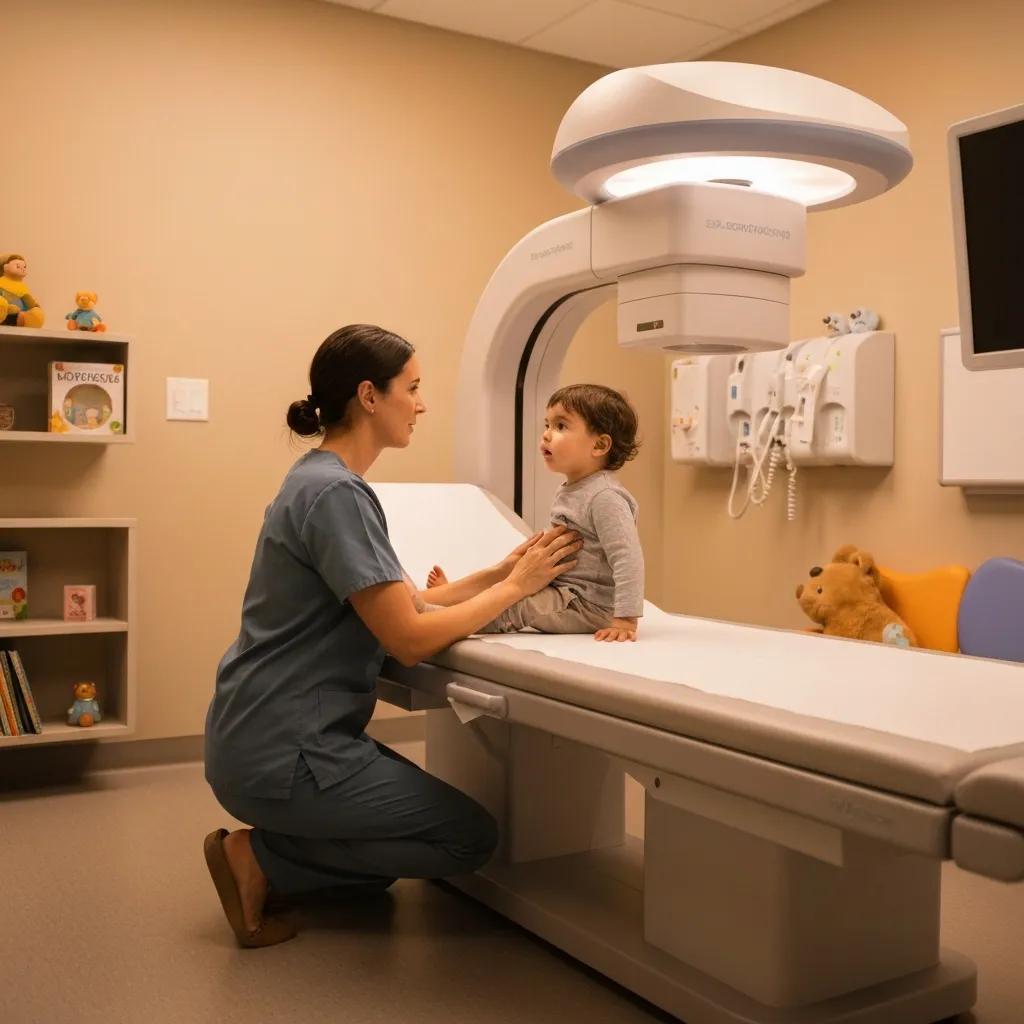
Preparing Your Child for Diagnostic Imaging: A Parent’s Guide to Child Medical Imaging Preparation and Support
Diagnostic imaging can feel overwhelming for families, but with clear preparation you can reduce your child’s anxiety and help clinicians get the best results. This guide explains what diagnostic imaging means, why preparation matters, and how parents can combine emotional support, practical logistics, and safety questions to make appointments smoother. You will learn step-by-step preparation strategies for common pediatric modalities—X-ray, ultrasound, MRI, and CT—plus age-specific communication scripts, anxiety-management techniques, and checklists to bring to the appointment. The article also compares radiation vs non-radiation options, explains sedation and contrast basics, and provides short, actionable items parents can use immediately. Read on for modality-specific tips, printable-style tables, distraction strategies recommended by Child Life Specialists, and parent-friendly phrases that make pediatric imaging preparation clearer and less stressful.
How Can Parents Effectively Prepare Their Child for Diagnostic Imaging?
Effective preparation for pediatric imaging combines clear, age-appropriate explanation, simple physical readiness, and logistical coordination with the imaging team. Diagnostic imaging preparation reduces anxiety and improves image quality by ensuring the child can cooperate, remain still, or meet fasting/bladder requirements when needed. Start by learning the specific exam instructions from the provider, then plan emotional rehearsals and practical checks for clothing and devices. The next paragraphs break down emotional and physical steps and show how tailor-made communication reduces fear and improves cooperation.
What Are the Key Emotional and Physical Preparation Steps for Children?
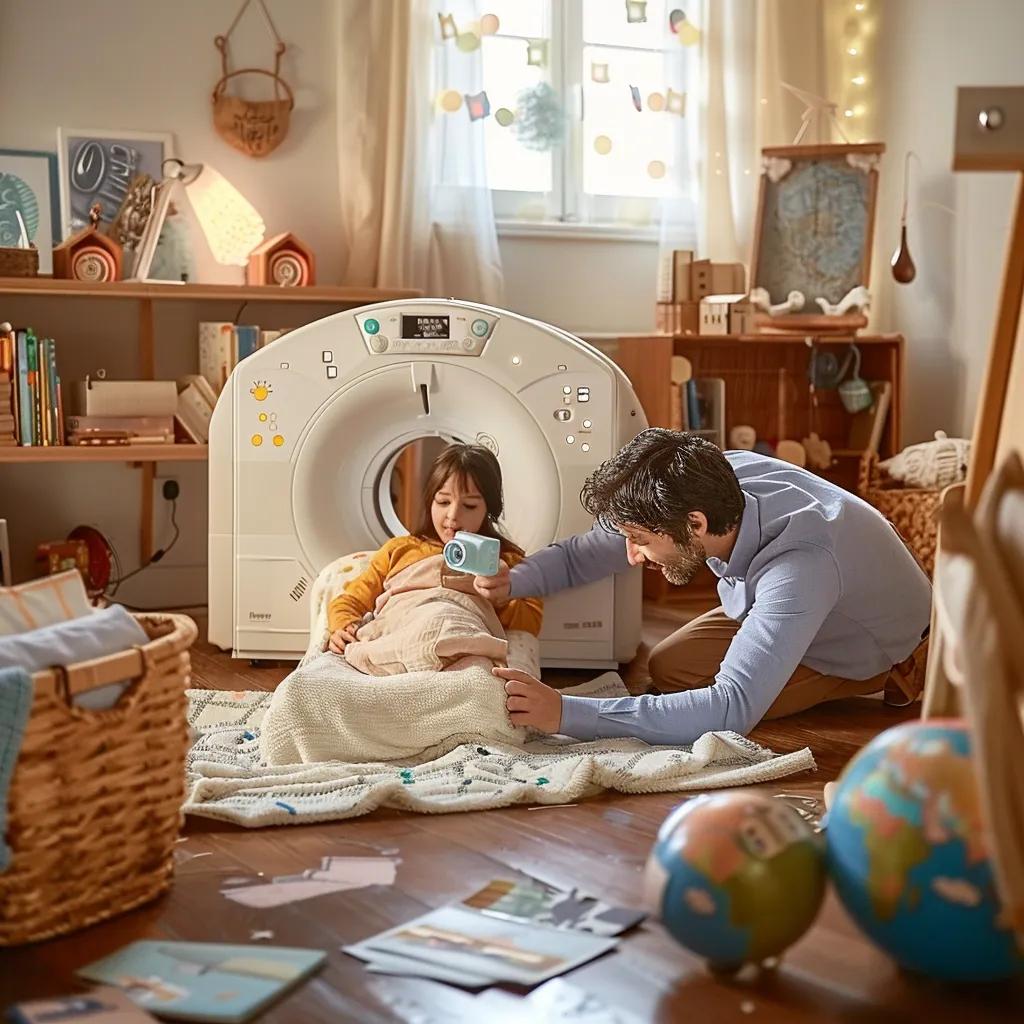
Emotional preparation means naming feelings, using honest language, and rehearsing the experience through play or brief role-play sessions so the child knows what to expect. Physically, check fasting instructions, remove jewelry or metal, choose comfortable clothing without snaps or metal zippers, and pack a favorite comfort item for after the scan. Practical rehearsal examples include “freeze” games to practice staying still and reading a short story about a character who visits a hospital camera; these activities make the procedure concrete for young children. Confirm logistical details with the imaging center the day before, which helps avoid last-minute surprises and ensures that your practical prep supports the emotional strategies you used during rehearsal.
How Can Age-Appropriate Communication Help Reduce Child Anxiety?
Age-appropriate communication uses simple metaphors for young children and more detailed explanations for older kids while always being honest about what will happen. For toddlers say, “You’ll lie down and the big camera takes quiet pictures,” and for school-aged children explain the approximate length, sensations (noise, cool gel), and who will be present; invite questions and choices like which song to play. Use medical play with dolls or stuffed animals to simulate the steps for preschoolers and short practice sessions for school-aged children that reward cooperation. Preparing words and activities in advance reduces uncertainty and builds a sense of control, which helps children move from fear toward curiosity and cooperation for imaging.
What Should Parents Know About Preparing for Specific Pediatric Imaging Types?
Different imaging types require different preparation: X-ray and CT use ionizing radiation and usually need little prep, ultrasound uses sound waves and can require fasting or a full bladder, while MRI uses magnets and often requires extended stillness and strict metal rules. Understanding these modality-specific needs lets parents plan naps, meals, clothing, and emotional rehearsals to match the exam. Below are targeted step-by-step instructions, expected sensations, and safety notes for each modality so parents can prepare effectively and ask the right questions of the imaging team.
How Do You Prepare a Child for an X-ray?
An X-ray is a quick image using a small amount of radiation; preparation is usually simple but purposeful. Dress your child in comfortable, metal-free clothing and remove jewelry, hair clips, or clothing with metallic elements to avoid repeat images; explain that the X-ray is like a photo of bones, and practice a short stillness game. Lead aprons may be offered selectively to shield sensitive areas—ask the staff about when shielding will be used and why. If parents are concerned about radiation, ask the provider about pediatric low-dose protocols and alternatives; this question helps clinicians explain the diagnostic benefit versus minimal risk and supports informed consent.
What Are the Best Practices for Pediatric Ultrasound Preparation?
Ultrasound uses sound waves and involves no radiation; preparation depends on the exam location. Abdominal ultrasounds often require fasting (usually 4-6 hours, with clear liquids allowed up to 2 hours before) to reduce gas and improve images, and pelvic or pelvic-bladder scans may require a full bladder—follow the provider’s instructions on timing and volumes. Prepare infants by timing feeds so they are calm or drowsy at the appointment, and bring a favorite pacifier or blanket; explain to older children that gel will be warm or slightly cool and the transducer is like a small camera pressed gently on the belly. These preparations reduce movement and allow the sonographer to complete the study more efficiently, increasing comfort and diagnostic quality.
How Can Parents Prepare Their Child for an MRI Scan?
MRI scans use powerful magnets and require children to lie very still for longer periods; preparation emphasizes safety and coping for noise and confinement. Remove all metal, inform staff about implants or devices, and practice stillness at home by lying quietly for short, gradually longer intervals; use headphones, playlists, or familiar audio when permitted to reduce anxiety. Child Life Specialists often provide mock scanner tours or sound recordings to rehearse the noises; sedation is an option only when other techniques fail, so discuss alternatives and safety protocols with the imaging team. Preparing both physically (no metal, appropriate clothing) and emotionally (practice, distraction plan) significantly increases the chance that the child will tolerate the MRI awake.
What Is Important to Know About Preparing for a Child’s CT Scan?
A CT scan is fast and highly detailed but uses ionizing radiation, so dose reduction strategies for children are important to discuss beforehand. Expect a short exam time, but plan for possible contrast: if intravenous contrast is needed, follow fasting instructions and review allergy history and kidney-related considerations with the team. Ask whether the imaging center uses pediatric low-dose CT protocols and whether alternative non-radiation tests could answer the same clinical question. After the scan, if contrast was used, ensure hydration and observation per staff instructions; preparedness around contrast and radiation questions empowers parents to balance diagnostic benefit and safety.
This comparison table helps parents anticipate prep needs and choose questions to ask clinicians, improving both comfort and diagnostic accuracy.
How Can Parents Manage Their Child’s Anxiety and Emotional Needs During Imaging?
Managing anxiety in pediatric imaging blends distraction, familiar routines, and professional support when needed; it reduces the need for sedation and improves scan cooperation. Distraction tools should be tailored to developmental level—visual and tactile items for toddlers, audio and choice-based distractions for school-aged children—and parents should plan arrival times to avoid rushed, stressed transitions. The sections that follow list concrete distraction techniques and explain how Child Life Specialists intervene, providing scripts parents can use to request support before they arrive.
What Are Effective Distraction and Comfort Techniques for Children During Scans?

Distraction and comfort techniques include multi-sensory options chosen by age and preference to keep the child engaged and calm during the procedure. Common effective tools include favorite songs or playlists for older children, short videos or tablet apps approved by staff, and tactile comfort items like a soft blanket or stuffed toy for younger children; practice deep breathing or bubble-blowing before the scan to model calm. Coordinate with staff to confirm what devices or items are allowed in the scanner room (for example, electronic devices are restricted in MRI); having a plan and backup options reduces stress and increases cooperation. These techniques are most effective when rehearsed ahead of time and paired with positive reinforcement after the procedure.
What Role Does a Child Life Specialist Play in Pediatric Imaging Preparation?
Child Life Specialists provide developmentally appropriate education, coping strategies, and medical play that help children understand and manage imaging procedures. They use age-appropriate language, mock equipment, and rehearsal activities to reduce fear and often decrease the need for sedation by teaching children how to lie still and use relaxation techniques. Parents should ask imaging centers whether Child Life services are available and request them for high-anxiety children or those with special needs; a simple request can ensure a specialist meets your child at arrival. Involving a Child Life Specialist early helps align emotional preparation with clinical needs and improves the overall imaging experience for families.
Research consistently shows that Child Life Specialists significantly enhance the experience of children undergoing medical procedures, including diagnostic imaging.
Impact of Child Life Specialists on Pediatric Imaging: A Randomized Controlled Trial
Children undergoing procedures in pediatric health care facilities and their families have been shown to benefit from psychosocial services and interventions such as those provided by a Certified Child Life Specialist (CCLS). The comprehensive impact of a CCLS in a pediatric imaging department is well recognized anecdotally but has not been examined in a prospective or randomized controlled fashion.
We prospectively assessed the impact of a CCLS on parent satisfaction, staff satisfaction, child satisfaction, and parent and staff perceptions of child pain and distress in a pediatric imaging department.
Eligible children between 1 and 12 years of age (n= 137) presenting to the pediatric imaging department for an imaging procedure were randomly assigned to an intervention or control arm. Those assigned to the intervention received the comprehensive services of a CCLS. The control group received standard of care, which did not include any child life services. Quantitative measures of satisfaction and perception of child pain and distress were assessed by parents and staff using a written 5-point Likert scale questionnaire after the imaging procedure. Children 4 and older were asked to answer 3 questions on a 3-point scale.
Statistically significant differences between the intervention and control groups were found in 19 out of 24 measures. Parents in the intervention group indicated higher satisfaction and a lower perception of their child’s pain and distress. Staff in the intervention group indicated greater child cooperation and a lower perception of the child’s pain and distress. Children in the intervention group indicated a better overall experience and less fear than those in the control group.
Child life specialists have a quantifiably positive impact on the care of children in imaging departments. Measures of parent satisfaction, staff satisfaction, child satisfaction, child pain and child distress are shown to be positively impacted by the se
A randomized controlled trial: child life services in pediatric imaging, 2014
What Are the Essential Practical Tips and Checklists for Imaging Appointments?
Practical preparation covers paperwork, documentation, clothing, comfort items, and timing to make the appointment efficient and less stressful. Confirm fasting, arrival time, and whether a parent can enter the room; bring identification, insurance information, a list of medications and allergies, and prior imaging studies if available. The next subsections provide a concise packing checklist and behavioral guidance for parents during the scan so families arrive organized and ready to support their child.
What Should Parents Bring to Their Child’s Diagnostic Imaging Appointment?
Bring essential documents, comfort items, and anything that supports cooperation and safety during the appointment. Pack identification and insurance cards, a current medication list and allergy information, prior imaging on a CD or printed reports if available, favorite comfort item and change of clothes, and a charged tablet or headphones for distraction when allowed. Include snacks and water if fasting is not required, and bring distraction tools such as storybooks or a playlist tailored to the child’s preferences; confirm with the imaging team which items are allowed in each modality (for example, electronics are usually not allowed in MRI rooms). Being organized reduces last-minute stress, giving parents space to focus on calming and coaching their child.
This packing table creates a quick-reference checklist parents can use to prepare a small appointment bag that improves readiness and reduces anxiety on the day of imaging.
How Can Parents Support Their Child During the Imaging Procedure?
During the scan, parents’ calm voice, clear cues, and simple reassurance are powerful tools to maintain cooperation and comfort. Use brief, concrete phrases like “You’re doing great, three more minutes” and avoid complex medical talk; demonstrate slow breathing together to model calm behavior. Follow staff instructions about whether you can be present in the room and whether shielding or positioning is needed—this coordination preserves safety and scan quality. After the procedure, reinforce cooperative behavior with praise and a brief reward to strengthen positive associations for future appointments.
The role of Child Life Specialists is crucial in pediatric radiology, aiming to make the experience positive and reduce the need for interventions like general anesthesia.
The Role of Child Life Specialists in Pediatric Radiology Departments
Since radiology is often the first experience for families, but not the last, it is essential to involve them in a positive experience. Imaging facilities serving pediatric patients are currently developing or considering child life programs. A certified child life specialist (CCLS) is committed to developing programming that enhances the child’s understanding and involvement in their medical experience. This paper provides an outline of the responsibilities and areas of expertise of the CCLS in a pediatric radiology department. The reviewed program is based on, but not limited, to fluoroscopy.
The role of a child life specialist in a pediatric radiology department, 2003
What Are the Safety Considerations and Post-Imaging Care for Children?
Safety considerations for pediatric imaging include differentiating radiation vs non-radiation modalities, understanding when sedation or contrast is necessary, and knowing the common post-procedure steps and signs to monitor. Parents should ask about pediatric low-dose CT protocols, alternatives to radiation-based tests, and the facility’s sedation and monitoring policies; this empowers informed decision-making. The following sections compare relative radiation doses, sedation questions, and immediate aftercare expectations to help parents feel prepared and confident.
How Safe Is Radiation Exposure from Pediatric X-rays and CT Scans?
Radiation from X-rays and CT scans is used judiciously in children because the diagnostic benefit generally outweighs the small theoretical risk; doses vary by modality and body area imaged. Ask whether the imaging center follows pediatric low-dose protocols and whether alternative non-radiation options (ultrasound or MRI) can answer the same clinical question—this direct question helps clinicians match safety with diagnostic need. Reference organizations focused on radiation safety in children when discussing concerns and ask staff to explain dose reduction steps; understanding the balance of risk and benefit reduces parental anxiety and supports shared decision-making.
This table clarifies relative radiation exposure and post-care expectations so parents can ask targeted questions and follow safe aftercare when contrast or sedation is used.
What Should Parents Expect and Do After Their Child’s Imaging Procedure?
After imaging, follow staff instructions closely—this includes hydration after contrast, observing the child until fully alert after sedation, and watching for rare allergic reactions. If sedation was provided, expect a monitored recovery period and written discharge instructions that include feeding, activity restrictions, and safety precautions; make sure you have transportation arranged and a responsible adult to accompany the child. For non-sedated exams, normal activity often resumes immediately, but discuss result timelines and how clinicians will communicate findings so you can plan follow-up conversations with your child in an age-appropriate way. Clear aftercare planning completes the clinical process and helps parents feel confident managing any next steps.
Child Life Specialists are integral to a multidisciplinary healthcare team in pediatric radiology, significantly improving patient and family experiences and potentially reducing the need for anesthesia.
Child Life Specialists: Enhancing Pediatric Radiology Patient and Family Experiences
Pediatric radiology departments rely heavily on a dedicated, efficient and collaborative multi-disciplinary health care team to provide efficient service and quality care to patients and families. Certified child life specialists are an essential part of this multi-disciplinary team. The main goal of the child life specialists is to improve the overall experience for patients and families. In addition, child life specialists, working in collaboration with the medical care team, help decrease the need for general anesthesia by providing patient pain management, distraction and coping techniques. These interventions result in improved patient safety, increased departmental efficiency and increased revenue. The role of child life specialists extends into the exam room, where their interventions help decrease procedure times and improve imaging quality. In this article, the authors discuss the key role of child life specialists in a pediatric radiology department and provide examples of how child life can impact patient safety, patient and family satisfaction, and operational efficiency.
The role of child life in pediatric radiology, 2020
How Do Age-Specific Guidelines Affect Preparation for Pediatric Imaging?
Age-specific guidelines tailor preparation to developmental needs—infants and toddlers require feeding and soothing strategies, while school-aged children benefit from detailed explanations and involvement in coping choices. Adjust rehearsal length, distraction type, and the detail of your explanations to match cognitive and emotional maturity. The next subsections outline concrete timing and soothing practices for infants and toddlers and practical empowerment strategies for school-aged children that reduce anxiety and improve cooperation during imaging.
How Should Infants and Toddlers Be Prepared Differently for Imaging?
Infants and toddlers respond best to rhythm, feeding-schedule planning, and physical comfort that limits movement and distress. Time imaging around feedings to encourage calmness or natural sleep, bring familiar swaddles or pacifiers, and confirm whether parental holding is allowed during the exam to soothe the child and reduce movement. Use minimal language and consistent, calm routines to prevent overstimulation; the parent’s calm presence and physical soothing are often the most effective tools for these age groups. These approaches increase the chance of successful, non-sedated imaging and shorter appointment times.
What Are the Best Practices for Preparing School-Aged Children for Scans?
School-aged children can understand more detailed explanations, participate in coping plans, and benefit from choices that increase cooperation and autonomy. Provide a clear timeline, sensory descriptions (how loud the MRI is, how long an X-ray takes), and options like which song to hear or which comfort item to use; involve them in setting small goals such as “stay still for three minutes.” Use educational videos or apps designed for older children to explain the procedure, and offer a post-scan reward or responsibility-based incentive to reinforce positive behavior. Engaging school-aged children in the process builds trust, reduces anxiety, and often improves scan quality without sedation.
- Plan with the team: Call ahead to confirm prep steps and Child Life availability.
- Practice at home: Short role-play and stillness games tailored to age.
- Pack smart: Documents, comfort items, and approved distraction tools.
- Ask safety questions: Low-dose CT protocols, contrast allergies, and sedation policies.
- Provide calm leadership: Model slow breathing and use simple, truthful statements.
These final actionable steps summarize the core preparation strategy: coordinate with clinicians, rehearse, bring essentials, ask safety questions, and lead calmly to reduce stress and produce reliable diagnostic images.