


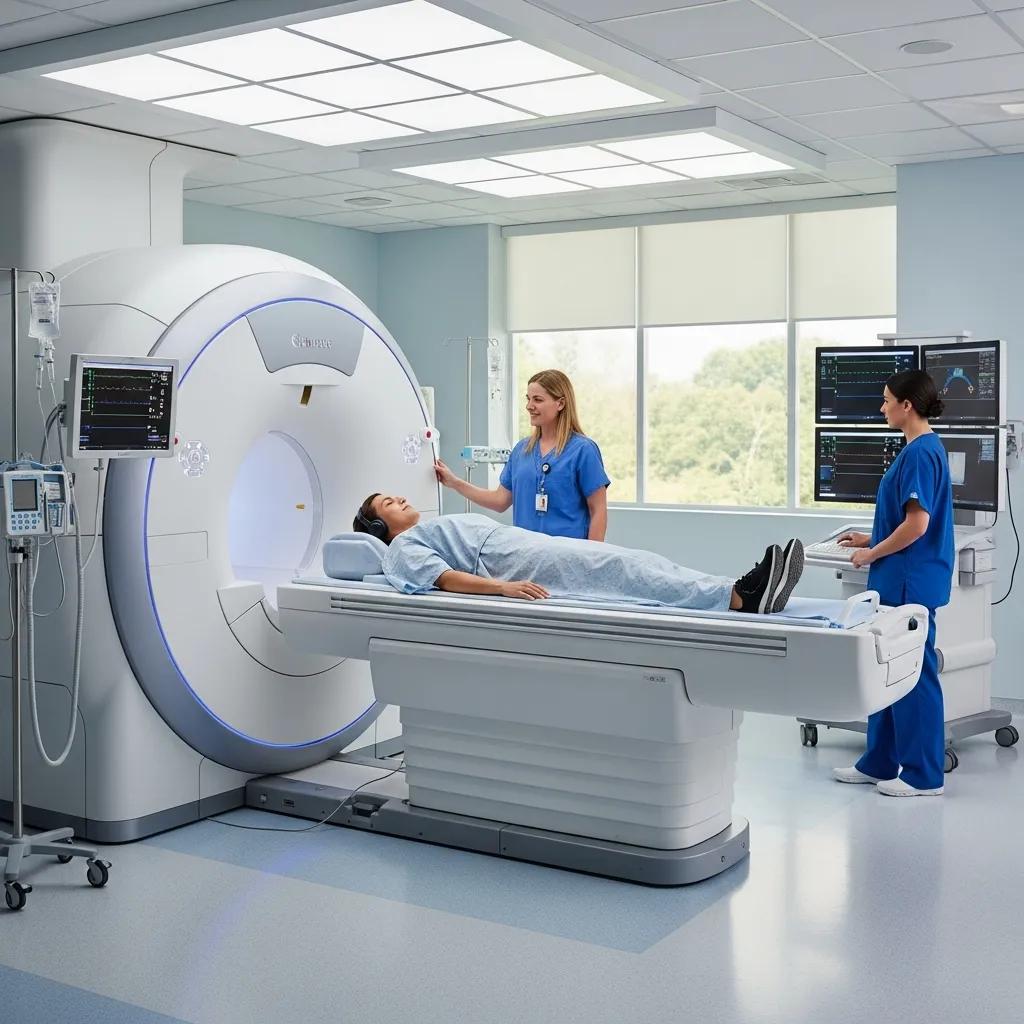
MRI Locations Near Me: Find and Book MRI Scans on the Central Coast NSW
Magnetic resonance imaging (MRI) is a non‑invasive diagnostic test that uses magnetic fields and radiofrequency pulses to produce detailed images of soft tissue, organs and the musculoskeletal system. This guide outlines where to find MRI centres on the Central Coast, how to book an appointment, which scan types are offered, typical cost considerations and practical preparation tips to help your visit go smoothly. Many people search for “MRI centres nearby” or “MRI scan Central Coast” when they need fast, reliable imaging; knowing local options and the booking process reduces delays and uncertainty. Below we map clinic locations across the Central Coast, describe common MRI types and indications, explain booking routes including eReferral and online options, and provide clear preparation and billing guidance so you know what to expect. Read on to locate services near you, compare scan types and access, and prepare confidently for your appointment.
Where Can I Get an MRI Scan on the Central Coast NSW?
Private imaging clinics across the Central Coast offer MRI services for brain, spine, musculoskeletal, cardiac and women’s health concerns. These local clinics provide access to MRI scanners and radiology reporting so patients can often get timely imaging without travelling to metropolitan hospitals. Below is a concise directory of clinics that provide MRI services, plus practical guidance on booking pathways and the scope of services. Use this directory to compare sites and decide which location best matches your clinical need and convenience; the booking steps follow in the next section.
The table below lists the main Central Coast clinics offering MRI scans and summarises the scan types and how to arrange an appointment.
This quick comparison helps you choose a clinic that fits your referral and convenience needs. If you’re unsure which site is best for your referral or scan type, ask your referring clinician to recommend a location and submit an eReferral to streamline scheduling.
What MRI Services Are Available at Life Medical Imaging Locations?
Life Medical Imaging Central Coast operates several clinics across the region and offers a wide range of diagnostic MRI services including brain, spine, musculoskeletal, cardiac and women’s health scans. Sub‑specialist radiologist reporting is available where clinically indicated — for example in women’s and cardiac imaging — which can improve diagnostic clarity for complex cases. Modern scanners and experienced radiographers support protocols from routine structural imaging to contrast‑enhanced studies when required. Knowing which services each site provides helps you and your referrer choose the most appropriate clinic; the next section explains how billing arrangements can differ between locations.
Which Clinics Offer Private and Bulk-Billed MRI Scans?
Bulk‑billing means Medicare covers the service for eligible referrals; private MRI scans typically involve an out‑of‑pocket fee with possible Medicare rebates depending on the referral and item numbers. Bulk‑billing availability varies by clinic and clinical indication, so confirm this with the imaging provider or your GP before booking. Some private clinics may offer bulk‑billing for eligible patients or Medicare‑rebated outpatient imaging, but this must be confirmed at booking. If cost is a concern, discuss bulk‑billing eligibility with your GP and request a referral that supports the desired billing pathway.
How Do I Book an MRI Appointment Near Me?

There are three common booking pathways: the clinic’s online booking portal, phone reservations (where offered), or submission of a GP referral via eReferral to the imaging provider. A clear referral that states the clinical question and suggested scan type speeds scheduling and helps the radiology team prepare the correct protocol. eReferral systems are increasingly used to transmit referrals and streamline bookings. The steps below outline what to do when arranging an MRI, whether you’re a private patient or seeking Medicare‑billed care.
- Obtain a referral from your GP or specialist that specifies the clinical indication and suggested MRI protocol.
- Submit the referral via eReferral or upload/present it when using the clinic’s online booking portal.
- Pick the clinic location that best matches the scan type and your convenience; ask about bulk‑billing eligibility if this is important to you.
- Confirm any pre‑scan instructions (fasting or contrast consent) and the estimated appointment time; bring ID and your Medicare card if applicable.
Following these steps reduces delays and helps the imaging team allocate the appropriate scanner and protocol. If your doctor considers the scan urgent, ensure the referral clearly notes clinical urgency and discuss expedited scheduling with your referrer.
What Is the Process for Booking MRI Scans at Erina, Bateau Bay, Killarney Vale, and Umina Beach?
Each Life Medical Imaging Central Coast site accepts referrals and schedules MRI appointments, typically supporting online booking and eReferral to simplify intake. To book, have your referring clinician submit an eReferral or bring the referral to the clinic’s booking desk; staff will confirm the correct MRI protocol and available appointment times. Wait times depend on clinical urgency and scanner availability — clinics can advise on same‑day or expedited options for urgent cases where possible. After booking, you’ll receive preparation instructions and consent forms if contrast is required.
Do I Need a Referral for a Private or Bulk-Billed MRI Scan?
Yes — a clinical referral is generally required for MRI in Australia to ensure the scan answers an appropriate clinical question and to enable Medicare rebates or bulk‑billing when eligible. Even for private scans without Medicare coverage, a referral helps document clinical need and guides the imaging protocol. Bulk‑billing requires an eligible Medicare referral and the clinic’s agreement to bill Medicare directly. If you don’t yet have a referral, contact your GP to discuss your symptoms and request the correct referral, asking them to use eReferral if you prefer electronic submission. Clear referral documentation reduces administrative delays and helps the radiology team schedule the correct scan efficiently.
What Types of MRI Scans Are Offered Near Me on the Central Coast?
MRI is tailored to different clinical questions. Common scan types include brain MRI, spinal MRI, musculoskeletal MRI, cardiac MRI and pelvic MRI for women’s health. Each uses specialised coils, patient positioning and sequences — and sometimes contrast agents — to highlight anatomy or pathology. MRI produces excellent soft‑tissue detail, which makes it the preferred test for many neurological, spinal and joint problems. The table below summarises common scan types, typical indications and brief preparation notes to help you and your GP choose the most informative study.
This table shows why different MRI protocols are selected for specific symptoms and helps your GP choose the best scan for the clinical question. If you need specialised MRI (for example cardiac or advanced women’s imaging), ask your referrer to request sub‑specialist reporting so the correct protocols and radiologist expertise are arranged.
Which MRI Scan Types Are Available: Brain, Spine, Musculoskeletal, Cardiac, and Women’s Health?
Brain, spine, musculoskeletal, cardiac and pelvic MRI are widely used to detect structural, inflammatory and neoplastic conditions and to monitor treatment response. Brain MRI identifies stroke, inflammation, tumours and degenerative change with high soft‑tissue contrast; spinal MRI evaluates disc disease, nerve root compression and cord pathology; musculoskeletal MRI assesses ligaments, tendons and cartilage with high resolution. Cardiac MRI quantifies ventricular function and tissue characterisation without ionising radiation, while pelvic MRI gives detailed soft‑tissue contrast for gynaecological assessment. Although these studies share the same underlying MR physics, they differ in coil choice, sequences and reporting focus to match the clinical question.
How Do Specialized MRI Services Benefit Patients?
Specialised MRI services use tailored protocols and sub‑specialist radiologist reporting to improve diagnostic accuracy and guide treatment planning. For example, cardiac MRI provides quantitative measures that assist cardiology management, while women’s imaging protocols define lesion extent and composition important for surgical planning. Sub‑specialist reporting reduces ambiguity in findings and delivers clearer guidance for referring clinicians, helping speed the path from imaging to appropriate care. The next section explains how these service differences can influence cost and billing options.
How Much Does an MRI Scan Cost Near Me on the Central Coast?
Costs vary with scan complexity, use of contrast, whether the scan is private or provided through public hospital services, and whether you’re eligible for Medicare rebates or bulk‑billing. Private outpatient MRI usually requires an out‑of‑pocket fee with a possible Medicare rebate depending on the referral and item numbers. Bulk‑billing may be available for eligible patients but varies by clinic. Clinics typically provide specific pricing at booking because protocols — and therefore fees — differ by case; the table below outlines common billing scenarios and factors that affect cost. After that we describe how to find affordable options and compare public versus private pathways for access.
Because pricing depends on the requested protocol, clinics will ask for referral details before providing an exact quote. If cost is a concern, talk with your GP about bulk‑billing eligibility and discuss likely out‑of‑pocket expenses with the imaging clinic before booking.
What Are the MRI Scan Prices and Bulk Billing Options at Local Clinics?
Exact prices vary by region scanned, use of contrast and the clinical protocol; clinics give personalised pricing when you book and provide the referral. Bulk‑billing is possible for eligible Medicare referrals but availability differs between clinics and scan types, so always confirm at booking. Clinics can also outline potential Medicare rebates that reduce out‑of‑pocket cost and provide a tailored estimate once the referral specifies the required sequences. For a precise quote, contact the imaging clinic and supply the referral details.
Are Affordable MRI Services Available in Gosford and Surrounding Areas?
Affordable options exist through public hospital radiology services and selected private clinics that offer bulk‑billing for eligible patients, though public pathways may involve longer waits. Weighing cost against access means deciding whether faster private imaging with an out‑of‑pocket component or a public pathway with potential wait times suits your needs. Discuss urgency with your GP — they can advise whether immediate imaging is clinically required and whether an expedited referral is appropriate. For speed, private clinics often provide quicker appointments and rapid reporting; public services remain an important affordable alternative for non‑urgent cases.
What Should I Expect When Preparing for an MRI Scan Near Me?

Preparing for an MRI is straightforward and helps ensure safety and image quality: remove metal items, tell staff about implants or pregnancy, follow fasting instructions for abdominal or contrast studies, and arrive early for pre‑scan screening. MRI scanners make loud gradient noise, so ear protection is provided and you can communicate with the radiographer by intercom. MRI produces detailed soft‑tissue images without ionising radiation. Below is a short checklist and a walkthrough of what happens during the appointment so you know each stage from arrival to report delivery. Good preparation reduces the chance of repeat scans and helps the team obtain diagnostic images on the first attempt.
- Remove metal jewellery, watches and piercings, and notify staff of any implants or medical devices.
- Bring your referral, photo ID and Medicare card if applicable; inform staff if you are pregnant or breastfeeding.
- Follow any fasting or hydration instructions if your referral indicates contrast‑enhanced abdominal or pelvic imaging.
- If you have claustrophobia or anxiety, discuss comfort measures or alternatives with your GP or the imaging clinic beforehand.
Completing this checklist reduces delays and improves image quality. The following subsection describes the scanning process and typical timeframes you can expect on the day.
How Do I Prepare for Different Types of MRI Scans?
Preparation depends on the scan: most brain and joint MRIs require only removal of metal items, while abdominal or pelvic MRI may ask for fasting or a specific bladder status. Contrast studies require screening for kidney function and allergies. Cardiac MRI often needs ECG setup and breath‑hold practice, and some specialised protocols include medication instructions from your referrer. If you have an implanted device, bring implant documentation and notify the imaging team in advance for a safety assessment. Clear communication between your referrer and the imaging staff ensures correct pre‑scan instructions and reduces the chance of rescheduling.
What Happens During an MRI Scan and How Long Does It Take?
On arrival you’ll complete a safety questionnaire and may change into clinic clothing if required. A radiographer will explain the procedure and position you on the scanner couch using the appropriate coil. The scanner makes rhythmic noise during sequences; ear protection and two‑way communication keep you comfortable and in contact with the technologist. Technicians may pause between sequences to check instructions or comfort. Typical scan times range from around 20 minutes for a single‑joint study to 60 minutes for complex or multi‑region protocols; additional sequences can extend the appointment. After imaging, radiologists review and report the images, and the results are sent to your referring clinician who will discuss findings and next steps with you.
Why Choose Life Medical Imaging for MRI Services on the Central Coast?
Life Medical Imaging Central Coast is an accredited, independent radiology group with four Central Coast locations offering a broad range of diagnostic imaging services, modern facilities and a patient‑centred approach. The clinics emphasise quality through accreditation and sub‑specialist reporting in areas such as women’s and cardiac imaging, which supports accurate diagnosis for complex cases. Contemporary scanner technology and an experienced clinical team enable comfortable imaging pathways and high‑quality diagnostic reports. Below is a concise list of clinic strengths drawn from service descriptions and accreditation notes.
- NATA accreditation that reflects our laboratory and imaging quality standards.
- Independent radiology services with sub‑specialist Women’s and Cardiac Imaging.
- A team of skilled clinical and support staff working with modern imaging equipment.
- A commitment to a professional, comfortable and respectful patient environment.
These strengths make Life Medical Imaging a local option for patients seeking accredited imaging and specialist reporting. If you choose a Life Medical Imaging site, request the correct scan protocol on your referral and submit an eReferral to start the booking process.
What Makes Life Medical Imaging’s MRI Clinics Unique?
Life Medical Imaging Central Coast combines accredited, independent radiology services across multiple sites with sub‑specialist expertise in women’s and cardiac imaging. Our clinics pair experienced radiologists and staff with up‑to‑date scanners, providing local access to specialist reporting without the need to travel to metropolitan centres. These capabilities support referring clinicians and patients seeking timely, specialist‑level imaging and reporting for complex investigations.
How Does Life Medical Imaging Ensure Patient Comfort and Safety?
Patient safety begins with thorough pre‑scan screening and trained radiographers who oversee each procedure. We follow protocols for contrast consent and allergy screening, and offer comfort measures such as wide‑bore scanners, headphones for noise reduction and clear communication with the technologist to reduce anxiety. Infection control and staff training maintain a safe environment, while sub‑specialist reporting and quality assurance processes support diagnostic accuracy. If you have concerns about claustrophobia or implants, discuss them with your GP and the clinic team before your appointment so we can make appropriate arrangements.
Frequently Asked Questions
What should I wear to my MRI appointment?
Wear comfortable clothing without metal fastenings (zips, buttons or metal threads) as they can interfere with imaging. Many clinics provide gowns if needed. Remove jewellery, watches and hairpins before the scan, and tell staff about any implants so they can advise on safety and any special protocols.
How long does it take to receive MRI results?
Report turnaround varies with clinic workload and scan complexity. Typically, radiologists provide a report within 24–48 hours, though urgent studies can be prioritised and sent to your referring clinician more quickly. Ask the clinic at booking for an expected timeframe so you know when to follow up with your doctor.
Can I bring someone with me to my MRI appointment?
Yes — most clinics allow a companion to come with you for support. For safety reasons, companions will usually be asked to wait in a designated area during the scan. Check the clinic’s visitor policy when you book, as some procedures or current health guidelines may restrict access.
What if I have claustrophobia or anxiety about the MRI scan?
If claustrophobia or anxiety is a concern, tell your referring doctor and the imaging clinic before your appointment. Options include wider‑bore or open scanners, comfort aids like headphones and relaxation techniques, or sedation in selected cases. Early communication lets the team plan the most comfortable approach for you.
Are there any age restrictions for MRI scans?
There are no strict age limits for MRI, but appropriateness and technique vary with age and clinical condition. Special considerations are taken for children to ensure comfort and cooperation; a parent or guardian is usually required to be present. Discuss any age‑specific concerns with your referrer to determine the best pathway.
What happens if I need a contrast agent for my MRI?
If contrast is required, the clinic will inform you when booking. You may need a brief screening for allergies and kidney function beforehand. Contrast is typically given by IV during the scan to enhance image detail. Follow any pre‑scan fasting or hydration instructions provided by the clinic to ensure the best results.
Conclusion
Finding and booking an MRI on the Central Coast is straightforward when you know where to look and how to prepare. A range of clinics offer accessible MRI services, so you can choose a location and scan type that meet your clinical needs. Understanding booking steps, billing options and preparation helps make the process smoother and speeds access to accurate results. For more information on local MRI services and to arrange an appointment, consult your GP or contact the clinic that best suits your needs.