


Medical Radiation Technologist Careers UK: How to Become One, Salary Expectations and Job Outlook
Medical radiation technologists — known in the UK as radiographers — blend technical skill with patient-centred care to diagnose and treat illness using imaging and therapeutic equipment. This guide explains the role, sets out step-by-step education and registration routes in the UK, summarises expected NHS salary bands, and maps common specialities such as CT, MRI and ultrasound that shape career development. If you’re weighing degree routes, apprenticeships or conversion programmes, or planning CPD to meet HCPC requirements, this article offers practical next steps and useful resources. Expect clear descriptions of day-to-day duties, safety and radiation protection practice, comparisons of modalities, salary and training tables, and targeted advice on applying to employers — including how Life Medical Imaging Central Coast fits into the clinical picture. Read on for concrete qualification steps, realistic salary benchmarks and career planning tips relevant to the UK job market (current to 06/2024).
What Is a Medical Radiation Technologist or Radiographer?
A medical radiation technologist — or radiographer — is a registered healthcare professional who creates and processes diagnostic images or delivers therapeutic radiation as part of patient care. Radiographers operate equipment such as X‑ray and CT scanners, apply radiation‑protection principles to keep doses low, and ensure image quality so clinicians can make accurate decisions. They also support patients directly: explaining procedures, checking for contraindications and working closely with radiologists and wider clinical teams to interpret and report findings. Strong clinical judgment, technical competence and clear communication are central to the role and open different career paths in diagnostic or therapeutic practice.
This section outlines the core responsibilities and contrasts diagnostic and therapeutic pathways to help you decide which route best fits your skills and interests. The following subsection gives a practical summary of typical daily tasks and how they link to patient safety and image quality.
What are the main responsibilities of a medical radiation technologist?
Radiographers balance technical imaging work with direct patient care and safety. Their duties include preparing patients and equipment, selecting suitable imaging protocols, positioning patients to capture diagnostic images, and operating scanners while optimising dose. They keep accurate records, check referrals, and liaise with radiologists or oncologists to ensure images meet clinical needs for diagnosis or treatment planning. These tasks require following radiation protection law, carrying out routine quality assurance on equipment and committing to ongoing professional development to stay current with evolving imaging technology.
Across settings, radiographers use structured safety checks and informed‑consent processes that protect patients and underpin clinical governance. Those safety routines naturally lead into the diagnostic vs therapeutic distinction covered next.
How do diagnostic and therapeutic radiographers differ?
Diagnostic radiographers focus on producing diagnostic images using X‑ray, CT, MRI and ultrasound. Their work centres on image acquisition, modality‑specific protocols and immediate patient assessment. Therapeutic radiographers specialise in planning and delivering targeted radiation treatments for cancer and other conditions, requiring treatment‑planning skills, immobilisation techniques and close collaboration with oncology teams. After initial registration the training paths diverge: diagnostic practitioners often subspecialise in modalities such as CT or MRI, while therapeutic practitioners build radiotherapy‑specific competencies — all supported by targeted CPD. Workplace settings differ too: diagnostic staff usually rotate across imaging departments, while therapy staff are typically based in dedicated radiotherapy centres.
These differences influence career progression, CPD choices and everyday routines, and they inform the educational and registration options described in the next major section.
How to Become a Radiographer in the UK: Educational Pathways and Registration

To qualify as a radiographer in the UK you normally complete an HCPC‑approved radiography degree or an equivalent apprenticeship, then apply for HCPC registration to practise. Both degree and apprenticeship routes combine academic study with supervised clinical placements to build safe, practical skills. Degree programmes typically offer distinct diagnostic or therapeutic accreditation; apprenticeships provide paid, workplace‑based training alongside university assessment; and postgraduate conversion or MSc routes are available for graduates from other fields. Entry requirements vary but commonly include A‑levels or equivalent science qualifications. After qualifying you must register with the Health and Care Professions Council (HCPC) and meet their standards of proficiency, plus ongoing CPD requirements to maintain registration.
Here’s a simple checklist to guide prospective applicants through the usual progression into practice.
- Confirm academic entry requirements (A‑levels or equivalent) and research HCPC‑approved radiography programmes.
- Apply for a BSc (Hons) in Diagnostic or Therapeutic Radiography, a degree apprenticeship, or a postgraduate conversion where eligible.
- Complete the programme’s clinical placements and pass required professional assessments.
- Submit an application to HCPC for registration, showing you meet standards of proficiency and are fit to practise.
- Begin clinical practice and continue CPD to meet revalidation and career development needs.
These steps outline the practical route into the profession and lead into a comparative table that maps common pathways, entry requirements and outcomes.
Different routes have different timelines and outcomes; the table below summarises typical pathways and what to expect on completion.
This table shows how each route leads to HCPC eligibility and typical timeframes, helping you choose the pathway that fits your circumstances and schedule.
What qualifications and degrees are required to become a radiographer?
Most entrants complete a BSc (Hons) in Diagnostic or Therapeutic Radiography from an HCPC‑approved provider, which combines theory and clinical placements to develop safe, competent practitioners. Typical entry requirements include science A‑levels (or equivalent), satisfactory occupational health checks and evidence of good communication and patient‑care aptitude during selection. Apprenticeship routes let trainees work while training and usually require employer sponsorship, with the same professional standards expected on completion. Regardless of route, graduates must meet HCPC standards of proficiency and demonstrate required competencies before becoming registered radiographers.
After qualifying, registrants must undertake continuing professional development to maintain modality skills and meet revalidation expectations that underpin safe practice. The next subsection explains how HCPC registration works in practical terms.
How does HCPC registration work for radiographers?
HCPC registration means proving you meet the Council’s standards of proficiency and are fit to practise. The application typically requires certified evidence of qualifications, identity checks and declarations about health and character. Applicants submit documents and an online form, then wait for approval; once registered, radiographers must follow professional standards and keep up CPD in line with HCPC guidance. Registrants must notify HCPC of anything that affects fitness to practise and take part in employer appraisals and revalidation processes that show ongoing competence. Staying registered is essential for lawful practice and for career progression, since many advanced roles require current HCPC status and additional credentials.
Preparing your documentation early during your studies or apprenticeship makes the registration step much smoother and helps you enter the workforce on time.
What Is the Radiographer Salary and Job Outlook in the UK?
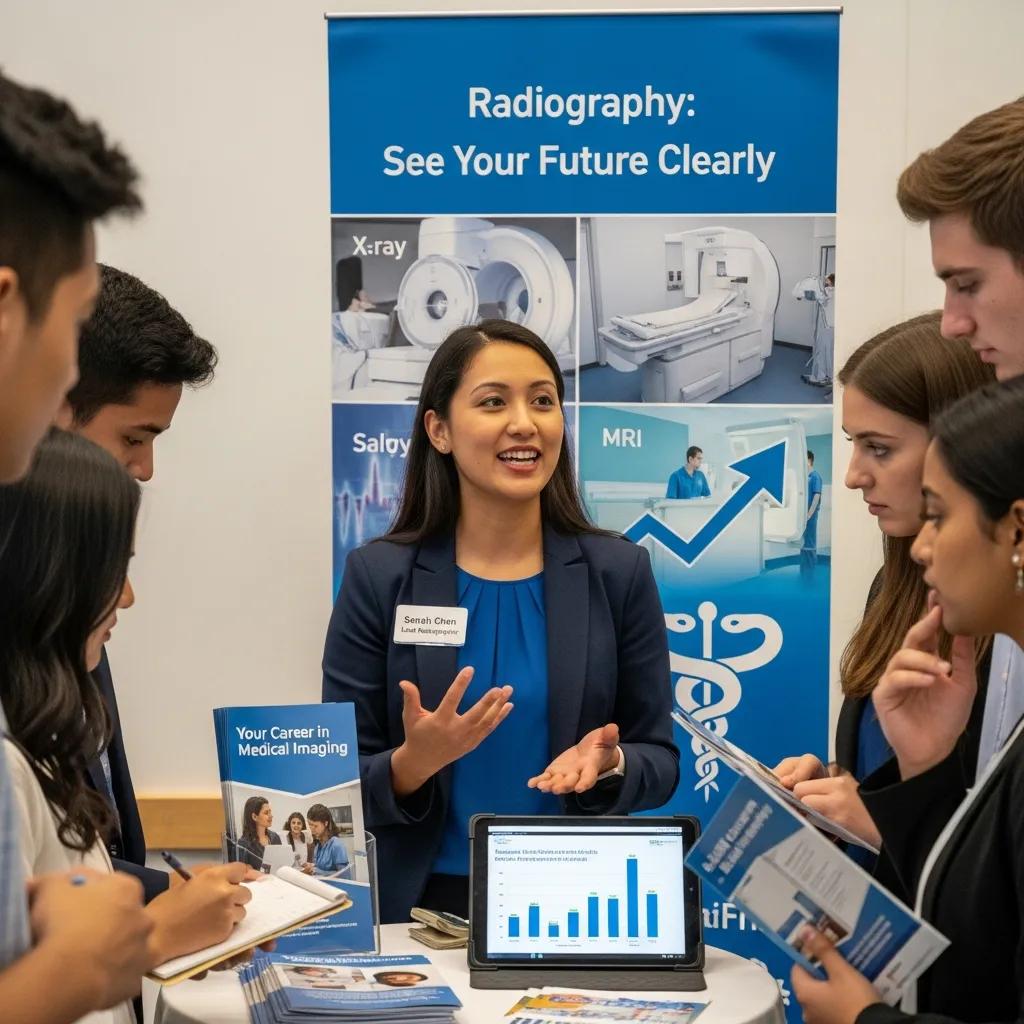
Radiographer pay in the UK is commonly aligned with NHS pay bands for public roles, while private sector salaries vary by region and speciality. Newly qualified radiographers usually start at NHS Band 5 and progress into Band 6 and Band 7 as experience and responsibility increase; consultant or advanced practitioner roles may sit above those bands or attract higher private rates. Demand is strong in many areas because of population health needs, rising imaging volumes and staffing shortages, and emerging technologies such as AI are currently used to augment workflow rather than replace skilled technologists. The table below links typical experience levels to NHS banding and salary ranges to help with career planning.
This summary clarifies typical pay progression and sets realistic expectations for salary planning. The next section describes the market drivers that shape demand and career choices.
Demand is driven by demographic change, growing diagnostic workloads and local vacancy levels, making skills in CT, MRI and ultrasound especially valuable. Employers increasingly favour flexible practitioners who can cover multiple modalities, and CPD that demonstrates reporting or advanced practice capabilities can speed promotion into senior bands. Technology such as AI‑assisted interpretation will change workflows but still requires skilled operators and interpreters, so radiographers with digital confidence and data literacy will remain highly employable. These factors should guide your choices about specialisation, CPD and employer targeting in the sections that follow.
What are the average radiographer salaries by experience and NHS pay bands?
Newly qualified radiographers typically start at NHS Band 5, with salaries reflecting supervised practice and developing responsibilities. Moving to Band 6 and Band 7 corresponds with growing autonomy, specialist skills and leadership duties. Regional cost‑of‑living differences and private sector roles can affect take‑home pay, particularly for clinicians with advanced reporting skills or niche expertise such as cardiac CT or interventional imaging. Employers in high‑demand areas may offer retention payments or enhanced bank rates for flexible working. Understanding banding criteria, common negotiation points and career milestones helps clinicians plan a realistic salary trajectory.
The steady need for skilled staff emphasises the value of continuous learning and targeted CPD throughout a radiographer’s career.
Continuing Professional Development for Medical Radiation Technologists: Skill Enhancement and Specialisation
“For the practitioner, the development of new skills is more important than their initial education and training.” This resource focuses on designing CPD to meet the specialised needs of technologists.
Education and professional development, 2006
What is the job market demand and future outlook for radiologic technologists?
The long‑term outlook for radiographers in the UK is positive, driven by steady growth in imaging demand, screening programmes and an ageing population needing diagnostic and therapeutic services. Some regions show high vacancy rates, creating strong demand for both newly qualified and experienced staff. Employers often prioritise multi‑skilled clinicians who can work across CT, ultrasound and plain‑film services. Technological advances, including AI and new imaging hardware, tend to augment diagnostic workflows and generate roles that combine technical operation with image interpretation and data management. Jobseekers who target in‑demand modalities and demonstrate CPD‑backed competencies will improve their employability and chances of accelerated banding.
As the landscape evolves, radiographers who build transferable skills, reporting abilities and digital literacy will be well placed to secure rewarding roles and move into advanced practice pathways.
An evidence‑based approach to practice remains essential for maintaining standards and advancing the profession.
Evidence-Based Practice in Radiologic Technology: A Continuous Professional Development Approach
This work encourages ongoing reading and research to embed evidence‑based practice within continuous professional development for radiologic technologists.
Evidence‑Based‑Practice Radiologic Technology (EBPRT) Teaching Strategy which Curriculum Is Based on Continuous Professional Development Gate, 2013
What Specialisations Exist Within Medical Radiation Technology?
Medical radiation technology includes several modality specialities — CT, MRI, ultrasound, nuclear medicine and interventional radiography — each with specific clinical tasks, equipment and training pathways that affect daily work and career prospects. Specialising usually requires targeted CPD, supervised practice modules and sometimes postgraduate qualifications, all of which can boost employability and pay. Employers value clinicians who combine modality expertise with transferable skills such as patient communication, image evaluation and radiation safety. The compact table below compares key modalities, typical training needs and day‑to‑day duties to help you choose a direction.
This comparison helps align specialisation choices with the patients and services you prefer to work with. The next subsection explains routes for advancing through specialisation and CPD.
What are the roles of CT, MRI, and Ultrasound technologists?
CT technologists perform rapid cross‑sectional imaging for emergency and elective cases, manage scanner protocols and optimise dose to balance image quality and patient safety; some sub‑specialise in cardiac or vascular CT. MRI technologists deliver high‑contrast soft‑tissue imaging, requiring thorough safety screening, an understanding of magnet risks and advanced sequence knowledge for neurological and musculoskeletal imaging. Ultrasound technologists conduct real‑time, operator‑dependent scans across obstetrics, gynaecology, vascular and MSK work, using probe technique and immediate interpretation to support diagnosis and interventions. All three roles demand modality‑specific training, strong patient communication and ongoing CPD to keep skills current.
These modality roles shape daily routines and training needs; the following subsection looks at how CPD and advanced practice support career progression across these areas.
A collaborative, Europe‑wide review of CPD in radiography highlights the profession’s shared commitment to lifelong learning.
Continuing Professional Development in Radiography: A Collaborative European Review
This review examined research on CPD in radiography to support development of cohesive professional learning strategies across Europe.
Continuing professional development (CPD) in radiography: a collaborative European meta‑ethnography literature review, C Buissink, 2017
How can radiographers advance their careers through specialisations and CPD?
Radiographers advance by combining targeted CPD, postgraduate study and clinical mentorship to gain advanced practice skills such as image reporting, treatment planning or interventional procedures, which can lead to higher NHS bands or senior private‑sector roles. Typical CPD activities include accredited short courses, postgraduate certificates or MSc programmes, supervised reporting portfolios and participation in audit or research that demonstrates service impact. Employers increasingly recognise advanced practitioner roles that include independent reporting, procedural competencies and service development, with corresponding pay and leadership opportunities. To make CPD effective, set specific learning goals, choose accredited programmes and keep reflective records to support appraisal and HCPC revalidation.
What Is a Typical Day Like for a Medical Radiation Technologist?
A typical shift mixes scheduled outpatient work, urgent or emergency referrals, equipment checks and multidisciplinary communication to keep services safe and efficient. The day often starts with handover, equipment QA and protocol review, then moves to patient preparation, positioning and image acquisition across routine and complex cases, and finishes with documentation, data transfer and liaison with reporting clinicians. Time management, infection control and empathetic communication are essential to sustain throughput while maintaining patient comfort and consent. This practical picture helps explain how technologists prioritise tasks and respond to unexpected clinical needs.
The following section outlines the safety practices technologists use to protect patients and staff and describes the advanced equipment commonly used in modern clinics.
How do technologists ensure patient safety and comfort during imaging procedures?
Technologists follow standardised checks and patient‑centred communication to reduce anxiety and minimise risk: confirming patient identity and referral, screening for contraindications (for example pregnancy or implants) and explaining procedures in clear, accessible language. Radiation protection follows justification, optimisation and ALARP principles — adjusting dose settings, using shielding where appropriate and choosing the lowest reasonable exposure for diagnostic quality. For children and other vulnerable patients, extra measures include age‑appropriate explanations, modified protocols and guardian involvement to reduce distress. Clear documentation, incident reporting and regular team briefings further reinforce a strong safety culture and continuous improvement.
These safety practices naturally tie into the equipment and techniques that support low‑dose, high‑quality imaging in modern practice, described next.
What advanced technologies do radiographers use at Life Medical Imaging Central Coast?
At Life Medical Imaging Central Coast we use ultra‑low dose, high‑definition imaging platforms and specialist modalities that reflect contemporary best practice. Our services include ultra‑low dose CT and cardiac CT, digital X‑ray systems and advanced ultrasound platforms covering general, vascular, musculoskeletal and obstetric/gynaecological imaging. Working with this equipment requires careful dose‑management, modern post‑processing skills and good patient communication to maximise diagnostic value while preserving comfort. Our focus on women’s and cardiac imaging shows how up‑to‑date scanners and experienced radiographers together improve clinical pathways and reporting accuracy for complex cases.
These examples show the type of clinical environment many radiographers seek and lead naturally into practical advice on joining similar teams, including application steps and staff benefits.
How Can You Join Life Medical Imaging Central Coast as a Medical Radiation Technologist?
If you’re looking for work on the Central Coast, Life Medical Imaging Central Coast recruits technologists across a range of modalities and promotes a patient‑centred workplace with modern equipment and CPD support. Candidates can find vacancies on the clinic’s careers page or submit speculative applications to express interest in CT, X‑ray or ultrasound roles. When applying, highlight relevant modality experience, HCPC registration (or eligibility) and recent CPD. For role enquiries or more information about current vacancies, contact the clinic directly by phone to speak with the hiring team.
Use this short checklist to prepare a strong application when targeting specialised imaging clinics.
- Update your CV to emphasise modality experience and HCPC registration status.
- Write a concise cover letter that links your clinical skills to the clinic’s specialist services.
- Assemble CPD certificates, supervised reporting logs and referees to evidence competence.
- Call the clinic to ask about vacancies or speculative application procedures.
What current job vacancies and career benefits does Life Medical Imaging offer?
Life Medical Imaging Central Coast commonly seeks radiographers experienced in CT, X‑ray and ultrasound to support varied clinical services. The clinic values clinicians who prioritise patient safety, pursue CPD and adapt across clinical settings. Typical benefits include access to modern imaging platforms, exposure to specialty areas such as cardiac and women’s imaging, and structured CPD support to develop reporting skills. If there’s no immediate match, speculative applications are often considered for future openings. Applicants should provide evidence of HCPC eligibility, relevant clinical experience and recent CPD to strengthen their application.
How does Life Medical Imaging support professional growth and team culture?
Life Medical Imaging Central Coast supports staff development with on‑site access to advanced modalities, supervised practice opportunities across subspecialties and encouragement of CPD to broaden clinical skills. The clinic’s multidisciplinary setting fosters collaboration between technologists, radiologists and administrative teams, creating mentorship and peer‑learning opportunities that improve practice. Staff gain focused experience in paediatric imaging, interventional work and cardiac services, which supports career diversification and progression into advanced roles. For applicants, demonstrating teamwork, learning agility and a patient‑centred approach aligns well with the clinic’s values and development priorities.
Frequently Asked Questions
What skills are essential for a successful career as a medical radiation technologist?
Successful radiographers combine technical, clinical and interpersonal skills. Technical ability covers safe operation of imaging equipment and a sound grasp of radiation safety. Clinical skills include assessing patient needs, ensuring comfort and explaining procedures clearly. Interpersonal skills are vital for teamwork and compassionate patient care. Attention to detail and problem‑solving are important for producing high‑quality images and maintaining safety — all key to career progression.
What continuing professional development (CPD) opportunities are available for radiographers?
Radiographers can access many CPD options: accredited short courses, workshops, postgraduate certificates and MSc programmes focused on specific modalities or advanced practice. Professional bodies and universities offer online learning, conferences and training days. Involvement in audit or research also counts as CPD. Regular CPD helps you stay current with technology, meet HCPC revalidation requirements and strengthen your career prospects.
How does the role of a radiographer differ in private versus public healthcare settings?
The radiographer role varies between public and private sectors. In the NHS you’ll work within established protocols and pay bands and often see a wide mix of urgent and routine cases. Private practice may offer more flexible hours, a focus on elective procedures and sometimes higher pay, but can also involve closer patient relations and business‑oriented workflows. Both settings offer valuable clinical experience — the best fit depends on your priorities for workload, hours and specialisation.
What are the common challenges faced by medical radiation technologists?
Common challenges include high patient volumes and time pressures, which require balancing efficiency with quality care. Radiographers also manage the emotional side of patient encounters, especially with anxious or vulnerable people. Keeping up with rapidly changing technology and regulations requires ongoing learning. Finally, strict safety standards and managing radiation risk are persistent responsibilities that demand vigilance and professional commitment.
What is the importance of teamwork in the role of a radiographer?
Teamwork is central to radiography. Radiographers collaborate with radiologists, oncologists, nurses and admin staff to ensure imaging is accurate and integrated into patient care plans. Good communication and cooperation improve clinical outcomes, support shared learning and create a safer, more efficient working environment. Being a reliable team member also helps you develop professionally and stay connected to service improvements.
How can aspiring radiographers prepare for their job applications?
Aspiring radiographers should highlight relevant clinical experience, qualifications and any CPD on their CV. A tailored cover letter that links your skills to the employer’s needs makes a strong impression. Provide referees and evidence of HCPC registration eligibility where possible. Research the organisation and be ready to explain how your values and approach to patient care align with the clinic during interviews.
Conclusion
A career as a medical radiation technologist in the UK combines hands‑on technical work with meaningful patient care, offering good job prospects and clear progression routes. Know the education and registration steps, consider specialisms that match your interests, and commit to CPD to grow professionally. If you’re aiming to join a modern clinic like Life Medical Imaging Central Coast, prepare a focused application that highlights modality experience, HCPC status and recent learning. Start exploring courses, apprenticeships and vacancies today to take the next step toward a rewarding career.