


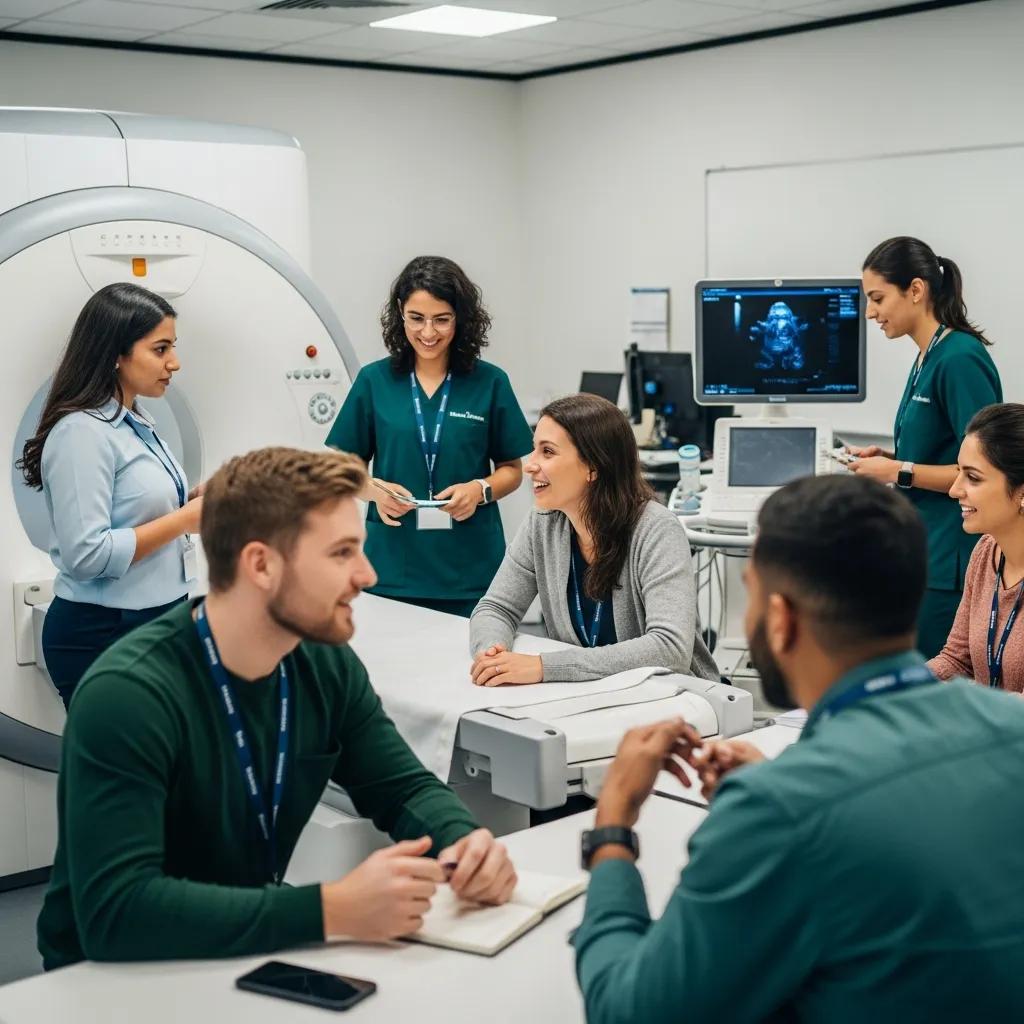
Diagnostic Imaging Degree: Your complete guide to study, careers and accreditation
A diagnostic imaging degree trains clinicians and technologists to produce and interpret medical images — X‑ray, CT, MRI and ultrasound — that support diagnosis and treatment decisions. This guide is written for prospective students, people changing careers and clinicians who refer imaging services, and it maps the journey from entry requirements through to professional registration and job prospects in both the UK and Australia. You’ll find clear explanations of typical course content, how online and blended study compare with campus-based teaching, the role and structure of clinical placements, and which accrediting bodies influence employability and patient safety. We also outline common career paths, specialisations and realistic salary expectations so you can plan study and professional development. Read on for practical checklists, comparison tables and stepwise registration pathways, plus tips on locating employer placements and clinical training relevant to the Central Coast healthcare market. By the end you’ll be able to compare degree types, choose a study format and understand the regulatory steps needed to practise in diagnostic imaging.
Complete Guide to Diagnostic Imaging Degrees, Careers & Accreditation
In the UK, a diagnostic radiography degree is normally an undergraduate honours programme combining academic teaching with supervised clinical practice so graduates meet professional standards and can register to practise. Courses deliver core knowledge — anatomy, imaging physics and radiation protection — alongside assessed clinical placements that build practical competence. Programmes are offered at different award levels and lengths to suit school leavers, mature entrants and postgraduate conversion students. Knowing these variations helps applicants pick the route that matches their background and career goals. The table below summarises common degree options by entry expectations, duration and placement emphasis so you can quickly see which pathway fits you.
Different degree types provide varying balances of academic depth and clinical preparation for a radiography career.
This comparison makes it easier to see how award level influences course length, clinical exposure and the final qualification, helping you match your prior study to an appropriate programme and plan placements.
What are the entry requirements for diagnostic radiography degrees?

Entry to radiography programmes usually combines academic qualifications, subject prerequisites and evidence of suitability for clinical practice to ensure candidates can manage technical material and patient contact. Typical academic expectations are science A‑levels (biology or physics) or equivalent vocational qualifications, with a UCAS tariff threshold for undergraduate courses; mature applicants may use access courses or an HND as alternatives. Non‑academic requirements commonly include a personal statement, references and documented patient‑facing experience or volunteering to demonstrate communication and professionalism. International applicants should check how their qualifications map to UK entry standards and whether English language proof is needed. Together, these elements let selection panels assess both academic readiness and the interpersonal attributes needed for safe, compassionate practice.
Typical entry routes and alternatives include:
- Science A‑levels (biology, physics or applied science) or recognised equivalents specified by the course.
- UCAS points threshold or vocational qualifications such as HND/Diploma for certain programmes.
- A personal statement, references and evidence of patient‑care experience or relevant volunteering.
These criteria confirm both the academic preparation and the personal suitability needed for supervised clinical training and future registration.
Which accredited diagnostic imaging programmes are available in the UK?
Universities across the UK offer accredited radiography programmes at undergraduate and postgraduate levels; accreditation determines whether graduates are eligible for professional registration. When choosing a course, confirm it’s recognised by the statutory regulator and relevant professional bodies so graduates can apply for registration and employment without extra obstacles. Courses differ in modality focus — some emphasise broad diagnostic radiography while others allow specialisation in CT, MRI or ultrasound in later years — so check course content and placement arrangements carefully. International applicants should also verify how UK accreditation maps to their home country’s registration rules if they plan to practise overseas. Confirming accreditation early avoids surprises about eligibility for registration and smooths the transition to work.
To find accredited programmes, look for course pages that explicitly state regulator recognition and describe clinical placement partners and assessment methods.
How do online medical imaging courses compare with traditional degrees?
Online and blended imaging programmes can deliver high‑quality theoretical teaching remotely, but accredited clinical qualifications require substantial supervised hands‑on practice that can’t be completed entirely online. Fully online formats are well suited to CPD, image interpretation theory, informatics and health‑service management using recorded lectures and simulations. By contrast, initial registration for radiographers and sonographers depends on documented clinical competencies and assessed placements, so most qualifying programmes use hybrid models: online theory plus in‑person clinical practice at approved sites. For practising clinicians, targeted online certificates and postgraduate modules provide flexible upskilling without needing to relocate or stop work.
In short: online learning complements but does not replace the hands‑on clinical training needed for initial registration.
Hybrid models offer the best balance of flexibility and clinical competency when universities secure robust placement partners; fully online programmes are best for continuing education rather than initial qualification.
What online medical imaging courses support career development?
There’s a wide range of online options for continuing professional development — from short modules on CT or MRI protocols to postgraduate certificates in imaging informatics or leadership. These courses typically focus on image interpretation, advanced physics, data management and patient safety, delivered through recorded lectures, case libraries and virtual simulation to sharpen decision‑making. Many provide CPD points recognised by professional bodies, which helps clinicians meet registration requirements and build modality expertise. For those in remote or rural areas, online study combined with arranged local supervision can speed up skill acquisition without long‑term relocation.
Prioritise courses that offer assessed competencies and recognised CPD credits so your time investment clearly supports career progression and regulatory needs.
Can you complete a diagnostic imaging degree fully online?
No — most accredited diagnostic imaging degrees require substantial supervised clinical practice and hands‑on skills assessment, so fully remote qualification is not a practical route to initial registration. Regulators in both the UK and Australia expect portfolios of assessed clinical competencies, direct observation and demonstrated dose‑management skills that must be achieved in clinical environments. Hybrid programmes that teach theory online but arrange local placements can meet these requirements when universities partner with approved clinical sites. Students considering online routes should check accreditation statements and placement arrangements closely to confirm eligibility for registration after graduation.
Knowing this regulatory boundary helps prospective students evaluate placement logistics and clinical assessment strategies when choosing how to study.
What are the common radiography career paths after graduation?
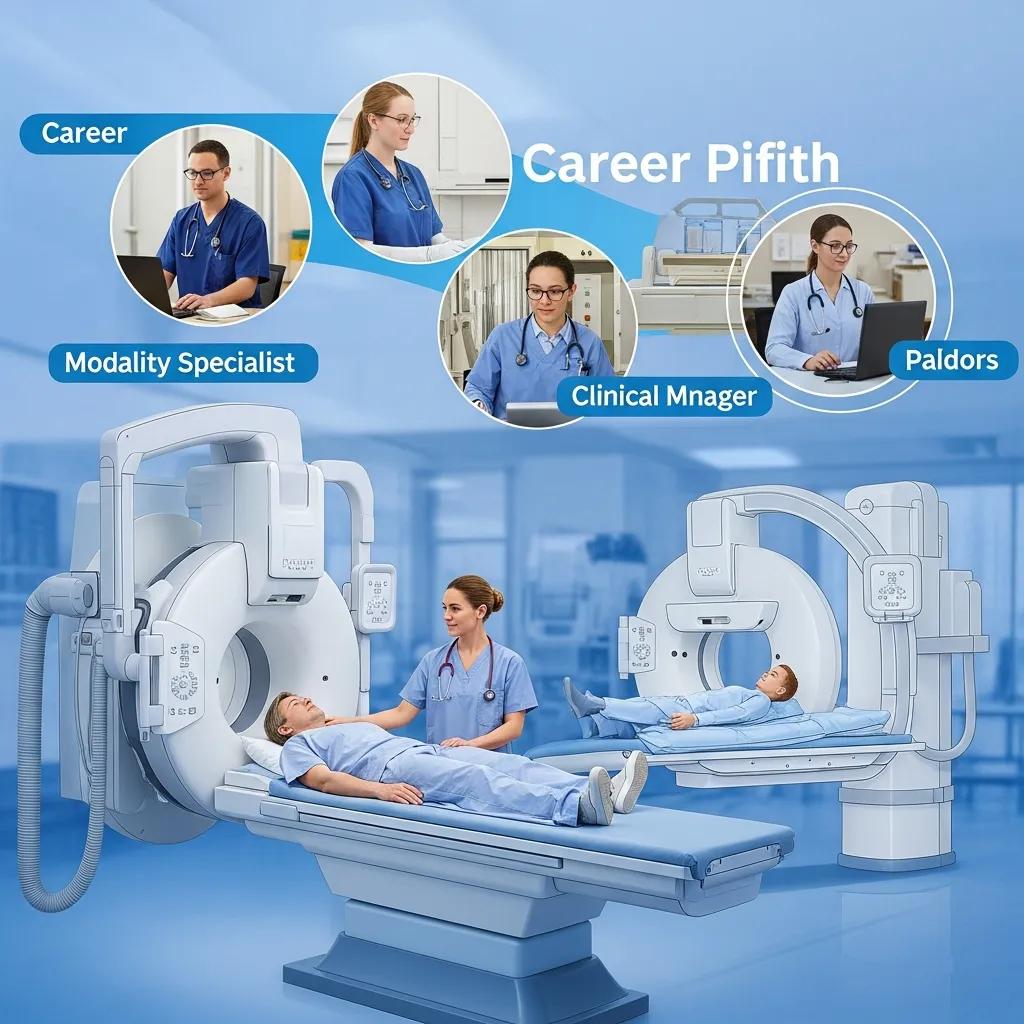
Graduates from diagnostic imaging programmes move into a wide range of clinical and non‑clinical roles: general diagnostic radiography, modality specialisation, advanced practice, management and education. Early roles concentrate on image acquisition, patient positioning and radiation safety across X‑ray and CT, with opportunities to specialise in MRI, ultrasound or interventional imaging via employer training and postgraduate study. Other pathways include research, teaching, service management and reporting roles that build on clinical expertise. Understanding these trajectories helps graduates plan CPD, pursue relevant postgraduate qualifications and make targeted role changes that match workforce demand.
Typical career directions include:
- Diagnostic Radiographer: performing general imaging examinations and maintaining radiation safety.
- Modality Specialist: focusing on CT, MRI, ultrasound, nuclear medicine or interventional radiography.
- Non‑Clinical Roles: careers in education, research, service management or imaging informatics.
How do you become a registered radiologic technologist or sonographer?
Registration usually follows a clear sequence: complete an accredited degree or approved conversion course; document and demonstrate supervised clinical competence; apply to the relevant national regulator; and continue with ongoing CPD to maintain registration. Employers typically expect both an academic award and a clinical portfolio before offering independent patient‑facing roles. Processes differ between the UK and Australia, so check the regulator’s documentary requirements well before finishing your programme.
A simple stepwise checklist:
- Complete an accredited diagnostic imaging degree or approved conversion qualification.
- Finish supervised clinical placements and compile competency documentation for registration.
- Apply for registration with the relevant national body and maintain ongoing CPD.
Following these steps secures legal eligibility to practise and positions new graduates for early career employment.
What specialisations exist within diagnostic imaging careers?
Specialisation in diagnostic imaging can be modality‑based or population‑focused, allowing clinicians to develop advanced technical skills and clinical decision‑making in niche areas. Common modality specialities are CT, MRI, ultrasound/sonography, nuclear medicine and interventional radiography; each typically requires postgraduate training, in‑service competency development and sometimes additional credentialing. Other specialities concentrate on patient groups — paediatrics, cardiac imaging or women’s imaging — combining modality skills with tailored clinical protocols. Progression into advanced practice or reporting roles often involves postgraduate study, supervised scope expansion and structured mentorship within employer services.
Choosing a specialisation early lets clinicians tailor CPD and placement choices to the competencies employers value for advanced roles.
Why is accreditation important for diagnostic imaging degrees and professionals?
Accreditation confirms that programmes and facilities meet standards for education, clinical governance and patient safety, and it directly affects a graduate’s eligibility to register and practise lawfully. Programme accreditation shows the curriculum, assessment and placement arrangements produce graduates capable of safe practice, while facility and technical accreditation ensures clinical environments maintain equipment standards and quality systems. Recognition by respected authorities gives employers and patients confidence in training and service delivery and supports professional mobility across jurisdictions that share standards. The table below links common accreditation types to typical recognising bodies and their practical impact on careers and safety.
Accreditation ties educational standards to professional outcomes and patient protection.
This mapping shows how accreditation layers work together to protect patients and help graduates move into regulated practice without unnecessary barriers.
Life Medical Imaging Central Coast is a NATA‑accredited independent radiology clinic on the Central Coast — a practical example of how facility accreditation supports safe clinical placements and employer expectations for technical standards. Prospective students and graduates seeking clinical experience or employment can consult local education and careers pages to match placement expectations with course accreditation and to understand how facility standards support safe training.
Which organisations accredit diagnostic imaging programmes and professionals?
In the UK, statutory registration is overseen by the Health and Care Professions Council (HCPC), while professional bodies and colleges provide curriculum guidance and CPD frameworks. In Australia, AHPRA manages registration and ASMIRT sets sector standards and professional development pathways. NATA focuses on technical and laboratory accreditation to ensure safe imaging environments and quality control. Prospective students should confirm the specific regulator and professional body named by their chosen course to avoid gaps between graduation and eligibility to practise in a given jurisdiction.
Knowing each organisation’s remit helps applicants align course selection and placement choices with future registration requirements.
How does accreditation affect career opportunities and patient safety?
Accreditation matters to employers because they prefer graduates from recognised programmes when recruiting clinicians responsible for patient safety. Accredited training reduces the need for extended supervision after hire, speeds early independent practice and supports cross‑jurisdiction recognition where agreements exist. For patients, accreditation signals that imaging services follow standards for dose management, equipment calibration and staff competency, lowering the risk of diagnostic error and ensuring consistent quality. Choosing an accredited programme and completing placements at accredited facilities therefore benefits both a new professional’s career mobility and the safety of the communities they serve.
Understanding this connection highlights why accreditation should factor heavily into course and placement decisions.
What skills and knowledge are essential in diagnostic imaging degree programmes?
Diagnostic imaging degrees combine biomedical science, imaging physics, radiation protection and clinical practice to produce professionals who can acquire high‑quality diagnostic images and care for patients safely. Core academic modules cover anatomy and physiology, pathology and imaging physics; these form the foundation for image interpretation and clinical reasoning. Clinical skills include patient positioning, communication, dose optimisation and image quality assurance, while professional skills such as ethical practice, accurate record keeping and teamwork underpin safe service delivery. Technical competencies extend to modality‑specific protocols for CT, MRI and ultrasound, all demonstrated during assessed clinical placements to meet registration standards.
A curriculum that balances theory with hands‑on practice is essential to turn classroom learning into confident clinical performance.
The degree curriculum typically includes these core subject areas:
- Anatomy and Physiology: essential knowledge that links images to clinical conditions.
- Imaging Physics and Radiation Safety: equipment principles and dose management.
- Clinical Practice and Professionalism: patient care skills, communication and ethical conduct.
Which subjects are covered in diagnostic radiography degrees?
Radiography modules usually progress from basic biomedical sciences to applied imaging practice: anatomy and physiology, imaging‑relevant pathology, imaging physics, radiation protection, image acquisition and clinical reasoning. Early years focus on core knowledge and laboratory skills; later years prioritise modality techniques, advanced protocols and placement assessments that integrate theory with patient care. Elective modules or specialist placements may allow deeper study in CT, MRI, ultrasound or areas such as paediatrics or women’s imaging. This staged approach prepares graduates to meet regulator competencies and employer expectations.
Mapping modules to workplace tasks clarifies why each subject is a building block for safe, evidence‑based imaging practice.
How do practical placements and clinical training support learning?
Practical placements give supervised opportunities to apply classroom learning to real patients, developing technical skill, clinical judgement and professional behaviour under workplace conditions. Placements are assessed using competency frameworks, reflective logs and portfolio evidence so students can show progression against registration outcomes. Clinical partners range from hospital radiology departments to accredited private clinics and specialist imaging centres, offering varied exposure to workloads and modalities. Employer feedback during placements often influences hiring decisions, and strong placement performance can lead directly to graduate employment locally.
Because placements are central to competency development, students should actively seek high‑quality clinical partners and keep clear documentation of assessed skills to support registration and the early transition into work.
Life Medical Imaging Central Coast offers clinical training opportunities and publishes education and careers information describing placement arrangements and staff development pathways — a practical employer perspective for students seeking local clinical experience that meets academic requirements.
What is the job outlook and salary range for diagnostic imaging professionals in the UK and Australia?
Demand for diagnostic imaging professionals remains strong in both the UK and Australia, driven by ageing populations, expanding imaging capacity and new technology adoption. Hiring spans public hospitals, private clinics and specialist imaging centres, with regional variation: metropolitan and growing peri‑urban areas recruit modality specialists like CT and MRI more frequently, while rural regions may offer incentives for clinicians who cover a broader service mix. Salary ranges depend on experience, specialisation and sector: entry‑level public roles typically start lower than private sector positions, while advanced practitioners and managers earn higher pay. The table below summarises typical roles, salary bands and regional outlooks to help graduates target applications and prioritise skills.
This overview highlights salary bands and demand drivers to support career planning across jurisdictions.
What are the employment prospects for medical imaging technologists?
Prospects look favourable for graduates who combine accredited qualifications with strong placement records and sought‑after modality skills, with growth strongest in CT, MRI and ultrasound services. Public hospitals, independent imaging clinics and specialist cardiac or women’s imaging centres all recruit technologists; research and education institutions also require staff for teaching and study coordination. Geographic mobility and a willingness to upskill into high‑demand modalities significantly boost employability. Recent workforce analysis points to sustained need for imaging professionals, making diagnostic imaging a resilient allied health choice.
Graduates should match training choices to local demand and consider specialisation to enhance hiring prospects.
How much can you expect to earn as a diagnostic radiographer or technologist?
Salary varies by region, employer sector and experience: public healthcare pay scales often set the baseline, while private clinics may offer higher starting rates for in‑demand skills. Specialisation (for example MRI, CT or interventional radiography) and advanced practice roles usually attract higher remuneration and added responsibilities such as reporting or leadership. When negotiating pay, emphasise accredited qualifications, a thorough clinical portfolio and ongoing CPD to support higher bands. Reviewing local pay frameworks and targeting roles that match in‑demand skills helps accelerate early career earnings.
Demonstrating high‑value skills and documented competence during placements is an effective way to speed salary progression after qualification.
Graduates and students seeking local clinical placements, employment or information about training pathways are welcome to contact Life Medical Imaging Central Coast. We provide resources on careers and education opportunities and are happy to discuss placements and clinical experience for prospective students and early career professionals. Review our careers and education pages to see how local employer expectations align with programme accreditation and placement planning.
Frequently Asked Questions
What is the difference between a BSc and an MSc in Diagnostic Radiography?
A BSc is an undergraduate degree (usually three years) providing foundational knowledge and practical skills for new entrants. An MSc is a postgraduate route, designed for people who already hold a degree in a related subject; it typically lasts one to two years and often includes advanced specialisations and research components to prepare graduates for higher‑level roles.
Are there any scholarships available for students pursuing a Diagnostic Imaging degree?
Yes. Universities, professional bodies and healthcare organisations offer scholarships and grants based on academic merit, financial need or specific eligibility criteria. Check with your chosen institution for available funding and deadlines, and explore professional organisations for grants that support study and CPD.
What are the continuing professional development (CPD) requirements for radiographers?
CPD is essential to maintain registration and stay current with practice. In the UK, radiographers must record a minimum amount of CPD each year (requirements vary by regulator), which can include workshops, conferences, online learning and self‑directed study. Documenting CPD activities is necessary for registration renewal and demonstrates commitment to ongoing professional growth and patient care quality.
How can I find clinical placements during my diagnostic imaging degree?
Universities usually coordinate placements via established partnerships with hospitals and clinics. Work closely with course coordinators and careers services to explore opportunities. Networking with local clinicians, attending careers events and joining professional associations can also help you identify placement sites and learn about application processes.
What role does technology play in modern diagnostic imaging education?
Technology is central to contemporary imaging education: simulation tools, virtual labs and online platforms let students practise complex skills in safe environments. Curricula increasingly include AI and machine‑learning concepts relevant to image analysis and workflow optimisation, preparing graduates for a technology‑driven clinical landscape.
What are the job prospects for diagnostic imaging graduates in rural areas?
Rural job prospects can be strong where staffing shortages exist. Graduates willing to work in regional settings may find roles in hospitals, clinics and community health centres, and some employers offer incentives such as relocation support or signing bonuses. Being adaptable and open to varied responsibilities improves employment chances in rural areas.
Conclusion
Studying diagnostic imaging equips you with practical, in‑demand skills and a clear route into a healthcare career that blends technical expertise with patient care. Knowing entry requirements, accreditation implications and likely career paths will help you choose the right programme and plan placements and CPD. Take the next step: explore accredited courses, check placement arrangements and reach out to local providers for advice. If you’re interested in Central Coast placement or training opportunities, contact Life Medical Imaging Central Coast — we’re here to help you progress confidently into a career in diagnostic imaging.