



Bachelor of Applied Science in the UK: Complete Guide to Degrees, Careers, and Entry Requirements
The Bachelor of Applied Science (BASc) in the UK is a vocational undergraduate degree that pairs scientific theory with practical training and industry placements. It’s designed for students who want to move quickly into technical, clinical or professional roles. This guide explains what a BASc involves, why some students prefer applied routes over traditional BScs, and how elements like placement years, structured lab practice and a final-year project prepare you for employment or professional registration. You’ll also find clear advice on UK entry requirements, alternative access routes, how to compare courses and universities, the realities of online delivery, typical modules and the practical skills employers look for. There’s a focused section on how applied specialisms connect to medical imaging careers, plus practical next steps and checklists for UCAS applications and clinical placements.
What Is a Bachelor of Applied Science Degree and Why Choose It?
A Bachelor of Applied Science is a vocational science degree focused on hands-on skills, workplace standards and assessments designed with employers in mind. Programmes mix core theory with practical lab sessions, research methods and a supervised placement or capstone project so graduates can perform job-ready tasks on day one. An applied route suits students prioritising workplace readiness or clinical pathways — for example diagnostic radiography, clinical science or technical roles where professional competence matters. Unlike research-led BScs, applied degrees typically emphasise competency-based assessment, structured placements and partnership working with industry, which can shorten the route to employment. Below we compare applied and theoretical degrees and outline common specialisations within applied science.
How does an Applied Science degree differ from other science degrees?
Applied Science degrees stress vocational competencies, practical assessment and employer engagement. Traditional science degrees usually focus more on theoretical depth and laboratory research. In applied programmes you’ll often be assessed through competency checks in the lab, workplace appraisals during placements and employer-style project briefs. Graduates commonly enter technician, clinical support or applied research roles directly, while BSc or MEng graduates may follow academic research or engineering registration routes. Accreditation and professional recognition differ by specialism, so check course descriptors and employer links when weighing applied versus theoretical options. Looking at assessment types and likely career outcomes helps you choose the path that matches your goals.
What are the main fields and specializations within Applied Science?
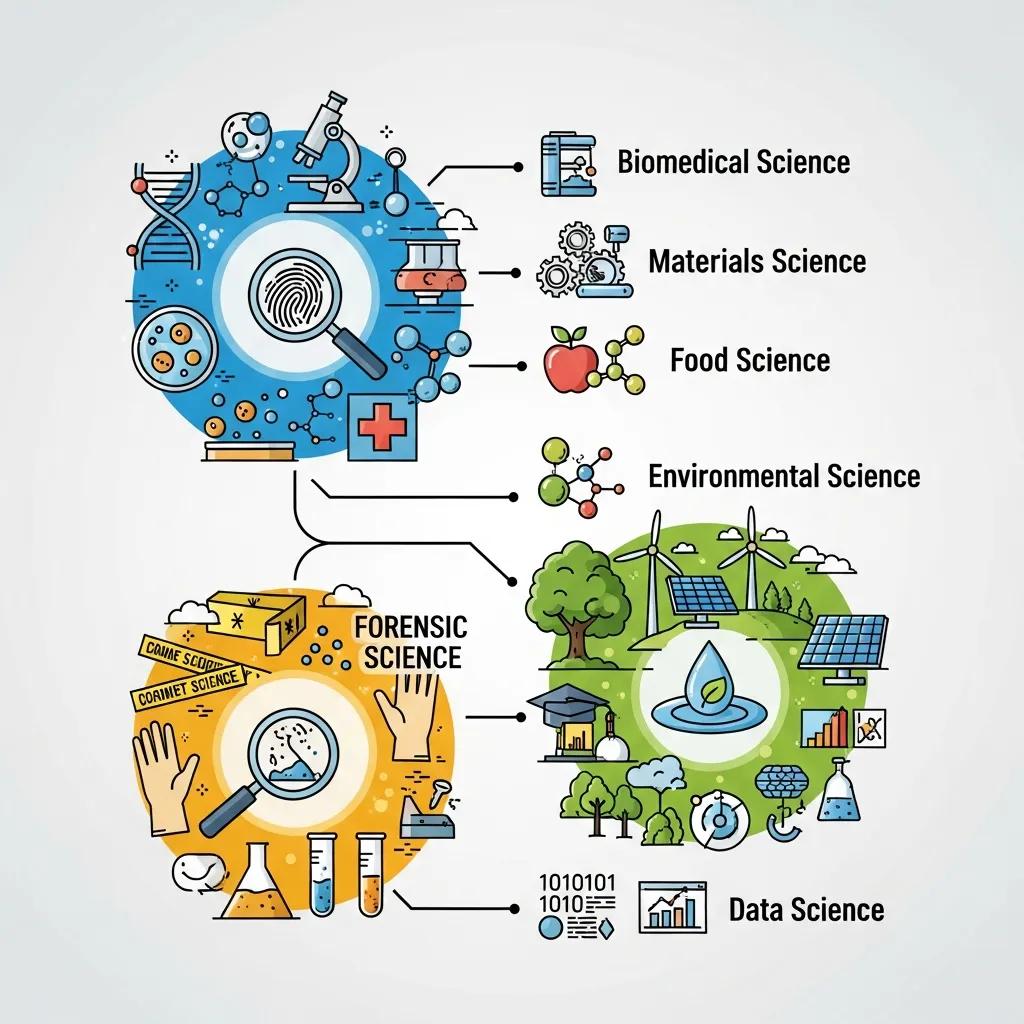
Applied Science covers a range of specialisms, each leading to distinct career paths and combining technical training with transferable scientific skills. Typical fields include biomedical science (laboratory diagnostics and support), diagnostic radiography and medical imaging (clinical imaging and patient pathways), forensic science (crime scene and lab analysis), environmental applied science (monitoring and compliance), and clinical science disciplines that support healthcare diagnostics. Most programmes include core lab modules, clinical or discipline-specific practice and industry placements to prepare you for sector-specific roles. Knowing these options helps you pick modules and placements that suit your career plans and clarifies any further registration or postgraduate requirements.
What Are the Entry Requirements for a Bachelor of Applied Science in the UK?
Entry to BASc programmes typically combines academic qualifications, subject prerequisites and — for clinical routes — evidence of practical experience and DBS checks for placements. Offers are usually expressed as UCAS points bands rather than fixed tariffs and often ask for A-levels in relevant sciences (for example, biology or chemistry for biomedical pathways). International applicants must meet English language requirements and show equivalent secondary qualifications. Mature students can use access courses or recognised vocational qualifications. Knowing these common requirements helps you pick realistic UCAS choices and prepare supporting documents for interviews or admissions checks.
Which qualifications and grades do UK universities require?
Universities use UCAS point ranges and subject requirements rather than a single sector-wide grade. Many applied science courses expect moderate UCAS bands and at least one or two science A-levels (or equivalent vocational qualifications). Specialised routes such as biomedical science or clinical imaging commonly specify biology or chemistry. Some courses offer a foundation year for applicants without standard qualifications, and some accept progression from HNDs or apprenticeships. Always check each course page for exact entry criteria and use UCAS guidance when choosing realistic options.
Are there alternative entry routes or foundation courses available?
Yes — common alternatives include embedded foundation years, Higher National Diplomas (HND/HNC), access to higher education courses for mature students, and progression from apprenticeships or college diplomas. Foundation years build the core skills and subject knowledge needed to join the full degree, while HNDs can sometimes transfer credits into later years of a BASc. International students often use pathway programmes to meet academic and language standards. Which route is best depends on your previous qualifications, timelines and whether you need guaranteed access to clinical placements.
Which Are the Top Universities for Applied Science Degrees in the UK?
Choosing a university for applied science is less about a single ranking and more about course focus, placement quality and employer partnerships. Look for placement years, links with clinical or industrial partners, high-quality lab and simulation facilities, and career services that turn technical training into real job outcomes. Compare module lists, placement arrangements and accreditation to find programmes that match your chosen specialism — whether that’s medical imaging, biomedical science or environmental monitoring.
UK universities offer applied science degrees with different emphases on research, vocational training and industry links.
What makes these universities stand out for Applied Science?
Universities stand out when they show strong employer relationships, up-to-date laboratory and simulation facilities, and clear placement support that embeds students in real workplaces. The best programmes align assessment with professional competencies, offer capstone projects linked to employers or research teams, and provide career services that actively connect students with internships and graduate roles. Evaluating these features helps you judge whether a course will deliver the hands-on learning and professional scaffolding needed for clinical or technical careers.
How to compare course content and career support at leading universities?
Use a consistent checklist to compare module content, assessment methods, accreditation and placement details so you can make evidence-based decisions. Look at practical hours, placement length, assessment formats (competency checks versus exams) and employer involvement in teaching or project supervision. Confirm any professional recognition or clinical partnerships for regulated careers such as diagnostic radiography or clinical science.
Prospective students can use this checklist to compare applied science programmes:
- Check module descriptors for practical and placement hours.
- Confirm accreditation or recognition relevant to your specialism.
- Review placement duration and the support structure for clinical partners.
- Assess career services and employer engagement in projects and assessments.
Making choices based on practical training and career alignment is more useful than relying on reputation alone. For clinical imaging routes in particular, partnerships with imaging providers are often decisive for placement quality.
Find out about medical imaging services and how to book appointments or ask questions.
What Career Opportunities Are Available with a Bachelor of Applied Science?

A BASc opens many vocational routes across healthcare, laboratory services, environmental monitoring, forensic work and industry R&D, often allowing direct entry into technical or clinical support roles. Specialisms map to sectors: biomedical degrees feed pathology and lab technician roles; clinical imaging routes support entry to diagnostic radiography pathways or imaging assistant roles (depending on further training and registration); and environmental applied science leads to monitoring and compliance positions. Employers value the practical competence BASc graduates bring, and many roles offer progression through CPD, specialist certificates or postgraduate study. The table below links common careers to typical entry steps and starting roles.
This career mapping shows how degree specialisms connect to likely entry routes and job titles.
That mapping clarifies how modules and placements translate into employable roles and what additional steps — certificates, registration or an MSc — may be needed for progression. For clinical imaging careers, accumulating placement experience and demonstrable practical competence is essential; employers commonly expect technical skills and DBS clearance.
Find out about medical imaging services and how to book appointments or make an enquiry.
Which industries and roles commonly employ Applied Science graduates?
Applied Science graduates work across healthcare diagnostics, hospital laboratories, environmental monitoring teams, forensic labs and industrial quality control. Typical job titles include laboratory technician, clinical support officer, imaging assistant, R&D technician and quality assurance analyst. Employers look for practical skills from placements plus transferable abilities such as data analysis, technical reporting and project management. Knowing employer expectations for your specialism helps you choose modules and placements that boost your hireability.
Structured placement support is vital for developing the competence required in health professions.
Clinical Placements in Health Professions Education: A Scoping Review
Clinical learning is central to undergraduate health professions education. This scoping review maps the purposes, methods and outcomes reported for clinical placement models and highlights recommendations for curriculum design. It underlines that placement models should explicitly develop competence in students and that evidence-based placement design can support stronger clinical learning and better community health outcomes.
Clinical placement models for undergraduate health professions students: a scoping review, CN Nyoni, 2021
How can graduates enhance their career prospects after the degree?
Graduates boost employability through targeted CPD, postgraduate conversion courses, professional accreditation, networking and employer-linked projects that show applied competence. Short vocational courses and specialist certificates can close sector-specific gaps, while placement reports, lab competency records and project outcomes make a strong portfolio for job applications. Masters study or higher apprenticeships offer routes into advanced specialisms and professional registration. These steps improve immediate job prospects and long-term career mobility.
How Can You Study Applied Science Online?
Online study works well for theory-heavy modules and research training, but practical lab skills and clinical placements require careful delivery. Credible providers arrange local placements, short on-campus residencies or partnerships with local labs and clinics so students gain hands-on experience. Online programmes offer flexibility through recorded lectures and virtual simulations, but for accredited applied courses you must confirm how and where practical competencies will be assessed. Verify accreditation and the provider’s practical learning plan before you enrol.
What are the benefits and challenges of online Applied Science degrees?
Online applied science degrees give flexibility and accessibility for working or remote students, with benefits such as self-paced theory modules and virtual labs. Challenges centre on arranging supervised laboratory time, clinical placements and reliable assessment of hands-on skills. Many institutions manage this with local placement agreements, intensive practical residency weeks and simulation tools that prepare you for in-person sessions. When comparing programmes, check how practical learning and assessment are guaranteed.
Which UK institutions offer accredited online Applied Science courses?
When investigating online options, confirm institutional accreditation and ask for specific arrangements for practical modules — for example, local placement partners, on-site residency weeks or supervised lab blocks. Read course specifications carefully to see how practical assessments are organised, whether simulated labs are complemented by in-person sessions, and how placements are supervised and assessed. Clear placement pathways and recognised accreditation protect your employability and professional recognition. Always request detailed placement and assessment plans from admissions teams.
What Are the Typical Course Modules and Skills Gained in a Bachelor of Applied Science?
BASc curricula blend core modules in laboratory techniques, research methods, statistics and professional practice with discipline electives and a final-year project or placement that brings learning together into applied competence. Core teaching covers practical lab methods, quality assurance, data analysis and technical communication, while electives let you specialise in areas like medical imaging, environmental monitoring or forensic analysis. The course is designed to build transferable skills — project management, technical reporting and critical data interpretation — that employers value across sectors. The table below maps module types to typical content and the skills you’ll gain.
This module-to-skills mapping shows how teaching components translate into workplace-ready competencies.
Each module builds workplace readiness by combining hands-on technique with analytical and professional skills. When modules include clinical imaging content, students gain competence in imaging protocols, patient care basics and image data handling — directly relevant to diagnostic imaging roles.
Find out about medical imaging services and how to book an appointment or enquiry.
Which practical and theoretical skills are developed during the degree?
Applied Science degrees develop hands-on laboratory skills, analytical reasoning and professional competencies. Practical skills include accurate sample preparation, following SOPs, instrument use and routine quality-control checks. Theoretical training covers research design, statistics and evidence-based interpretation. Professional skills such as technical communication, report writing and project management are embedded through placements and capstone work. Graduates leave with a portfolio of assessed competencies that match employer expectations in labs, clinics and field teams.
How do course modules prepare students for real-world applications?
Courses use employer-shaped assessments, simulated lab scenarios, project work with live data and supervised placements to replicate professional responsibilities. Capstone projects frequently partner with industry or clinical teams on authentic problems, while placements require demonstration of professional conduct, technical delivery and reflective reporting. Assessments — competency checklists, workplace appraisals and project deliverables — mirror employer evaluation methods so academic performance maps to workplace performance and graduates are ready for technical and clinical roles.
Find out about medical imaging services and how to book appointments or make an enquiry.
- Key module outcomes: Graduates can perform standard lab techniques, interpret results and communicate technical findings clearly.
- Professional readiness: Placements and capstones require demonstration of workplace competence and reflective practice.
- Career mapping: Modules are chosen to align technical skills with sector demands such as healthcare, environment or forensics.
These checklist points summarise how modules support employability and guide students to prioritise courses and placements that develop demonstrable, job-ready competencies.
Find out about medical imaging services and how to book an appointment or enquiry.
Frequently Asked Questions
What career support services are typically available for Applied Science students?
Most universities offer dedicated career support for BASc students, including one-to-one careers advice, CV and interview workshops, employer networking events and help finding internships and placements. Many institutions also run sector-specific recruitment events and maintain relationships with local businesses and healthcare providers to improve graduate employment opportunities.
How important are placements during the Bachelor of Applied Science programme?
Placements are a core element of the BASc experience. They let you apply classroom learning in real settings, develop hands-on skills, and learn workplace behaviours. Placements often make graduates more competitive at interview and can lead directly to job offers, so they are one of the most valuable parts of the degree.
Can international students apply for a Bachelor of Applied Science in the UK?
Yes. International applicants must meet the same academic equivalency checks and English language requirements as domestic students. Many universities offer international pathway or foundation programmes to bridge gaps in knowledge or language before you start the full degree. Check individual course pages for precise international entry criteria.
What types of assessments can students expect in an Applied Science degree?
Expect a mix of assessment types that evaluate both theory and practice: competency-based lab assessments, project work, placement appraisals, reflective reports, presentations and traditional exams. This range reflects workplace evaluation methods and ensures you can demonstrate both technical skill and professional judgement.
What are the benefits of pursuing a specialisation within Applied Science?
Specialising gives you targeted technical skills and clearer employability in a chosen sector, whether biomedical, forensic, environmental or imaging. Employers often prefer graduates with sector-specific competence, and specialisms can make postgraduate or registration routes more straightforward.
How can students finance their Bachelor of Applied Science studies in the UK?
Students fund study through various channels: government student loans (where available), university scholarships, bursaries and grants, plus part-time work or paid placements. Some institutions offer merit-based or needs-based scholarships specific to certain courses. Check university finance pages for details and eligibility.
Conclusion
The Bachelor of Applied Science in the UK equips you with practical skills and employer-relevant knowledge that lead directly to technical and clinical roles across multiple sectors. Understanding entry requirements, comparing course content and prioritising placement quality will help you choose the right programme for your career goals. If you’re planning UCAS applications or clinical placements, use the checklists above to evaluate options and take next steps toward a practical, career-focused degree in applied science.