



Bachelor in Medical Degrees UK: Your Practical Guide to Medical Training and Career Pathways
In the UK, a “bachelor in medical” usually refers to primary undergraduate medical qualifications — MBBS, MBChB and BMBS — that lead to provisional registration with the General Medical Council and the first steps of a clinical career. This guide breaks down what those degrees cover, who can apply and how the route from graduation to GP or consultant typically unfolds. It’s written for school leavers and graduates alike, with practical clarity on A‑level combinations, admissions tests (UCAT, BMAT, GAMSAT), and how clinical placements build readiness for practice. You’ll find straightforward comparisons, timelines and career data to help you plan next steps with confidence, plus references to UCAS, the GMC and the NHS Foundation Programme where relevant.
UK Bachelor of Medical Degrees: A Comprehensive Guide to Medical Education and Career Pathways
In the UK, “bachelor of medical” refers to primary undergraduate medical qualifications such as MBBS, MBChB and BMBS, which ordinarily lead to provisional registration with the General Medical Council and the early stages of a clinical career. This guide clarifies the nature of those degrees, who is eligible, and the usual progression from graduation to roles such as consultant or General Practitioner (GP). It provides practical advice for both school leavers and graduates, addressing common uncertainties around A‑level subject combinations, admissions tests (UCAT, BMAT, GAMSAT) and the role of clinical placements in preparing students for practice.
Admissions processes for five year medical courses at English schools, J Mathers, 2006
What are the medicine entry requirements in the UK?

UK medical schools select candidates using a mix of academic grades, required A‑level subjects, admissions test results and evidence of relevant experience. Most schools expect high A‑level results, with Chemistry almost always required and Biology or another science strongly recommended. Tests such as the UCAT or BMAT are used by many universities to shortlist for interview. Some schools also apply contextual admissions, consider GCSE performance and look for meaningful work experience or extracurricular activity that demonstrates teamwork and resilience. Knowing how these pieces fit together helps you prioritise revision, test preparation and practical experience before UCAS deadlines and interview invites.
What A‑level subjects and grades do UK medical schools require?
Most UK medical schools expect Chemistry at A‑level plus Biology or a second science or mathematics, with typical offers ranging from A*AA to AAA depending on the university and the applicant’s context. Admissions teams want evidence you can handle intensive science learning and clinical reasoning. If your subject mix is non‑standard, look for universities that accept alternative routes or be ready to explain how your subjects develop relevant analytical skills. Early test preparation — UCAT for many school‑leaver courses, BMAT for some, and GAMSAT mainly for graduate entry — strengthens an application, since test scores are commonly used to shortlist for interviews. Targeted revision, structured work experience and careful personal statement work will improve your overall profile.
Admissions tests — UCAT, BMAT and GAMSAT — serve different roles. UCAT tests cognitive ability, situational judgement and decision‑making under time pressure and is used widely for school‑leaver entry. BMAT assesses science knowledge, problem solving and written communication and is required by a smaller group of schools. GAMSAT is aimed at graduate‑entry and mature applicants and tests reasoning across biological and physical sciences plus written communication and humanities. Preparation varies accordingly: UCAT benefits most from timed practice and technique drills, BMAT from targeted science revision and writing practice, and GAMSAT from deeper science consolidation and essay work. Check each university’s test requirements early so you can plan study and booking dates.
UKCAT Scores in UK Medical School Admissions: A Standardised Tool for Student Selection
The United Kingdom Clinical Aptitude Test (UKCAT) was introduced in 2006 as a battery of cognitive assessments taken before applying to medical school. It measures aptitude rather than learned content and provides medical schools with a standardised tool to help make selection decisions. Typically, selection follows three stages: review of academic qualifications, assessment of broader qualities from the UCAS application leading to interview invitations, and final selection for offers. Universities decide how to use UKCAT results within their own admissions systems, informed by psychometric guidance on the test’s subtests.
Use of UKCAT scores in student selection by UK medical schools, 2006–2010, J Dowell, 2006
Introductory comparison table: typical A‑level and admissions test requirements at representative UK medical schools.
These example rows illustrate how offers vary — always check each school’s published requirements before applying. Comparing universities by entry criteria helps you prioritise where to invest preparation time and which applications are realistic.
Which types of medical degrees and pathways are available in the UK?
Undergraduate medical degrees in the UK carry different titles but lead to the same professional outcome: MBBS, MBChB and BMBS all typically lead to provisional GMC registration on graduation. Most school‑leaver courses are five years, graduate‑entry routes are usually four years, and some programmes extend to six years where an intercalated year or a foundation/preparatory year is included. There are also widening‑access pathways such as foundation‑year programmes or apprenticeship pilots. Each route differs in applicant profile, pace of study and clinical exposure, so choose according to your prior qualifications, timing and readiness for intensive clinical learning.
What is the difference between MBBS, MBChB and BMBS degrees?
The difference between MBBS, MBChB and BMBS is historical and nominal rather than substantive: they are undergraduate medical degrees that qualify graduates to apply for provisional registration with the GMC. Degree titles reflect university tradition but do not imply different clinical skills on graduation. When choosing a programme, compare curriculum structure, placement schedules and assessment methods rather than focusing on the title. Most important is that the programme is GMC‑approved and matches your preferences for clinical exposure.
How does graduate‑entry medicine differ from standard undergraduate medicine?
Graduate‑entry medicine takes applicants who already hold a bachelor’s degree and is often selected using GAMSAT; these programmes compress pre‑clinical and clinical teaching into an accelerated four‑year course with a strong expectation of independent learning. Graduate entrants usually bring mature study habits and relevant experience, but the faster pace means early clinical contact and rapid integration of complex material. Success in graduate entry depends on disciplined time management, practical skills training and focused preparation for UCAS and admissions tests.
Introductory comparison table: degree types and typical features.
This table highlights how duration and applicant background vary across routes, helping you choose the pathway that suits your circumstances.
What does life as a medical student in the UK involve?
Medical school combines classroom teaching, lab work and structured clinical placements that build practical skills, clinical reasoning and professional behaviours over time. Early years focus on anatomy, physiology and foundational science; later years move towards ward‑based learning, patient histories, examinations and supervised procedural practice. Students have access to wellbeing support and can often intercalate a research or specialist degree year to deepen expertise. The day‑to‑day rhythm shifts from timetabled lectures to shift‑like clinical rotations, so strong time management, reflective practice and teamwork are essential.
What are clinical placements and how do they prepare students for practice?
Clinical placements are supervised periods in hospitals, GP practices and diagnostic departments where students apply theory to patient care and develop examination and communication skills. Typical activities include observing ward rounds, taking patient histories, practicing examinations, assisting in procedures and joining multidisciplinary meetings. Placements also expose students to imaging services — radiology, CT and ultrasound — where diagnostic workflows and reporting inform clinical decisions. These experiences are central to building the practical competence required for safe practice.
How do intercalated degrees and student support enhance medical education?
Intercalated degrees give students a year to pursue focused study or research — a BSc or MSc in areas such as public health, medical sciences or clinical research — and help develop critical appraisal and research skills. Intercalation can strengthen applications for competitive specialties by demonstrating research experience or advanced knowledge. Universities also provide academic tutors, counselling and peer mentoring to support wellbeing during intense study and clinical placements, and career guidance for Foundation Programme applications. Weigh the academic benefits of intercalation against the extra time in training and align the choice with your career goals and resilience.
How to become a doctor in the UK: medical career pathways explained
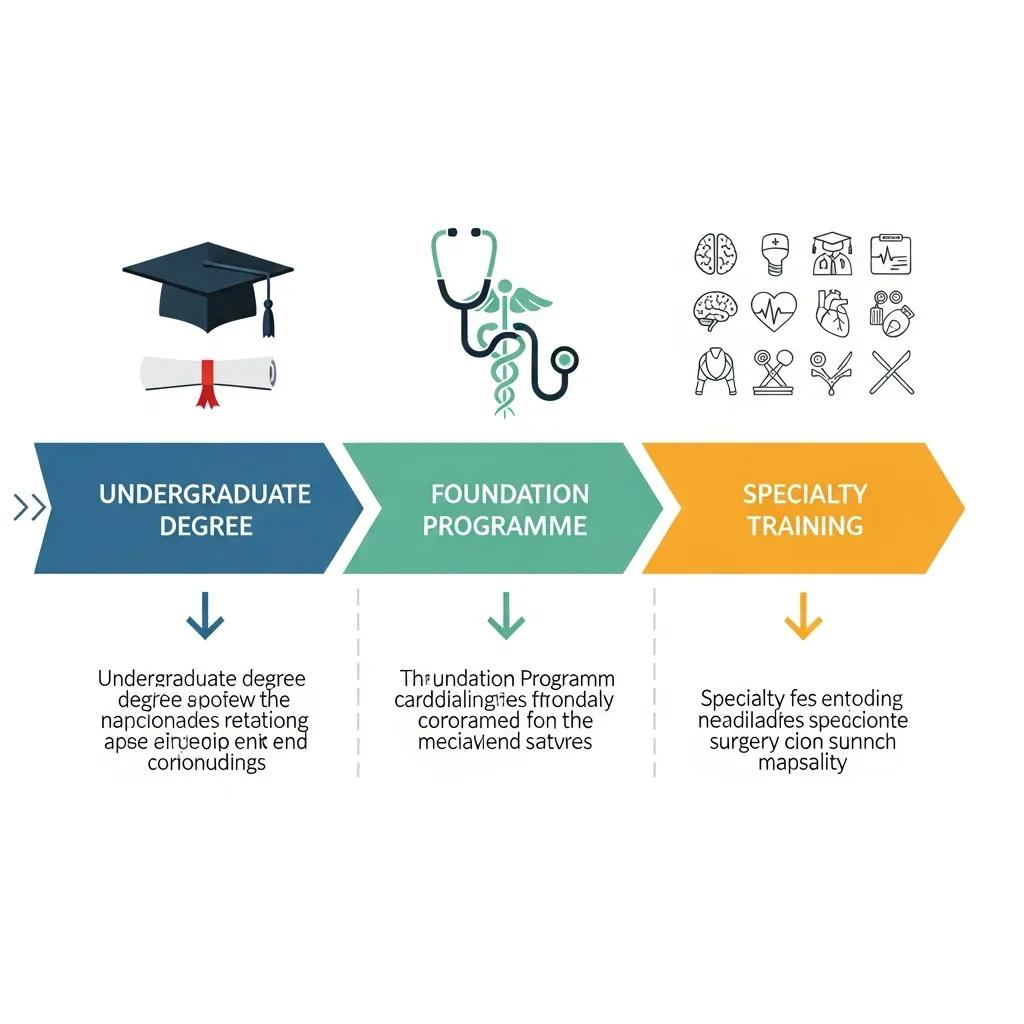
The standard progression is: undergraduate degree → Foundation Programme (FY1, FY2) → core or run‑through specialty training → higher specialty training leading to consultant or GP status. The Foundation Programme consolidates clinical competence, supports portfolio development and converts provisional to full GMC registration. Specialty training combines workplace assessments and postgraduate exams to reach a CCT or equivalent. Time to consultancy varies by specialty: GP training typically takes three years after foundation, while surgical and sub‑specialty tracks can take a decade or more. Early planning for exam milestones and portfolio development is essential.
What is the UK Foundation Programme and its role after graduation?
The Foundation Programme is a two‑year structured training period (FY1 then FY2) that turns university learning into supervised clinical practice. Expected competencies include safe prescribing, acute care and multidisciplinary teamwork. FY1 is when provisional registration is exercised under supervision, with assessments and end‑of‑rotation appraisals. FY2 broadens competence and allows exploration of specialty interests. Rotations commonly include acute medicine, surgery and community placements and give exposure to diagnostic services such as imaging. The Foundation Programme also prepares junior doctors for competitive applications to core or specialty training through portfolio development.
How does specialty training shape a medical career in the UK?
Specialty training sets clinical scope, on‑call responsibility and senior roles. Routes may be run‑through (direct progression) or a core plus higher specialty model, with duration depending on specialty requirements. For example, general practice training is typically three years post‑Foundation; radiology usually involves around five years of training with exams such as FRCR; surgical pathways can include core surgical training followed by higher specialist training. Specialty training includes summative exams, workplace‑based assessments and growing clinical autonomy, shaping your professional identity and prospects. Diagnostic imaging underpins many specialties — CT, ultrasound and interventional radiology inform decisions across medicine and surgery — and trainees can approach imaging providers for observation, referrals or service information to better understand diagnostic workflows.
Introductory timeline list: principal stages from qualification to consultancy.
- Undergraduate degree: MBBS/MBChB or graduate‑entry equivalent.
- Foundation Programme: FY1 and FY2 to consolidate clinical practice.
- Specialty training: Core or run‑through routes with exams and workplace assessments.
This timeline clarifies the sequence and highlights the importance of planning for exams and portfolio milestones at each stage.
Which are the best medical schools in the UK and how are they ranked?
Rankings combine measures such as entry standards, research output, student satisfaction, graduate outcomes and teaching quality; they are useful but should be read alongside personal fit. Top‑ranked schools often have high entry requirements and strong research profiles, but priorities like early clinical contact, community placements or wellbeing support may carry more weight depending on your goals. Use a mix of objective metrics and your own priorities — teaching style, placement quality and location — to choose the right programme.
What criteria determine UK medical school rankings?
Rankings typically mix quantitative and qualitative metrics: entry tariffs, research quality and grant income, graduate employability, student satisfaction and staff‑to‑student ratios. Each metric has limits — research income favours large institutions while satisfaction surveys capture subjective experience — so match the criteria to what matters to you, such as early clinical exposure or strong primary care training. Consider local NHS partnerships and student support services when interpreting rankings to ensure you pick a school that fits your training needs and lifestyle.
How to apply to UK medical schools through UCAS?
Medical applications through UCAS require early organisation: deadlines for medicine are usually earlier than for other courses, so have your personal statement, test registrations (UCAT/BMAT/GAMSAT) and referee report ready in good time. Interviews are commonly MMI (multiple mini‑interviews) or panel formats and reward practice in clinical scenarios, ethical reasoning and clear communication. Shortlist realistic universities, prepare a targeted personal statement that connects experience to motivation, and book test dates with enough revision time. A structured timeline and checklist reduce last‑minute stress and improve your chances of securing interviews.
Practical UCAS application checklist:
- Register with UCAS and note medical application deadlines.
- Book required tests (UCAT, BMAT or GAMSAT) early and practise with mock tests.
- Write a focused personal statement that links experience, motivation and resilience.
Following this checklist reduces common application errors and improves interview readiness.
A Comparison of UK Medical and Dental School Applicants: Demographics and Academic Experience using UCAS Data
This study compares demographics (age, sex, ethnicity, socio‑economic status) and academic experience (school type, tariff scores) of applicants to preclinical dentistry and medicine, and contrasts these with wider higher education applicants in the UK. The method used retrospective analysis of anonymised UCAS data for applicants and accepted candidates in 2006, comparing characteristics such as age, sex, ethnicity, region, school type and tariff score. Logistic regression modelled probability of acceptance against these variables and interactions.
Widening access? Characteristics of applicants to medical and dental schools, compared with UCAS, JE Gallagher, 1990
What career opportunities and salaries are available with a medical degree in the UK?
A medical degree opens a wide range of clinical roles — from FY1 and FY2 to registrar and consultant or GP partner — and non‑clinical careers in research, policy, management and industry. Salaries increase with training stage and responsibility: foundation doctors start at entry bands, specialty trainees earn registrar pay (often with on‑call supplements), and consultants or GP partners reach higher NHS pay bands. Location, on‑call commitments and private work affect overall income. Non‑clinical roles make use of clinical insight in areas such as research coordination, medical education and healthcare technology — attractive options for those prioritising different hours or academic work. Think about specialty length, lifestyle and earning potential when planning your career.
What are typical salaries for doctors by specialty and experience level?
Doctor pay follows bands that reflect experience and responsibility. Understanding these ranges helps with financial planning. Published pay scales show entry‑level FY1 salaries rising through registrar pay to consultant earnings. Specialty choice also affects median earnings and overtime opportunities. The table below gives a quick reference for typical pay at different stages.
This summary helps candidates compare stages and see how specialty choice affects earning potential.
What non‑clinical careers can medical graduates pursue?
Graduates can move into policy, healthcare management, research, medical education and industry roles where clinical experience adds clear value. Imaging providers offer non‑clinical career options such as clinical liaison, radiology management, PACS administration and imaging research for those interested in diagnostics. Clinicians and trainees can approach diagnostic providers to discuss observation placements, referrals or collaborative projects that bridge clinical training with management, informatics or applied research.
Core non‑clinical roles include:
- Clinical research coordinator or trial manager.
- Healthcare management or commissioning roles.
- Imaging service liaison, PACS administration and radiology research positions.
This table shows how non‑clinical roles map to experience and pay, helping graduates weigh alternatives to frontline practice.
What are the medicine entry requirements in the UK?
Entry to medicine in the UK combines strong academic results, admissions testing and demonstrable experience. Applicants typically need high A‑level grades including Chemistry and often Biology, and must prepare for UCAT, BMAT or GAMSAT where required. Universities balance these elements with interviews and contextual factors. Early planning of subject choices, test dates and meaningful experience collection improves competitiveness. Below is a short recap to guide applicants.
- Academic excellence: High A‑level grades, usually including Chemistry and often Biology.
- Admissions testing: UCAT or BMAT for undergraduate entry; GAMSAT for graduate entry.
- Experience and soft skills: Clinical observation, teamwork and reflective insight for interviews.
Which types of medical degrees and pathways are available in the UK?
Several degree pathways all lead towards GMC registration but differ in length and applicant profile. Comparing MBBS/MBChB with graduate and foundation‑year routes helps match prior qualifications and career timing to programme structure. Consider intercalation and foundation‑year options if you need extra science consolidation. The short table below gives an at‑a‑glance comparison.
What does life as a medical student in the UK involve?
The student experience balances theory and practice and gradually hands greater responsibility to learners through placements and assessments that mirror clinical work. Students develop practical skills, time management and reflective practice while accessing support and optional intercalated study. Interaction with diagnostic services such as imaging is common and helps students integrate diagnostic reasoning into patient care. Plan placements proactively, seek feedback and work closely with interprofessional teams to get the most from training.
How to become a doctor in the UK: medical career pathways explained
The career pathway is a sequence of credentialed stages that build clinical competence and professional autonomy; each stage requires assessment and portfolio evidence to progress. Prepare for the Foundation Programme early and map out specialty requirements including exams and selection criteria. Imaging and diagnostics are embedded across specialties and remain a constant feature of clinical decision‑making. Early career planning and mentorship help keep training focused and efficient.
Which are the best medical schools in the UK and how are they ranked?
Rankings highlight relative strengths such as research intensity or teaching quality but should be weighed against practical priorities like placement quality and student support. Applicants who value early clinical exposure or strong primary care training may prefer different schools than those seeking research‑led environments. Combine rank awareness with personal fit, location and career aims to choose the most suitable programme.
What career opportunities and salaries are available with a medical degree in the UK?
A medical degree opens clinical and non‑clinical career pathways with salary progression linked to training stage, specialty and added responsibilities like on‑call duties or private practice. Consider how specialty training length affects lifestyle and long‑term earnings. Imaging providers and healthcare organisations also offer non‑clinical roles and partnerships that use clinical skills in management, informatics and research. Clinicians seeking imaging information, observation or referrals can contact diagnostic providers to explore collaborations and practical learning opportunities.
Life Medical Imaging Central Coast is a diagnostic imaging and radiology clinic serving multiple locations on the Central Coast of Australia. Core services include General CT, Cardiac CT, CT Angiography, Dental Imaging, Digital X‑ray, Ultrasound (General, Vascular, Musculoskeletal, Obstetric & Gynaecological), Interventional procedures (spinal and joint injections, biopsies and aspirations), Paediatric imaging, Body Composition Dexa Scan, Bone Mineral Densitometry and Platelet‑Rich Plasma Therapy injections. The clinic is NATA‑accredited and combines advanced technology with an experienced clinical and support team. For students, trainees and healthcare professionals, these services provide observation and partnership opportunities; for appointments, referrals or enquiries about clinical observation or imaging information, contact the provider via their public channels.
Frequently Asked Questions
What is the typical duration of medical degrees in the UK?
Standard undergraduate medical degrees such as MBBS or MBChB usually last five years. Graduate‑entry programmes for those who already hold a bachelor’s degree are typically four years. Some routes — for example those with a foundation or preparatory year — can extend to six years. Knowing the length of your chosen pathway helps you plan education and career timelines.
Are there alternative pathways to medical education in the UK?
Yes. Foundation‑year programmes provide an extra year of preparation for applicants who don’t meet standard entry requirements, and apprenticeship models are being piloted in some areas to combine practical experience with study. These alternatives widen access and can suit applicants who need additional preparation before entering a full medical degree.
What role do personal statements play in medical school applications?
Your personal statement is a key part of a medical application. It should explain your motivation for medicine, highlight relevant experience and show personal qualities that make you a strong candidate. A clear, reflective statement that links experience to your reasons for applying can make a meaningful difference in a competitive field.
How important are extracurricular activities for medical school applications?
Extracurricular activities matter because they demonstrate commitment, teamwork and leadership. Volunteering in healthcare, sports, community service or other sustained activities provide examples of resilience, empathy and collaboration — traits admissions committees value. Choose meaningful experiences that reflect your interests and support your application story.
What is the significance of the Foundation Programme in a medical career?
The Foundation Programme is a crucial two‑year period for newly qualified doctors. It bridges medical school and specialty training, allowing graduates to practise under supervision while developing essential skills such as safe prescribing and acute care management. Completing the Foundation Programme is required to obtain full GMC registration and to progress to specialty training.
What are the common challenges faced by medical students in the UK?
Common challenges include heavy academic workload, the pressure of clinical placements and balancing personal life with demanding study. Securing placements and managing stress can be difficult. Access to support services, mentorship and peer networks is important to maintain wellbeing and get through the intense periods of training.
How can medical graduates transition into non‑clinical careers?
Graduates can move into non‑clinical roles by applying clinical knowledge in areas such as healthcare management, research, policy and education. Gaining relevant experience, networking and pursuing additional qualifications (for example in management or research methods) helps the transition. Understanding the skills each role requires and seeking internships or project work will make the switch smoother.
Conclusion
Training to be a doctor in the UK follows a clear, staged pathway from undergraduate study to specialty training, designed to build the skills and judgement required for safe practice. Understanding entry routes, degree types and career timelines helps you make informed choices about study and specialty planning. Use this guide alongside official resources and university information to shape a realistic, well‑timed application and training plan. When you’re ready, review our detailed guides and resources to take the next step in your medical career.