



Guide to UK Medical Imaging Courses & Enrolment – Life Medical Imaging
Choosing the right university course in the UK means matching your career goals, preferred delivery mode and practical training needs — whether you’re studying on campus, via a blended model or through distance learning. This guide walks through what different courses cover, how online degrees are delivered, common entry requirements and the key factors to assess medical imaging and radiography programmes. If you’re unsure about clinical placements, funding or UCAS timings, this article gives clear steps, comparison tools and checklists to help. You’ll find practical search tips, concise comparison tables and checklists for academic and language requirements, plus a breakdown of costs, scholarships and the UCAS process so you can apply and prepare with confidence.
What university courses are available in the UK?
UK higher education offers a wide range: full undergraduate degrees, shorter professional certificates, taught and research postgraduate programmes, and flexible distance-learning routes. Delivery can be on-campus, blended (mixing in-person and online teaching) or fully online with synchronous and asynchronous components. Understanding these options makes it easier to pick the right level and format for your goals — especially for subjects that require clinical placements, where practical training and timetabling are critical. Below is a compact comparison showing typical duration, entry expectations and delivery for the main course categories.
Different course types and typical attributes:
Which subjects and fields can you study at UK universities?
Universities in the UK teach across STEM, arts and humanities, social sciences, business, computing and health and clinical disciplines. Many courses let you pick electives or combine subjects for interdisciplinary study. Science, engineering and computing degrees often involve labs, practical projects and technical assessments; arts and humanities lean on essays, seminars and portfolios. Health and clinical programmes — such as medical imaging and radiography — add mandatory clinical placements, regulated assessments and, in many cases, professional accreditation or registration on completion. Knowing how each field assesses students and when hands-on training is required will help you balance academic interests with practical experience.
Clinical and placement requirements set health subjects apart because theoretical learning is integrated with supervised practice in clinical settings — which affects timetables, travel and assessment formats. Being clear on that structure helps you prioritise programmes with strong clinical partners and reliable equipment access. The next section explains practical search techniques for course catalogues so you can find programmes that meet those needs.
How to explore the university course catalogue in the UK
Search efficiently by using precise subject keywords, delivery-mode filters and module lists so you can compare learning outcomes, assessment methods and placement arrangements across courses. Start with filters for subject area, study mode (full-time, part-time, distance) and level (undergraduate/postgraduate), then read module descriptions to spot placement hours, lab requirements and assessment types. Check entry criteria and course contact details — these often reveal how a programme supports clinical experience and whether additional checks (for example, DBS) are required.
- Use subject and delivery filters to narrow results to relevant programmes.
- Compare module lists for placement hours, practical assessments and capstone projects.
- Note contact information and programme accreditation statements for follow-up enquiries.
After comparing modules, shortlist courses and prepare targeted questions for course teams about clinical equipment access and employer partners to assess the quality of practical training.
How do online degree programmes in the UK work?

Online degree programmes deliver content through learning platforms that combine recorded lectures, live tutorials and assessed coursework, and accredited online degrees meet the same academic standards as campus equivalents. Typical delivery mixes asynchronous materials for flexibility with scheduled synchronous sessions for cohort activities, tutorials and assessment briefings. Assessments can include essays, projects, proctored exams and practical tasks — some of which may require on-site attendance or local placements. For clinically focused fields, providers usually organise partnerships with local clinical sites, simulated labs or short residentials so students can meet professional accreditation requirements.
Online study increases access and supports part-time progression, but if your course requires clinical competence you should confirm how placements are arranged and how practical skills are assessed before you enrol.
What are the benefits of online and distance learning courses in the UK?
Distance learning offers flexibility for students balancing work, family or other commitments, while accredited online programmes can deliver the same curriculum as on-campus study. Benefits include reduced relocation and commuting costs, modular pacing that suits part-time study, and easier credit transfer in some cases. Bear in mind that clinical or hands-on subjects may still require local placements, on-site residencies or virtual simulation tools to develop practical skills — so confirm these arrangements up front.
- Flexibility for part-time or working students supports study alongside employment.
- Lower travel and accommodation costs make study more affordable for many students.
- Modular formats let you pace your learning and can simplify credit transfer.
Weigh these advantages against any in-person requirements and check how practical skills are assessed before committing to an online route.
Which universities offer accredited online degree programmes in the UK?
Look for clear accreditation statements on course pages, regulator recognition and confirmation that relevant professional bodies accept distance delivery — especially for clinically regulated qualifications. Accreditation shows the programme meets quality standards and that graduates are eligible for registration where required. For medical imaging courses, check whether practical competencies are assessed through approved clinical partners or supervised placements.
- Check the course page for accreditation and professional recognition statements.
- Confirm whether distance delivery includes approved placement arrangements for clinical skills.
- Contact programme teams to request details on assessment of practical competencies.
Verifying accreditation and placement logistics reduces the risk of enrolling in a course that cannot deliver the clinical experience you need for professional practice.
What are the entry requirements for UK university courses?
Entry requirements usually combine academic qualifications, English language proof and, for some programmes, relevant work experience or portfolios. Undergraduate entry commonly relies on A-levels, BTECs or recognised international equivalents; postgraduate courses typically ask for a relevant undergraduate degree or recognised prior learning. International applicants must usually provide English language test scores, though some universities offer pre-sessional English or foundation routes. Mature applicants and vocational candidates may be considered via alternative routes such as RPL or access courses.
This table summarises common entry routes and the documents typically required. Prepare transcripts, references and any portfolio material early to avoid delays. The following sections explain practical steps to meet academic and language requirements and how to present prior learning.
How to meet academic and language requirements for UK courses
If you need to meet academic or language thresholds, options include foundation or access courses, taking recognised English tests, or providing evidence of prior tertiary study delivered in English. Foundation programmes bridge gaps for specific degrees and are often accepted for mature and international applicants. Many universities accept a range of English tests and offer pre-sessional courses to raise scores — plan these steps well ahead of application deadlines.
- Consider foundation or access courses to meet academic prerequisites.
- Book recognised English tests early and allow time for any pre-sessional courses.
- Request official transcripts and certified translations well before application deadlines.
Organising evidence and timelines in advance reduces stress and improves your chances of satisfying conditional offers smoothly.
Can work experience or prior learning affect university course admission?
Work experience and Recognition of Prior Learning (RPL) often strengthen applications, especially for mature students or vocational programmes where practical skills matter. RPL can convert documented professional competency into academic credit or satisfy entry criteria when formal qualifications are limited. Present clear evidence — role descriptions, reflective statements and supervisory references — so selectors can judge the relevance and depth of your experience.
- Compile a concise RPL portfolio summarising learning outcomes and evidence.
- Use reflective statements to connect workplace tasks to academic competencies.
- Seek formal references from supervisors to corroborate your experience.
Well-documented prior learning can open alternative entry routes and improve your interview performance by demonstrating applied knowledge.
How to choose medical imaging courses in the UK
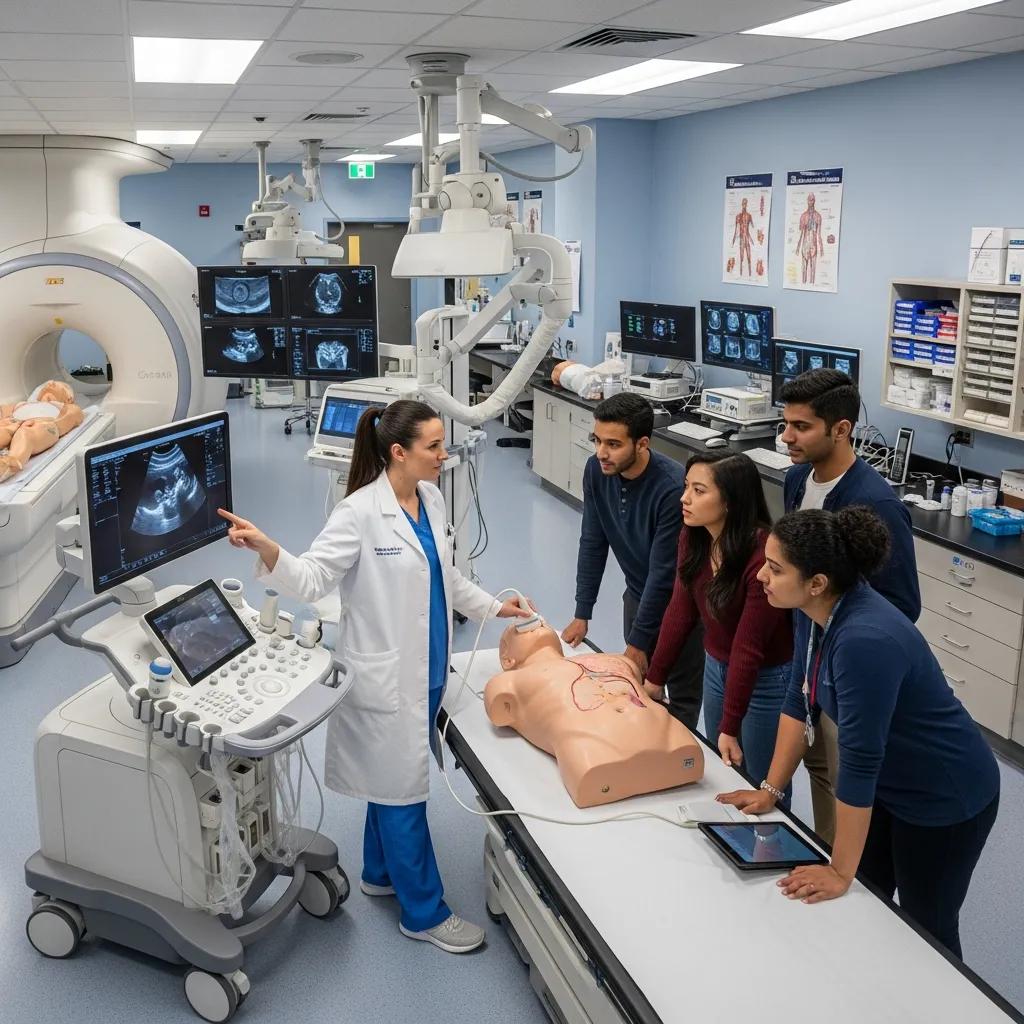
When selecting medical imaging courses, focus on accreditation, clinical placement provision, access to modern equipment and graduate outcomes — these factors determine whether you’ll be ready for clinical practice after graduation. Accreditation from relevant professional bodies confirms the course covers required competencies; clear placement arrangements give supervised experience with modalities such as X-ray, CT, MRI and ultrasound. Faculty expertise, contemporary imaging facilities and established clinical partners are strong indicators that a programme can deliver workplace‑relevant training. Prefer programmes that publish placement hours, describe clinical assessment methods and share graduate employment statistics.
Ask about placement locations, supervision ratios and exposure to different modalities, because hands-on experience during training strongly influences employability and confidence in clinical practice. Knowing these selection criteria helps you ask focused questions of course teams and decide which programmes fit your career plans.
If you need more practical context, contact local imaging providers or course teams to arrange observation visits or to ask about appointment and placement logistics.
Understanding how imaging services operate in clinical settings helps you evaluate course quality and the real-world placement options available, supporting a well-informed choice about where to apply and train.
What career paths do medical imaging courses in the UK lead to?
Graduates of medical imaging courses commonly move into roles such as diagnostic radiographer, sonographer, MRI technologist or CT practitioner, and can progress into specialist clinical or research positions. Early roles typically involve supervised imaging procedures, patient positioning, image acquisition and adherence to safety standards. With experience and further study, practitioners can specialise in areas like paediatrics, interventional radiography or imaging informatics, or take on leadership and academic roles. Plan for registration and scope-of-practice requirements relevant to your chosen role and keep up with continuing professional development (CPD) to access advanced opportunities.
Be aware of professional registration steps and postgraduate options that will expand your career pathways beyond initial clinical roles.
Which UK universities offer top-rated medical imaging programmes?
Top programmes are usually transparent about accreditation, clinical partnerships, the quality of equipment and graduate destinations — not just league table positions. Look for courses that publish placement hours, outline supervision structures and share graduate employment data. When you contact course teams, ask for details about partner hospitals, simulation resources and opportunities for observation or short placements so you can judge how theory links to practical experience.
If you’re shortlisting courses, use local diagnostic imaging providers and clinical partners to arrange observational visits or to ask about placement opportunities; seeing a clinical environment first‑hand helps verify a programme’s training claims.
Radiography Student Learning in Clinical Placements
This paper examines how radiography students learn during clinical placements, highlighting the mix of individual initiative and collective workplace practices that shape professional development. It explores how students’ motivation, local supervision and organisational culture interact to support practical learning in clinical settings.
What are the costs and funding options for university courses in the UK?
Course costs vary by level, residency status and delivery mode. Home undergraduate tuition is usually lower than international fees, and programmes with clinical teaching can attract higher charges because of placement and equipment costs. Placement-heavy subjects may incur extra expenses for travel, temporary accommodation, uniforms, equipment and background checks (for example, DBS). Funding sources include government student loans for eligible home students, university scholarships and bursaries, employer sponsorship for part-time or CPD routes, and awards from external charities and trusts. The table below summarises typical tuition bands and common funding routes to help you plan a realistic budget.
Costs depend on student status and the nature of the programme; always ask course teams about likely placement-related expenses and any bursaries available for clinical students. The following sections outline key cost drivers and where to look for funding.
How much do UK university courses typically cost?
Tuition fees reflect residency, course level and whether the programme requires high-cost teaching such as clinical placements or lab work. Home undergraduate fees are commonly capped (for example, up to £9,250 per year for UK students, subject to government policy), while international fees vary by provider and subject. Placement-heavy courses add indirect costs: travel to placement sites, short-term accommodation, specialist equipment or uniforms, and mandatory background checks to maintain patient safety.
- Expect additional placement-related expenses beyond tuition.
- Factor travel and temporary accommodation into budgets for placements.
- Ask course teams for estimated total costs, including mandatory checks.
Budget early and get clear cost estimates from programme administrators to avoid unexpected financial pressure during placements.
What scholarships and financial aid are available for UK students?
Funding can take many forms: merit scholarships, needs-based bursaries, course-specific awards for healthcare students and employer sponsorship for part-time study or CPD. Universities publish institutional scholarships on course pages and may offer targeted support for placement costs in clinical programmes. External trusts, charities and professional bodies also fund clinical students — research sector-specific awards and prepare application materials well in advance of deadlines.
- Search university scholarship pages and course-specific bursary listings.
- Explore external trusts and professional body awards for clinical students.
- Prepare supporting documents (personal statement, budget outline, references) early for competitive funding.
Actively pursuing available funding can substantially reduce tuition and placement-related costs and improve access to higher-cost programmes.
How to apply and enrol in UK university courses?
Undergraduate applications generally go through UCAS, while many postgraduate and distance-learning providers use direct application systems. UCAS applications include your course choices (up to five), a personal statement, predicted or final grades and a reference; universities respond with offers that are unconditional or conditional. After offers arrive, you accept a firm and (optionally) an insurance choice, then complete enrolment tasks such as submitting final transcripts and arranging visas if you’re an international student. For clinical or competitive programmes, prepare for interviews, auditions or practical assessments and keep documentation organised to ease the transition into study.
The sections below outline the UCAS process and practical interview preparation tips that help you present clinical experience and reflective practice effectively.
What is the UCAS application process for UK university courses?
UCAS centralises undergraduate applications: research courses, complete the online form with up to five choices, write a personal statement and provide a reference and grades. Meet UCAS deadlines to stay competitive. After submission, universities make offers and some applicants will be invited to interviews or assessments depending on the programme. Track key dates carefully and allow time for reference collection, test bookings and preparing documents for conditional offers.
- Research and shortlist courses before starting your UCAS application.
- Draft and refine your personal statement to highlight relevant motivation and experience.
- Monitor UCAS deadlines and respond promptly to offers and interview requests.
Good preparation and clear evidence of fitness for clinical study strengthen applications and reduce last‑minute stress.
Analysis of the UK UCAS System: Admissions and Algorithms
This report explains UCAS’s centralised admissions model and recent procedural developments, including algorithmic matching features designed to improve fairness and efficiency. It covers how preference ranking, personal statements and predicted grades feed into offer decisions across higher education providers.
How to prepare for interviews and assessments for UK courses?
Preparation depends on the format — panel interviews, clinical scenarios, practical skills tasks or auditions — so practise likely questions, gather supporting evidence and prepare concise reflective examples linking experience to learning outcomes. Use mock interviews, keep a reflective log of your clinical experiences and be ready to discuss specific duties and learning points. For practical assessments, check what materials are required and bring authorised evidence such as placement logs or supervisor references when permitted.
- Practice common interview scenarios and ethical or situational questions.
- Prepare a concise reflective account of clinical experience to demonstrate learning.
- Bring organised evidence and be ready to explain how past experience maps to course competencies.
If you need help arranging observational visits or checking placement logistics, contact course teams or local imaging providers early — that information helps with travel, accommodation and scheduling for supervised clinical experiences.
When shortlisting courses or after you receive an offer, request placement contact details and any requirements for observation sessions; early planning makes placement arrangements much smoother.
Frequently Asked Questions
What are the differences between full-time, part-time, and distance learning courses?
Full-time study usually means regular on-campus attendance and typically leads to a degree in three to four years. Part-time study spreads the same learning over a longer period, offering more flexibility for work or family commitments. Distance learning is delivered online and lets you study remotely, often at a self‑paced rhythm. Each mode has trade-offs in terms of time, cost and hands-on requirements, so choose based on your availability and the practical demands of your subject.
How can I find scholarships specifically for healthcare courses?
Start with the university’s financial aid pages and course information — many institutions list scholarships and bursaries for healthcare students. Also search external sources: professional bodies, healthcare charities and trusts that fund clinical training. Talk to current students or alumni for leads on smaller awards, and prepare your application materials early, as healthcare scholarships often have specific eligibility criteria and deadlines.
What should I consider when choosing a university for medical imaging?
Prioritise accreditation, the quality and quantity of clinical placements, faculty expertise and access to modern imaging equipment. Check the university’s clinical partners and how placements are organised, and review graduate employment rates and student support services. Speaking with current students or alumni gives practical insight into day‑to‑day training and can reveal how well the course prepares you for clinical practice.
Are there any specific entry requirements for international students?
International applicants commonly need validated academic transcripts, proof of English language proficiency (for example IELTS or TOEFL) and references. Some universities may require a foundation year or pre-sessional English if qualifications do not meet direct entry standards. Always check each university’s published requirements and plan for visa and translation timelines well ahead of deadlines.
What are the typical assessment methods used in university courses?
Assessment varies by subject and level: common methods include written assignments, exams, practical assessments and group projects. Health programmes usually include clinical assessments during placements where you demonstrate practical competence. Continuous assessment and participation can also play a large role, so review a course’s assessment structure to plan your study and time management.
How can I prepare for the UCAS application process?
Begin by researching courses and universities to match your goals. Draft a clear personal statement that highlights your motivation and relevant experience. Secure references from teachers or employers and keep a timeline for submitting documents. Meet UCAS deadlines and practise for potential interviews or practical assessments to give yourself the best chance of success.
Conclusion
Choosing a UK university course is an important step toward your career — but with the right information you can make a confident choice. Understand course types, entry requirements and funding options, verify accreditation and placement arrangements, and engage with course teams to confirm practical training. Research your options, prepare your application materials early and take the first practical steps — whether that’s contacting placement coordinators, arranging observation visits or starting your UCAS application.