


Medical Imaging Services — Central Coast: A Practical Guide to Scans and Imaging Types
Medical imaging covers the scans and image‑guided procedures clinicians use to look inside the body—to diagnose problems, monitor treatment and guide minimally invasive care. This guide walks through the main imaging classes offered to patients and referrers on the Central Coast, explains how each test works, when it’s commonly used, how to prepare, safety points and what to expect before, during and after your appointment. If you’re unsure whether you need CT, ultrasound, X‑ray, DEXA or an interventional procedure, the sections below define each modality, compare strengths and outline typical referral pathways so you can make confident choices. We also cover women’s imaging and breast care, CT types (including cardiac CT and CT angiography), ultrasound subtypes (including paediatric and musculoskeletal work), image‑guided procedures and practical booking and preparation steps for local appointments. Contemporary practice—like ultra‑low dose CT, AI‑assisted image processing and teleradiology—is referenced where relevant to keep advice current. You’ll finish with clear lists that make selecting the right scan easier and simple instructions for arranging appointments or eReferrals.
What Are the Different Types of Diagnostic Imaging Classes?
“Diagnostic imaging” is an umbrella term for the different technologies that show anatomy and function to help diagnose and plan treatment. Each modality relies on different physics—X‑rays for projection images, CT for cross‑sectional X‑ray reconstructions, ultrasound for sound‑wave real‑time imaging, and DEXA for bone density measurement—so they provide complementary information for clinicians. Knowing the differences helps explain why some problems need CT for detail while others are best assessed with ultrasound or DEXA. Below is a compact comparison to help patients and referrers quickly identify the right imaging class for common concerns.
Common imaging classes and their typical roles:
- X‑ray and Digital Radiography: quick projection images used for fractures, chest checks and emergency presentations.
- CT (Computed Tomography): cross‑sectional, high‑resolution anatomy for trauma, abdomen, chest and vascular assessment.
- Ultrasound: real‑time, non‑ionising imaging for pregnancy, pelvic, vascular and soft‑tissue evaluation.
- DEXA (Bone Densitometry): low‑dose measurement of bone mineral density to assess osteoporosis and fracture risk.
This short list sets out each modality’s role; the table below summarises what they visualise and common indications to help match symptoms to the right scan.
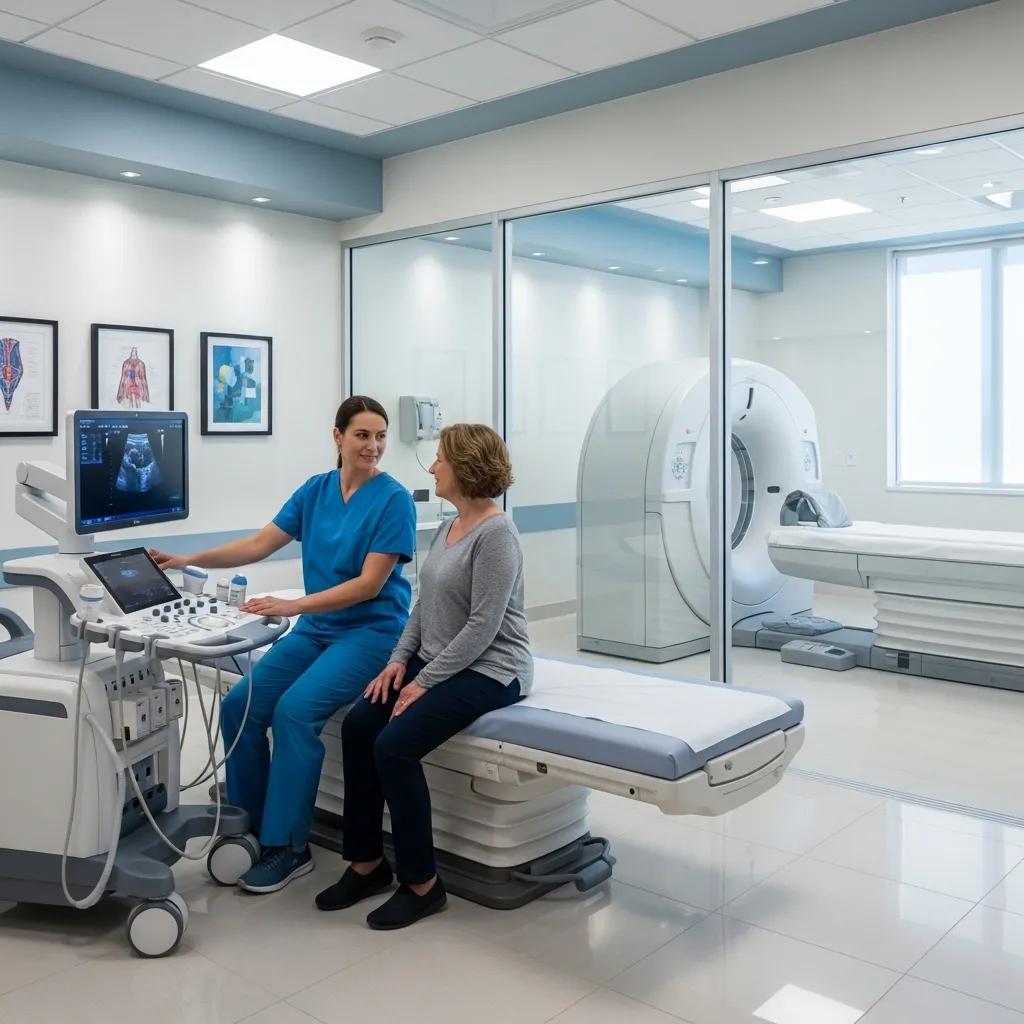
Seeing how broad terms like “medical imaging” break down into specific tests (CT, ultrasound, etc.) helps patients and referrers choose the most useful next step and understand the equipment involved—such as CT gantries or ultrasound transducers—used in everyday practice.
How Do CT Scans Work and What Are Their Common Uses?

CT scans use rotating X‑ray beams and computer reconstruction to create cross‑sectional images of the body. This gives rapid, high‑resolution views of bone, soft tissue and blood vessels, which is why CT is often the first choice for acute trauma, suspected internal bleeding, complex fractures and many cancer staging tasks. When intravenous contrast is added, CT angiography visualises vessels and detects stenosis or embolus. Modern practice focuses on reducing radiation exposure—using ultra‑low dose protocols and advanced reconstruction algorithms—so each scan balances diagnostic benefit with safety for the individual patient.
Later sections cover CT‑specific preparation and safety, including contrast screening and patient‑tailored dose optimisation.
What Should You Know About Ultrasound Scan Procedures?

Ultrasound produces live images from high‑frequency sound waves. Because it uses no ionising radiation it’s the preferred first‑line test for pregnancy, many pelvic issues and a wide range of soft tissue problems. The handheld transducer both sends and receives sound; Doppler modes assess blood flow, and the real‑time view lets the clinician observe movement—useful for tendon function or vessel compressibility. Most ultrasound exams are quick and comfortable; some abdominal or pelvic scans require fasting or a full bladder for better images. Ultrasound’s excellent safety profile—especially in pregnancy and paediatrics—makes it the preferred option for many patients.
Image quality can depend on the operator, so clear clinical history and good communication between referrer, sonographer and patient help ensure targeted, high‑yield studies.
How Does Women’s Imaging Central Coast Support Women’s Health?
Women’s imaging covers obstetric, gynaecological and breast services that support care across pregnancy, fertility assessment and breast symptom evaluation. We use high‑resolution ultrasound, dedicated obstetric protocols (including 3D/4D when appropriate) and diagnostic breast ultrasound for lumps, pain or focal changes. Timely local imaging helps with pregnancy dating, anomaly screening, pelvic problem assessment and focused breast evaluation—especially when mammography isn’t ideal for younger or pregnant patients. A local, patient‑centred imaging hub on the Central Coast reduces travel and coordinates with GPs and obstetric teams to streamline care.
Core women’s imaging services and their roles are listed below to set expectations.
- Obstetric Ultrasound: pregnancy dating, anomaly screening and growth monitoring.
- Gynaecological Ultrasound: assessment for pelvic pain, abnormal bleeding and fertility monitoring including follicle tracking.
- Breast Ultrasound (Diagnostic): targeted evaluation of palpable lumps and focal breast symptoms.
These services fit into clear clinical pathways; if further tests are needed, imaging reports guide referral to specialists or surgical teams.
What Are the Key Imaging Services for Pregnancy and Gynaecology?
Obstetric ultrasound includes first‑trimester dating, mid‑trimester anomaly scans and later growth checks to monitor fetal wellbeing. Gynaecological ultrasound evaluates the pelvic organs for pain, abnormal bleeding, ovarian cysts and fertility tracking—protocols are chosen to match the clinical question and timing in the menstrual cycle. 3D/4D can add useful anatomical detail in specific cases and Doppler assesses placental and fetal blood flow when indicated. Early pregnancy and pelvic scans often require a full bladder; later growth scans usually need minimal preparation. Providing accurate clinical history at booking helps the sonographer tailor the scan for best results.
When women present with combined gynaecological and breast concerns, our pathways allow coordinated assessment and prompt specialist referral where needed.
How Is Breast Imaging Performed and Why Is It Important?
Diagnostic breast imaging commonly uses ultrasound to characterise palpable lumps, localised pain or changes—helping distinguish cystic from solid lesions and guiding biopsy when necessary. Ultrasound complements mammography in symptomatic patients, particularly younger women or those who are pregnant where dense breast tissue limits mammographic sensitivity. Early detection and timely diagnostic imaging widen treatment options and typically improve outcomes. Where required, ultrasound also guides fine‑needle aspiration or core biopsy to obtain tissue. Please bring your referral and any prior breast imaging so the reporting radiologist can provide a well‑informed integrated opinion.
Breast imaging is a core part of multidisciplinary breast care and an important step in assessing symptoms promptly and accurately.
What Are the Benefits and Preparation Steps for CT Scan Procedures?
CT provides rapid, detailed anatomical images that help diagnose trauma, chest and abdominal disease, vascular conditions and support tumour staging and treatment planning. Its main strengths are speed, spatial resolution and the ability to reconstruct images in multiple planes and perform angiographic studies with contrast. Preparation varies by CT type: fasting is often required for contrast studies, and screening for allergies and kidney function is routine. Remove metal objects that could affect image quality. Radiation exposure is considered alongside clinical benefit—modern centres use dose‑reduction strategies such as ultra‑low dose protocols and AI‑assisted reconstruction to keep doses as low as reasonably achievable without compromising diagnostic accuracy.
The table below compares common CT types, preparation and safety notes to help you understand what to expect.
How Does Cardiac CT and CT Angiography Help Diagnose Heart Conditions?
Cardiac CT, including CT coronary angiography, non‑invasively images the coronary arteries and cardiac anatomy to detect coronary disease, calcium burden and anatomical variants that affect treatment. ECG‑synchronised scanning produces high‑resolution images of vessel lumen and surrounding structures, helping triage chest pain or clarify equivocal functional tests. Preparation often includes heart‑rate control (beta‑blockers when needed), fasting and IV contrast for angiographic detail. Results guide next steps—medical management, invasive angiography referral or further functional testing—and reports are written to give clear, actionable information to referrers.
Cardiac CT complements functional cardiac tests and provides fast anatomical clarity when it’s clinically required.
What Are the Safety Measures and Risks of CT Scans?
Safety for CT focuses on maximising diagnostic benefit while minimising radiation and contrast risks. Techniques include tailoring the scanned area, using ultra‑low dose protocols and pre‑scan screening for allergies and kidney function. Contrast reactions are uncommon but taken seriously; we screen for past reactions and relevant medical history and have emergency protocols ready. Radiation risk is discussed in the context of clinical benefit—CT often provides essential information that outweighs small long‑term risks, especially with modern dose reduction. Where appropriate, ultrasound or MRI can be considered to avoid ionising radiation or contrast exposure.
Clear, honest communication about these safety measures helps patients give informed consent and feel reassured about their care.
How Do Ultrasound Imaging Classes Vary by Type and Purpose?
Ultrasound classes include general abdominal/pelvic scans, musculoskeletal (MSK) studies, vascular Doppler assessments and specialised paediatric or obstetric protocols—each tailored to different clinical questions. The core advantage is real‑time imaging: you can see movement, blood flow and function as well as anatomy. Ultrasound is often chosen because it’s safe (no radiation), provides dynamic information and is cost‑effective for soft tissue and vascular evaluation. The table below contrasts common ultrasound subtypes with typical indications and preparation notes to help patients and referrers plan appropriately.
What Is Musculoskeletal and Vascular Ultrasound Used For?
Musculoskeletal ultrasound examines tendons, ligaments, bursae and joints to find tears, inflammation or fluid; it frequently guides injections or aspirations. Vascular ultrasound with Doppler measures blood flow and detects venous thrombosis, arterial narrowing or carotid disease, providing functional information that complements anatomy. These studies inform treatment choices such as physiotherapy, targeted injections or surgical referral; ultrasound’s non‑ionising nature and real‑time feedback make it particularly useful for planning interventions. Results usually guide conservative care or targeted procedures and determine whether further imaging (for example MRI) is needed for complex issues.
The clear link between imaging findings and treatment helps teams deliver focused, practical care.
How Is Paediatric Ultrasound Different from Adult Imaging?
Paediatric ultrasound adjusts technique, probe selection and communication to suit smaller anatomy and reduce distress. Preparation is often shorter than for adults and sedation is rarely needed; sonographers use distraction, fast imaging sequences and parent involvement to get diagnostic images. Common paediatric studies include hip ultrasound for developmental dysplasia, neonatal pyloric stenosis assessments and appendicitis scans in older children. Reports emphasise next steps for parents and referrers, and a child‑friendly approach improves image quality while reducing anxiety and motion artefact.
These child‑centred adaptations help deliver accurate results while making the experience as calm as possible for families.
What Interventional Radiology Procedures Are Offered in Imaging Classes?
Interventional radiology (IR) covers minimally invasive, image‑guided procedures used for diagnosis and treatment—such as spinal and joint injections, biopsies, fluid aspirations and platelet‑rich plasma (PRP) therapy. IR uses imaging tools like ultrasound, CT and fluoroscopy to guide needles and instruments precisely, reducing damage to surrounding tissue and improving outcomes. Benefits include targeted therapy, faster recovery and avoiding open surgery in many cases. Below are commonly offered image‑guided procedures and their main purposes.
- Spinal and Joint Injections: deliver steroid or therapeutic agents directly to the painful site to reduce inflammation and improve function.
- Biopsies and Aspirations: obtain tissue or fluid samples accurately for a definitive diagnosis.
- PRP Therapy Injections: use concentrated platelets from your own blood, placed under imaging guidance to support musculoskeletal healing.
How Are Spinal and Joint Injections Performed?
Spinal and joint injections are done under image guidance—fluoroscopy, CT or ultrasound—so medication is placed precisely in epidural spaces, facet or peripheral joints. The area is cleaned, local anaesthetic is applied and the needle is positioned under live imaging before medication is delivered. Most patients feel brief discomfort during needle entry and then gradual symptom improvement over days to weeks. Aftercare includes activity advice and watching for complications. Image guidance reduces misplacement and improves the chance of a successful outcome compared with blind techniques, and we’ll explain what to expect beforehand so you can prepare and recover confidently.
This precise, image‑guided approach emphasises safety, accuracy and measurable symptom relief for many musculoskeletal problems.
What Are Biopsies, Aspirations, and Platelet-Rich Plasma Therapy Injections?
Image‑guided biopsies use ultrasound or CT to target lesions for tissue sampling, giving pathologists the best chance of a definitive diagnosis while limiting harm to nearby structures. Aspirations remove fluid collections for diagnosis or symptom relief. PRP injections are prepared from the patient’s own blood and delivered under imaging guidance to areas needing healing support; these are used as part of conservative or adjunctive treatment plans. Preparation usually includes brief screening, local anaesthetic and short post‑procedure observation; recovery instructions vary but commonly recommend limited activity for a short time. Imaging guidance improves accuracy for both diagnostic sampling and therapeutic placement, helping clinicians link imaging and pathology to plan treatment.
These procedures bridge diagnostic certainty and targeted, minimally invasive therapy and are valuable options in modern care pathways.
How Can Patients Prepare for Medical Imaging Appointments on the Central Coast?
Good preparation helps produce better images and reduces the need for repeat scans. Requirements depend on the test, whether contrast is used and the clinical question. Typical steps include fasting for some CT or abdominal ultrasound studies, drinking fluids or arriving with a full bladder for pelvic scans, withholding certain medications only when instructed by your referrer, and removing jewellery or metal from the area to be scanned. Bring your referral, any prior imaging or reports and a current medication list; tell staff about allergies, pregnancy or kidney disease so we can plan safe contrast use. The checklist below summarises practical steps to help you arrive prepared.
- Bring documentation: referral, previous imaging reports and a list of current medications.
- Follow fasting or bladder instructions: fast when required for contrast CT or arrive with a full bladder for early pelvic scans.
- Inform staff: tell us about pregnancy, contrast allergies or kidney issues before any contrast is given.
- Wear easy clothing: loose garments and avoid metal jewellery to make the process quicker and improve image quality.
Following these steps reduces delays and supports safer, higher‑quality imaging—helping clinicians make accurate diagnoses while keeping you comfortable.
What Are Common FAQs About Imaging Procedures and Safety?
People often ask about radiation risk, pregnancy safety, contrast reactions and how long results take. We answer these briefly to reduce worry and set clear expectations. Radiation from CT is weighed against clinical benefit: modern ultra‑low dose protocols and clinical justification minimise exposure, and clinicians always consider alternatives when appropriate. Ultrasound uses no ionising radiation and is safe in pregnancy; MRI and nuclear medicine may be used when radiation is undesirable. Contrast reactions are rare; pre‑screening, hydration and monitoring reduce risk, and urgent findings are communicated promptly to your referrer. Routine results follow the referrer’s workflow, with timelines explained at the time of your scan.
These concise, evidence‑based answers are intended to help you understand safety trade‑offs and what to expect after your appointment.
How Do You Book Appointments and Access Referrals for Imaging Services?
This page aims to provide clear information about local imaging services and help you book or enquire about appointments. Patients and referrers on the Central Coast can arrange imaging by phone or, where available, through online appointment tools and eReferral systems. Referrers can submit eReferrals with clinical history and scan requests; our reception and clinical staff can answer suitability or preparation questions. For local bookings, contact Life Medical Imaging Central Coast by phone or use the online/eReferral options where supported. Providing clear referral details and any prior imaging speeds up booking and ensures the correct protocol and preparation advice are given before your appointment.
- Booking checklist: bring your referral, photo ID, Medicare details if applicable and any previous imaging.
- For referrers: submit an eReferral with clinical history and requested modality, then confirm appointment availability with the provider.
- Contact options: phone for direct assistance or online/eReferral submission for convenience.
These steps help secure timely imaging and ensure staff have the information needed to prepare the right protocol and keep care safe and efficient.
Life Medical Imaging Central Coast provides a local patient information hub and appointment support for the Central Coast community. For bookings or questions about services and preparation, call 02 4326 7000 to speak with our team who can advise on eReferral and appointment pathways. This brief signposting keeps business details clear while prioritising clinical education and patient information.
- Prepare documentation: referrals and prior imaging help speed booking.
- Ask about preparation: confirm fasting, medication or bladder instructions when you book.
- Confirm contact details: make sure we can reach you with any pre‑scan instructions.
Frequently Asked Questions
What should I expect during a CT scan?
During a CT you lie on a motorised table that moves through a ring‑shaped scanner while X‑ray detectors rotate around you. The technologist may ask you to hold your breath briefly while images are taken. Scans themselves are usually quick (minutes), though preparation or contrast administration can add time. After the scan you can generally resume normal activities unless your doctor has given other instructions. Following any preparation guidance helps ensure the best diagnostic images.
Are there any alternatives to CT scans?
Yes. Depending on the clinical question, ultrasound or MRI may be suitable alternatives. Ultrasound is especially useful for soft tissues and is safe in pregnancy and childhood. MRI gives excellent soft tissue contrast without radiation. Your referrer will recommend the most appropriate test based on symptoms and clinical history.
How can I manage anxiety before an imaging appointment?
To reduce anxiety, ask staff to explain the procedure so you know what to expect. Bring a friend or family member for support if allowed. Simple techniques—slow breathing, relaxation exercises or listening to music—can help. If you have specific concerns, tell the booking staff beforehand so we can discuss options to make you more comfortable.
What happens if I need a follow-up imaging study?
If further imaging is needed, your referrer will explain why and provide a referral with preparation instructions. Arrange the follow‑up promptly to maintain continuity of care; your referrer will also explain how results will be communicated and what next steps may be required based on those findings.
How do I know if I need a specific type of imaging?
Your healthcare provider will recommend the appropriate test after assessing your symptoms, history and any previous imaging. For example, joint pain may be investigated with ultrasound or MRI, while trauma assessment commonly requires CT. Always follow your clinician’s advice to ensure the most useful imaging is performed.
What are the risks associated with contrast agents used in imaging?
Contrast agents can cause side effects in a small number of patients—typically mild reactions such as nausea or itching. Serious allergic reactions are rare. Patients with kidney impairment require special assessment before IV contrast is used. Always tell the booking team about prior contrast reactions, allergies and kidney problems so we can assess safety and arrange any necessary tests beforehand.
Conclusion
Knowing the imaging options available on the Central Coast helps you and your referrer choose the right test at the right time. Each modality—from CT to ultrasound and DEXA—has specific strengths for different clinical questions. Preparing properly for appointments and using local resources can make the process smoother and improve outcomes. For more information or to book an appointment, contact Life Medical Imaging Central Coast today.